
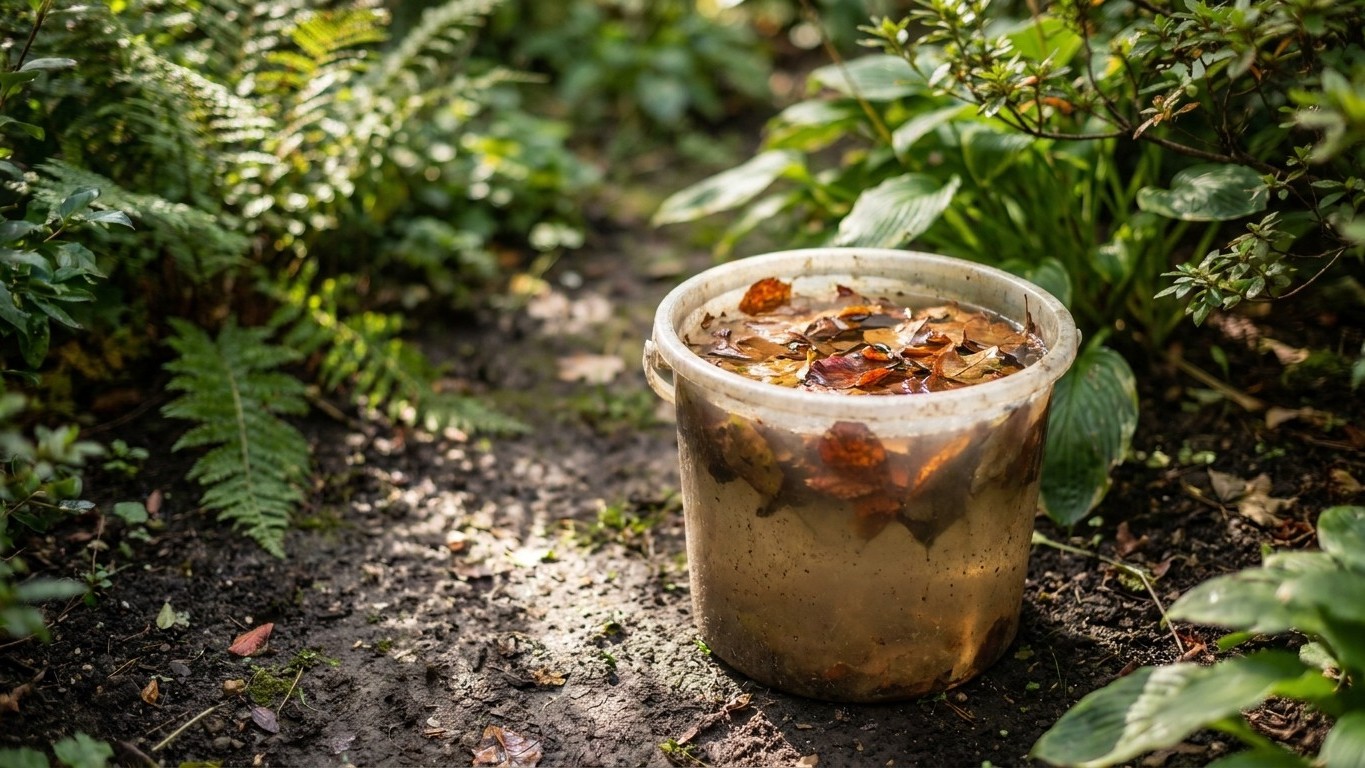
A single bucket, a handful of garden debris, and a small disc of naturally-occurring bacteria. That is the full recipe for what many gardeners are now calling the most effective, pence-per-season pest control trick they have ever tried. No sprays, no electric zappers, no clouds of chemical mist drifting over the flowerbeds. Just a bucket, sitting quietly at the far end of the garden, doing its job.
Key takeaways
- A £5 bucket with a natural bacterial disc stops mosquitoes before they can bite—but how does it know to target only mosquitoes?
- One queen wasp caught in April could represent 1,000 fewer workers by August—but timing is everything
- The wasp trap works so well that you might empty an entire bottle in days, yet it won’t harm the beneficial wasps your garden actually needs
Two buckets, two very different problems
The trick actually works as a two-pronged approach: one bucket for mosquitoes, one for wasps. They operate on completely different principles, but both exploit the insects’ own biology against them rather than trying to overpower them with toxins.
The mosquito bucket is the more clever of the two. It is simply a bucket filled with water and some yard debris, such as fallen leaves or straw. The water and organic matter create an ideal environment for mosquitoes to lay their eggs, but a small biological disc placed in the bucket prevents the larvae from ever reaching maturity. The disc contains the bacterium Bacillus thuringiensis israelensis (BTi), which targets the larvae of mosquitoes, black flies, and fungus gnats, and is not harmful to humans, animals, or other types of insects. You are, in effect, setting a nursery trap: the female mosquito thinks she has found the perfect breeding ground, lays her eggs, and every single larva that hatches is killed before it can bite anyone.
BTi is a naturally occurring bacterium found in soils. It contains spores that produce toxins which specifically target and only affect the larvae of the mosquito, blackfly and fungus gnat. It is target specific and safe for use around mammals, birds, fish and amphibians. Crucially, Bti has been employed to fight mosquitoes and black flies since the 1980s and, even after decades of widespread use, field resistance to Bti crystals has not been documented. That last point matters enormously. Mosquitoes simply cannot build up a resistance to it, which is more than can be said for most conventional insecticides.
The wasp bucket is a different beast entirely. Rather than a breeding trap, it is a lure-and-drown system. You take an ordinary plastic bottle or bucket, create a funnel opening (the neck inverted downward into the body works perfectly), and fill it with bait. Yellow jackets, hornets, and wasps flock to the bottle, go inside via the funnel, and get stuck in the liquid or become too disoriented to escape. This technique works alarmingly well; in a high-traffic area, you could end up emptying an entire bottle full of these pests within a few days.
Why April is the magic month
Here is where the science gets genuinely satisfying. Setting your traps out in April is not just about getting ahead of the season. It is about targeting the one insect that can spawn an entire plague of them.
In late March and into April, as temperatures rise, the queen wasp comes out of hiding and starts looking for places to start her colony. The queens are hearty enough to survive the harsh winter months, hibernating in safe, protected spaces. The most efficient use of a trap is to set it out early in spring before the insects become numerous, because the females, or queens, are moving about in the early season. Each queen caught is estimated to represent 1,000 workers later in the season.
Read that figure again. One queen equals a potential thousand workers buzzing around your barbecue by August. Each queen wasp can lay up to 20,000 eggs. A few queens caught quietly in April translates to thousands fewer wasps ruining your summer. The secret for effective use of wasp and hornet traps is that they can prevent infestation if placed already in early spring. Wait until July when the nest is already established, and you are fighting a losing battle.
The bait choice also changes with the season, and this is a detail most people miss. Wasps are more interested in protein in spring and early summer. It is only near the end of the season that their cravings for sugar spike. For early season use, a trap baited with rotten meat in plain water inside the bottle works well. By midsummer, apple cider vinegar, which is sweet, works well towards the end of the season for wasps.
How to build your own, step by step
For the mosquito bucket, you need a five-litre bucket (the sort that costs next to nothing from any garden centre or DIY shop), enough water to fill it three-quarters full, a handful of leaves or straw from the garden, and one biological larvae disc available from garden retailers. Add the debris, fill with water, drop in the disc. Place it in a shaded corner of the garden, at least two or three metres from where you sit. That is genuinely all there is to it. It is a passive way to get rid of mosquitoes and can be completed within five minutes. Refresh the water and replace the disc roughly every three to four weeks throughout the season.
For the wasp trap, cut a large plastic bottle one third from the top. Invert the top section and push it down inside the lower section so it forms a cone-shaped entrance pointing downward into the liquid. In spring, fill the base with a small piece of raw meat and a cup of water. Add a few drops of washing-up liquid, which breaks the surface tension and speeds matters along considerably. In a garden, it is best to put a wasp trap at least six to seven metres away from any human activity area, standing near or hanging in a tree about 1.5 metres off the ground. This position should attract more wasps.
It is also important to keep the trap clean. The build-up of dead wasp bodies will create a raft for living wasps that get trapped, and these live wasps can then find their way out of the container. Empty it weekly, rinse with hot water, and refill with fresh bait. A little effort, but nothing you cannot manage on a Sunday morning while the kettle boils.
A word about the wildlife you actually want to keep
Some gardeners hesitate here, which is entirely understandable. There are over 100,000 species of wasps described in the world, and in the UK alone there are 7,000 species. Social wasps, the ones most people recognise, account for only around 9 species in the UK. Wasps are hunters, usually of other insects and arthropods, because their offspring require meat to develop. This makes them very efficient natural pest-controllers, including insect pests in gardens like caterpillars, aphids and weevils. The goal of these bucket traps is not to eradicate every wasp from the planet. Completely eliminating them is neither necessary nor realistic anyway, as wasps cover large territories and new ones will always move in from surrounding areas. The aim is simply to keep numbers manageable around the areas where you and your family actually spend time.
As for the BTi in the mosquito bucket, it bears repeating that it is labelled for use in animal watering troughs, ponds, and birdbaths, and is completely harmless to plants, fish, frogs, turtles, and beneficial insects. You can tip the spent water onto the flower beds without a second thought.
One final detail worth knowing: the mosquito bucket works particularly well because it actively competes with every other patch of standing water in your garden, drawing females away from puddles, water butts, and old plant saucers where larvae would otherwise hatch unimpeded. A bucket that invites the mosquito in and guarantees she leaves no living offspring behind is, quietly, one of the cleverest tricks in the amateur gardener’s toolkit.
Sources : amazon.com | gardensillustrated.com