
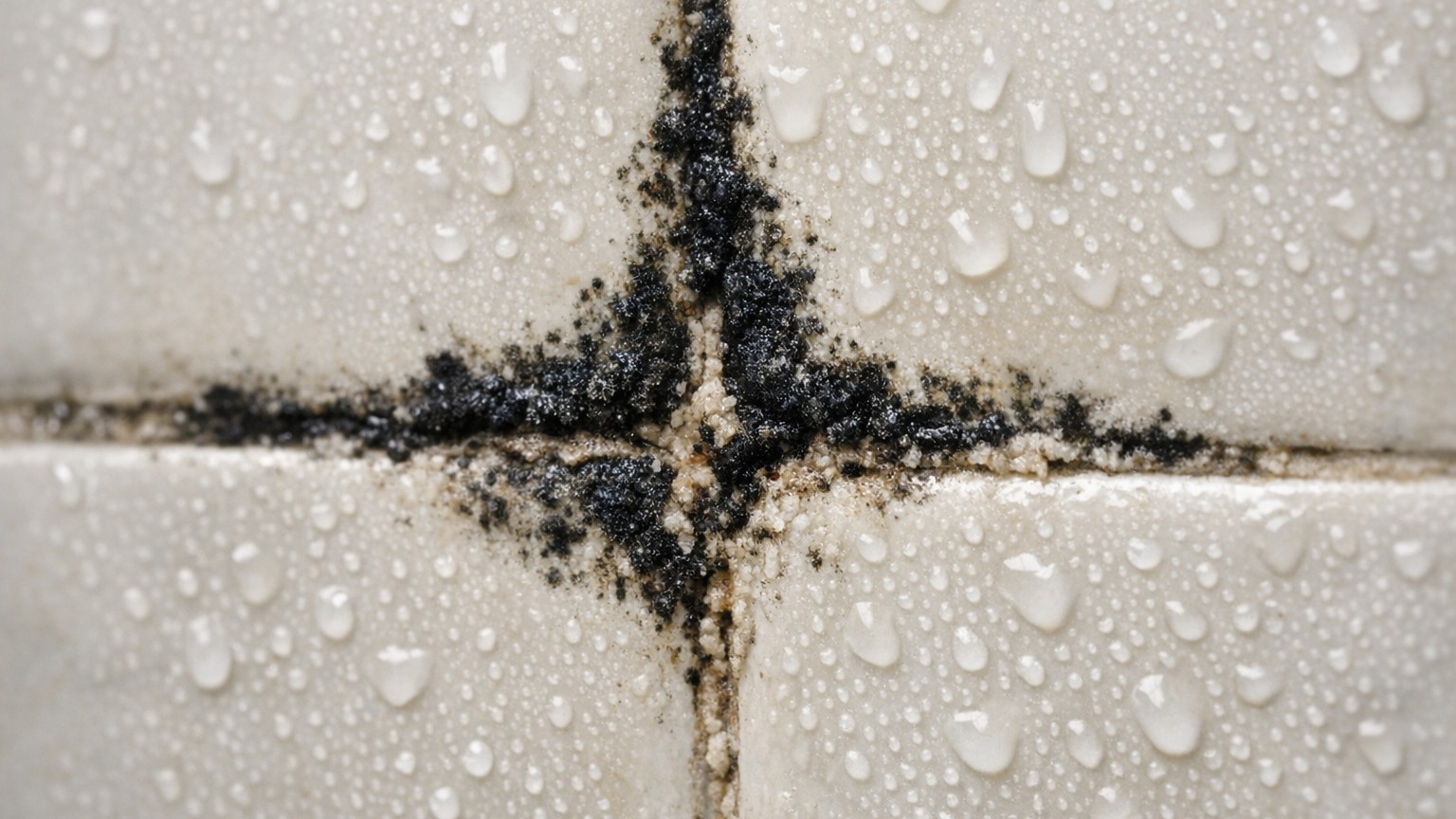
Three years. That is how long the grout in my shower alcove sat there, slowly crumbling at the edges, turning from cream to a mottled grey-brown, and occasionally shedding little chalky crumbs onto the bath mat. I told myself it was cosmetic. I was wrong. The afternoon I finally took a grout rake to those joints and scraped the old filler out, I found a thriving colony of black mould that had been merrily setting up home in the damp darkness behind the tiles, and it made me Understand, quite sharply, why this is a job you cannot keep putting off.
Key takeaways
- Crumbling grout isn’t just ugly—it’s a hidden breeding ground for dangerous black mould that thrives in damp darkness
- Black mould exposure triggers asthma in 43% of sufferers and poses serious respiratory risks, especially for children and elderly people
- You can completely regrout a bathroom yourself in one afternoon for minimal cost—but cutting corners now means repeating the nightmare later
What is actually hiding in crumbling grout
Cracked grout allows moisture to penetrate beneath the tiles, and even small cracks can widen over time, breaking the waterproof seal and potentially leading to water damage in the underlying structure. That is the structural problem. The Biological one is, if anything, more alarming.
Known scientifically as Stachybotrys Atra, black mould is the type you will usually find growing on bathroom walls, ceilings, or on the grouting between tiles. It is normally black or dark green with a wet and slimy top layer, and it thrives in warm, high-moisture environments. The grout itself makes things worse. Grout is a mixture of cement, sand, and water used to fill the gaps between tiles; it is porous and can easily trap moisture, making it an excellent breeding ground for mould.
Black mould is not a particularly quick-growing species, usually requiring a week or more of consistently wet conditions before it can begin to take hold, but once it is growing, it is a strong mould that is difficult to get rid of. Three years of daily showers, gives it rather a comfortable run-up. Mould forms from the inside out, so if you can see it, the issue may already be severe and will need fixing as soon as possible.
There is also a health dimension that is easy to dismiss until you read the figures. According to Asthma and Lung UK, 43% of respondents to their 2024 annual survey said mould can trigger their asthma. Long-term black mould exposure and damp can lead to health issues, including asthma attacks and more frequent lower respiratory infections. Babies, children, and older people are especially susceptible to these allergens and are more at risk of developing respiratory problems when exposed to damp and mould. That persistent sneezing or scratchy throat you have every morning after your shower? Worth considering the source.
How to remove old grout and do the job properly
The good news is that regrouting a bathroom is not a job that requires professional skills or a large budget. Regrouting is one of the most satisfying bathroom improvements you can do, it takes a day, costs under £30, and the results are dramatic. The key is doing it thoroughly rather than taking shortcuts.
Before you start, protect yourself. There are certain safety precautions you should take: protect yourself from spores with eyewear, long rubber gloves, and a mask that covers your nose and mouth. Open the windows for ventilation and keep doors closed to prevent spores from spreading to other parts of your home. Old clothes are a must, the dust gets everywhere.
Removing the old grout is the hardest part, and there really is no shortcut. Instead of reaching for an old screwdriver or spoon, use a proper grout rake to avoid scratching the tiles. Work in one direction, pushing the rake between tiles to dig out all the old grout. The easiest way to remove old grout is with an oscillating multitool, though if you do not have one on hand, manual grout removal tools tend to be about 10% of the cost and require significantly more elbow grease. For a single bathroom, the manual route is perfectly manageable over an afternoon : I did mine section by section with a grout rake and a cup of tea to hand.
If only a few small areas of existing grout need repairing, it may be tempting to patch them up with new grout, but to achieve a clean finish and long-lasting results, you should always remove old grout before re-grouting. Laying new material on top of a compromised base simply delays the problem. Once the old grout is removed, clean the area thoroughly. Use a vacuum to remove any grout and dust that remains and then wipe the tiles with a damp sponge to remove any remaining debris.
For the new grout itself, most UK tilers favour polymer-modified grout for bathrooms, as it offers a good balance of cost, flexibility, and durability. Epoxy is excellent but harder to work with and less forgiving for DIY. Mix only what you can use within about half an hour to prevent it setting prematurely in the bucket. Apply it with a grout float, pressing firmly into the joints, then wipe away the excess with a damp sponge before it dries. Where tiles meet the bath, shower tray, or sanitary ware, do not use grout, use silicone sealant instead. These joints move slightly, grout will crack, and silicone stays flexible.
Apply grout sealer once the grout has cured, usually after 24 to 48 hours. Allow the grout to cure for 24 to 72 hours depending on the manufacturer’s instructions, and do not use the bath or shower while the grout is curing, or you could weaken it.
Keeping mould out for good
Fresh grout is only half the battle. Grout sealers are excellent at preventing mould by creating a protective barrier that resists moisture and stains. Typical protection lasts between one and three years depending on use, with shower areas potentially needing resealing yearly, while lower-traffic wall tiles can last longer. Mark it on your calendar, it takes ten minutes and spares you the afternoon of scraping.
Ventilation matters enormously. Ventilate your entire home for at least 30 minutes daily by opening windows and interior doors for cross-ventilation, which helps moisture escape instead of settling on surfaces. Use and maintain extractor fans in kitchens and bathrooms, and let them run on after cooking or bathing. A fan that switches off the moment you leave the room is barely doing its job.
Very short bursts of high heat followed by long periods of cold encourage condensation. A reasonably steady background temperature, often around 18–21°C in cold weather, is usually better for both comfort and preventing damp and mould. Many of us heat the bathroom intensely in the morning and then leave it cold all day, precisely the cycle that deposits moisture onto cool grout.
One thing that surprised me when I finally finished the job: the pink colouration sometimes seen in shower grout is not actually mould at all, but is often associated with a specific type of bacteria, Serratia marcescens, which can form pinkish or reddish-pink stains on grout and shower curtains. It responds to bleach quickly and is far less concerning than black mould, but it is a reliable sign that your ventilation and sealing need attention before the more stubborn fungus moves in. Consider it an early warning system, and one worth heeding rather more promptly than I did.
Sources : dbsbathrooms.co.uk | plumbworld.co.uk