
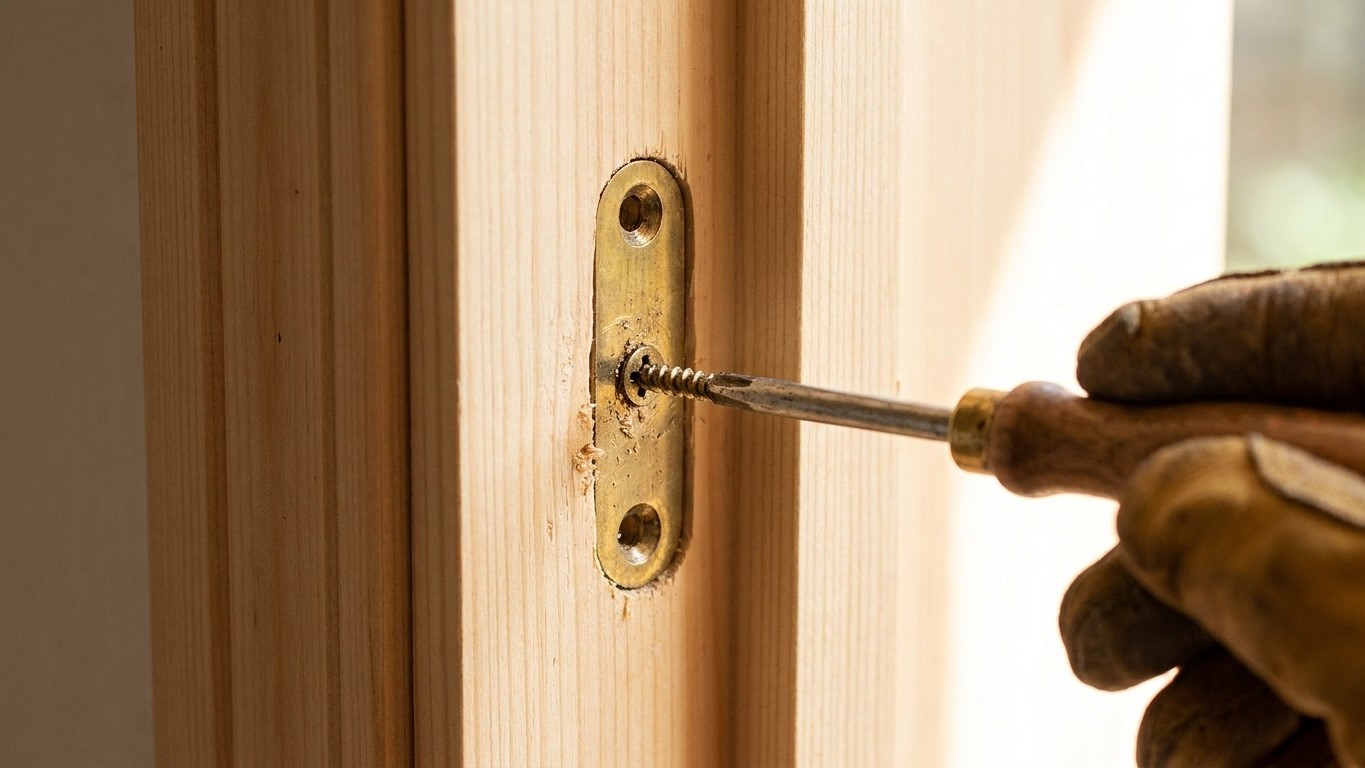
A loose door hinge is one of those small domestic nuisances that most of us fix in the same instinctive way: swap out the short screws for longer ones. Seems logical, doesn’t it? More screw, more grip. The trouble is, this very remedy is responsible for a hidden failure that quietly worsens over months, a split running along the inside of the door jamb, invisible until the wood suddenly gives way and the repair becomes ten times more costly.
Key takeaways
- Why the ‘obvious’ fix of using longer screws creates an invisible disaster
- How a split jamb can go undetected until catastrophic failure strikes
- A toothpick-and-glue solution that’s stronger than the original installation
Why longer screws cause more harm than good
The hinge plate on a standard interior door is typically held by screws around 25mm long, biting into the jamb itself. When the hinge begins to rock, usually because the wood fibres around the original screw holes have been compressed and worn down — the natural instinct is to reach for 50mm or even 75mm screws. These longer screws do bite further into the timber, and yes, they feel solid when you first tighten them. The problem is what happens under load.
A door swings on its hinges hundreds of times a day. Each swing transfers a lateral force through the hinge plate into the screws. Short screws distribute that force across the jamb face. Long screws, however, act more like levers, concentrating stress at a point deeper inside the wood. Over time, this creates a shear line running parallel to the grain, exactly the direction wood splits most readily. The jamb looks fine from the outside, but inside, a crack is slowly propagating toward the frame. By the time you notice the door drooping again, the timber has often fractured along its full length behind the hinge mortise.
There is also a second, less obvious problem. Many modern door frames, particularly in houses built since the 1980s, use relatively thin softwood jambs with a hollow or plasterboard-backed cavity behind them. A 75mm screw sailing past the jamb into nothing but air and paper provides almost no holding strength at all, while simultaneously stressing the thin timber shell it passes through. You get the worst of both worlds.
The repair that actually works, and costs almost nothing
The correct fix for a hinge with stripped screw holes does not involve longer screws at all. The goal is to restore the holding power of the original screw positions, and the most reliable method requires only three things you almost certainly have at home: a tube of wood glue (PVA works perfectly well), a handful of wooden toothpicks or matchsticks with the heads removed, and a few minutes of patience.
Start by removing the hinge entirely and clearing any loose debris from the screw holes. Dip your toothpicks or matchstick splinters in wood glue and pack them firmly into each stripped hole, snapping off the excess flush with the surface once the hole is full. Leave the glue to cure for at least two hours, overnight is better. When you refit the hinge with the original screws, they will bite into solid wood again, and the repair is genuinely stronger than the original fixing because the glue-consolidated wood resists compression far better than virgin softwood.
For hinge holes that are badly elongated rather than simply stripped, a thin sliver of timber cut from an old wooden skewer and glued in place works on the same principle. The key is always to rebuild the wood mass at the correct depth for the original screw length, not to chase the damage deeper into the jamb with a longer fastener.
When the jamb itself is already split
If you have already gone down the long-screw route and you can feel the hinge plate flexing slightly even with new screws tight, run your fingers along the inner edge of the jamb where it meets the door stop. A split jamb often reveals itself as a faint ridge, or the jamb may flex slightly when pressed. At this stage, the toothpick method alone will not suffice.
The most effective repair here involves injecting a low-viscosity wood glue into the split using a syringe or a thin nozzle, the kind sold with most wood glue bottles, and then clamping the jamb firmly closed with a G-clamp padded with scrap wood to protect the surface. Wipe away any squeeze-out immediately with a damp cloth and leave it clamped for a full 24 hours. Once cured, the split jamb can be as strong as before, particularly in softwood where the glue often penetrates the grain well. After that, rebuild the screw holes as described above and refit with the correct-length screws.
If the split has travelled the full height of the hinge mortise or the wood has crumbled significantly, replacing the jamb section is the only lasting solution. A joiner can splice in a new piece of timber rather than replacing the entire frame, a much cheaper job than it sounds, typically taking under two hours.
One thing worth adjusting before you refit anything
A loose hinge is frequently a symptom rather than a cause. Doors that drop or bind put far more stress on their hinges than doors that hang correctly. Before refitting, check whether the door itself has swollen, whether the frame has moved slightly (common in older houses that have settled), or whether the hinge mortises have become shallow due to repeated painting. A shallow mortise lifts the hinge plate proud of the surface, creating a rocking motion that strips screws quickly whatever their length. Chisel the mortise fractionally deeper, and the hinge will sit flush, transferring force evenly across the full plate rather than pivoting on its outer edge.
One small detail that makes a meaningful difference: countersinking the screw holes in the hinge plate very slightly before fitting ensures the screw head sits truly flush. A proud screw head creates a tiny rocking point that most people never notice, but which gradually works every surrounding screw loose. A countersink bit costs less than a pound at most hardware shops, and five seconds of work per screw hole can extend the life of a well-fitted hinge by years.