
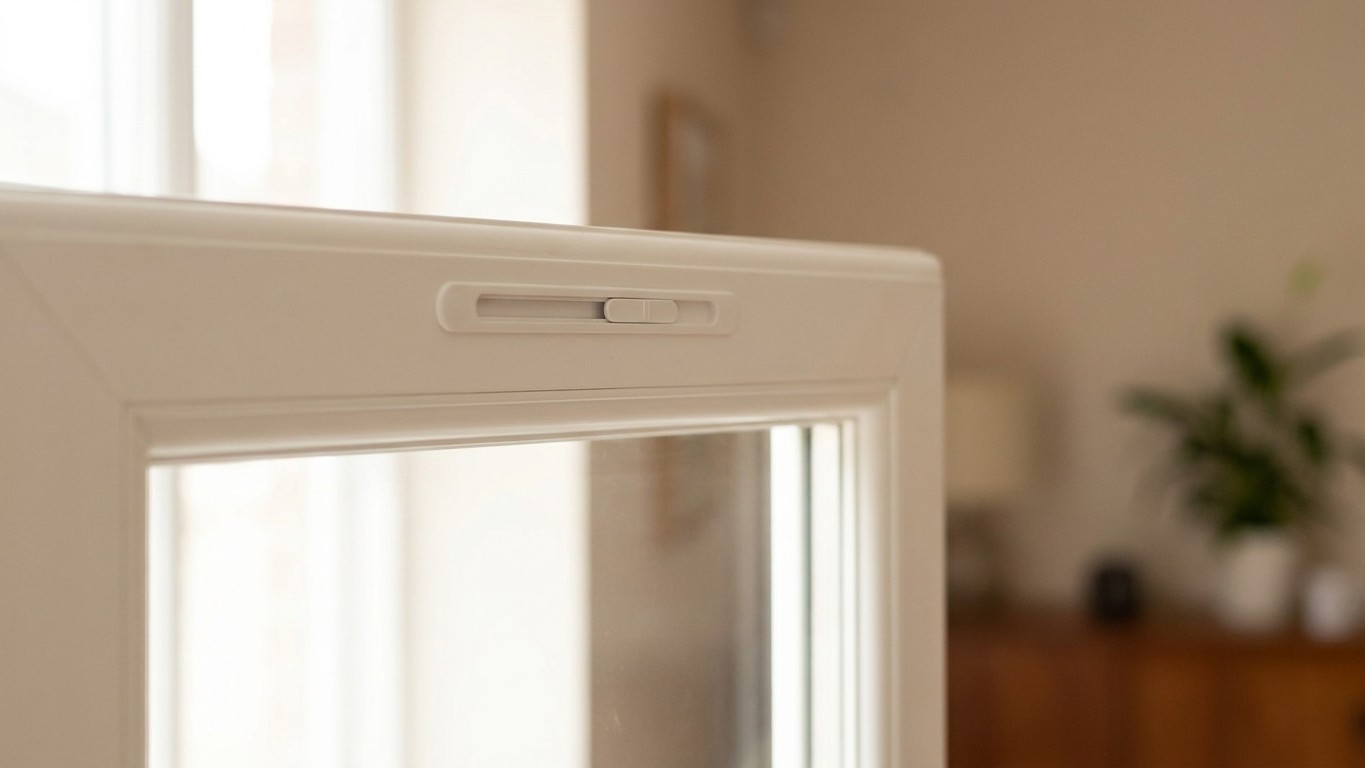
That small slot running along the top of your double-glazed window frame is not a manufacturing oddity, a gap left by a sloppy fitter, or anything that needs filling in. It is a trickle vent, and the chances are you have been living with yours blocked up for years without knowing it. A window fitter pointing one out after over a decade is, frankly, more common than the glazing industry would care to admit.
Key takeaways
- A tiny slot on your window frame has been quietly doing its job—or sitting blocked for years
- Painting over it reduces airflow by up to 70%, creating the perfect conditions for mould
- One simple masking tape trick prevents the problem entirely during your next redecoration
What exactly is that slot, and why is it there?
Trickle vents are small, manually adjustable slots integrated directly into the top of a modern window or door frame, specifically designed to provide constant, background ventilation to a room, helping to remove damp, stale air even when the window remains securely closed. When a window is manufactured, a slot is drilled into the plastic frame and a cover is placed over it; that cover has a control which allows you to open and close the slot at will to let air gradually trickle into your home without the need to open your window entirely.
The reason they exist comes down to a rather elegant problem of our own making. Modern double glazing has made UK homes incredibly airtight. This means air is unable to escape and air quality in the room deteriorates, from sources including CO₂, candles, paint fumes, cooking, and bathrooms. The trickle vent is the engineered answer to that sealed-box problem. One of the main benefits is that trickle vents help control moisture levels, because cooking, showering, and even breathing all add to indoor humidity, and without good ventilation, too much moisture causes condensation, leading to a damp environment that makes mould grow, peels wallpaper, and creates musty smells.
There are actually a few different designs in circulation. In a “through frame” design, the trickle vent is positioned through the head of the frame itself; in an “over-frame” design, ventilation is routed over the frame or head of the window when the vent cannot fit through; and in a “glazed in” version, the vent is fitted into the glazed area along the top of the sealed glass unit. The type sitting in your frame at home depends on when the windows were made and which manufacturer supplied them.
Painting over it, the mistake that spreads from house to house
During internal redecoration, decorators frequently paint trickle vents entirely shut, heavily blocking the sliding mechanism and destroying the airflow. This is so widespread it barely raises an eyebrow in the trade. A decorator arrives with a brush, works quickly and neatly along the window frame, and the vent, which sits flush with the paintwork, gets sealed without a second thought. The homeowner sees a tidy finish. Nobody mentions ventilation. Years pass.
Blockages from decorating debris like paint overspray clog vents, and blocked airflow can reduce ventilation capacity by up to 70%, trapping moisture indoors. That is not a trivial figure. A 70% reduction in airflow is enough to tip the balance in a bedroom or kitchen from perfectly comfortable to persistently damp, especially through a British winter when windows stay firmly shut for months on end.
The other common culprit is the well-meaning homeowner who simply closes the vent in January and never reopens it. Many homeowners close vents in winter to conserve heat, which neglects their purpose and elevates indoor humidity by 20–40%, fostering mould in kitchens and bathrooms. The logic feels sound, it is cold outside, so shut everything. But that approach treats the trickle vent as a draught gap, which it was never meant to be.
How to check yours and get them working again
Run your finger along the top of each window frame. You are looking for a narrow grille or a sliding cover, usually positioned centrally or slightly off-centre at the head of the frame. On older uPVC windows it may be cream or white and so similar in colour to the frame that it genuinely disappears to the eye, especially beneath a coat of emulsion.
If paint has sealed it shut, do not panic. A thin craft knife or a wooden cocktail stick (not metal, you risk scratching the frame) can gently score around the edges of the cover to break the paint seal. Work slowly. Once the cover moves, a quick vacuum of the slots or a wipe-down can clear accumulated grime, and simple steps like vacuuming slots or applying silicone spray prevent around 80% of operational failures. Silicone spray is available cheaply from most hardware shops and keeps the sliding mechanism moving freely through every subsequent repaint.
Going forward, mask the vent cover with a small piece of tape before you paint anywhere near the window frame. Remove the tape when the paint is touch-dry. Takes thirty seconds. Saves years of dampness.
What the building regulations now say
This is not merely a matter of good housekeeping. Because modern double glazing has made UK homes incredibly airtight, the government updated the Building Regulations (Part F) in 2022, making the installation of trickle vents a strict legal requirement for almost all replacement windows. Updated on 15th June 2022, this change requires trickle vents on the majority of new windows and doors being replaced, the main reason being to prevent an excessive amount of condensation which would otherwise damage the structure of the property.
You must not fit smaller vents than those removed, and if the previous installation had no vents at all, you must upgrade to meet current Part F requirements. So if you are planning a window replacement and your existing windows have trickle vents, even if those vents have been painted over for a decade, the new windows must include them too, and to an equivalent or greater specification.
For those with older windows that were fitted before trickle vents became standard, it is possible to retrofit trickle vents to existing windows, provided the top of the window frame is wide enough to accommodate them, by carefully drilling holes into the frames. Retrofitting is a viable solution for homes suffering from severe condensation, but it requires high precision to avoid damaging the internal steel reinforcements or the glass units within the frame, so unless you are a confident and experienced DIYer, this is a job best left to a specialist.
One small thing worth knowing: trickle vents need to be positioned at least 1.7 metres above floor level for effective distribution of air. That height requirement is part of why they sit at the top of the frame rather than lower down, warm air rises and carries moisture with it, so intercepting that moisture near the ceiling line is far more effective than a vent at waist height. A detail most of us never think about, but someone clearly did.
Sources : venti-group.com | upvc-store.co.uk