
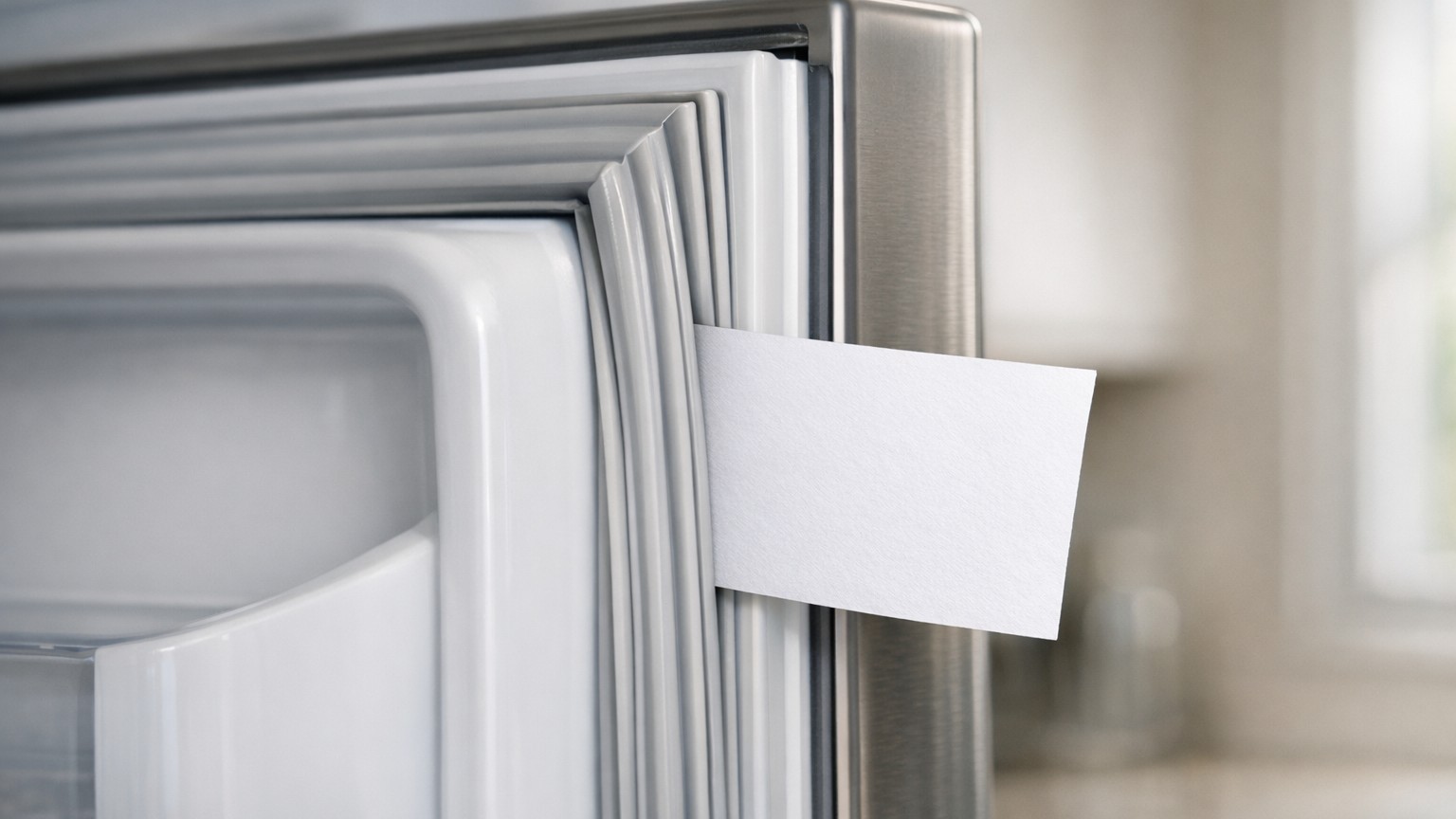
That thin rubber strip running around the edge of your fridge door, the gasket, is one of the most ignored components in the entire kitchen. Most of us close the door, hear a satisfying thud, and assume all is well. The paper test proved otherwise for me, and once you understand what a failing seal actually costs per month, you’ll be checking yours before the week is out.
Key takeaways
- Most people never check their fridge seal, yet a failing gasket can waste 15-25% of the unit’s energy
- A simple paper test takes two minutes and reveals if your seal is compromised—no tools needed
- Energy waste from a bad seal adds up to real money: in the UK, it could cost £100+ per year without you realizing
The sheet of paper that changed how I see my fridge bill
The test itself takes about two minutes. You place a banknote or a piece of paper between the seal and the fridge frame and close the door so the paper sticks out. If the seal is doing its job, it will remain firmly in place. Repeat the test at several different spots around the door, if the note slips down or slides out wherever you put it, the seal has been breached. Simple, no tools required, and rather humbling if you’ve never done it before.
If the paper pulls loose with very little resistance at any point, that’s a weak seal. It shouldn’t be impossible to pull out, but there should be some resistance before it gives. A completely stuck piece of paper is the goal. Anything slipping free too easily is a red flag, and one that’s almost certainly appearing on your electricity bill each month without you realising it.
There’s also a second method worth knowing about, particularly useful after dark. Place a torch (even the one on your phone) inside the fridge, pointing towards the door, then close the door and look at the edges. If you notice any visible gaps or light shining through along the edges, the seal is not tight enough and air is leaking. Between these two checks, you’ll have a thorough picture of exactly where your cold air is disappearing to.
What a faulty seal actually costs you
If the door gasket doesn’t seal properly, your fridge leaks cold air all day long, even when the door is closed. That causes a constant cycle of energy loss, making your compressor run more often and shortening the fridge’s lifespan in the long run. The compressor is the engine of the whole operation. Every time it kicks in to compensate for escaping cold air, it’s burning electricity you’re paying for.
Because fridges run 24 hours a day, even small inefficiencies are cumulatively expensive. A damaged door seal can cause a unit to waste 15% to 25% of its energy, and in extreme cases, it can cause the unit to use three times more power than intended. Think about that figure against your electricity bill. With UK electricity rates running at around 30p per kWh as of 2025, even a modest fridge working harder than it should adds a real and visible sum over twelve months. The energy loss isn’t dramatic in a single day; it’s the relentless accumulation across every hour of every week that builds into a meaningful figure.
A refrigerator door gasket that isn’t sealing properly is one of those problems that feels minor but runs silently expensive. Your compressor runs more frequently, sometimes continuously, trying to compensate for the warm air constantly leaking in. Energy consumption climbs. The compressor wears faster. And a compressor repair, should it eventually fail, costs considerably more than a new gasket ever would. Having a professional supply and fit a new compressor in the UK typically runs between £300 and £480. Replacing a gasket early is, by any measure, the better financial decision.
Cleaning first, replacing if needed
The flexible gasket is pleated, like a little accordion. Those pleats can get dirty and clogged up, so when you clean the fridge give them some attention with a simple vinegar and water solution or dish soap. A weak test result doesn’t automatically mean the gasket needs replacing, it may simply need a good clean. Sticky residues from spilled jam, old milk, or grease can prevent the rubber from pressing flat against the frame, and wiping it down thoroughly sometimes restores the seal completely.
If cleaning makes no difference, then replacement is the sensible next step. On average, the cost to replace fridge seals in the UK ranges between £40 and £140, depending on the size and specifications of your fridge or freezer. Confident DIYers can often do the job themselves, many modern gasket profiles simply push into the track around the door without tools. For those who’d rather call someone in, having a professional supply and fit a new door seal or gasket typically costs between £95 and £150. Either way, weighed against months of inflated electricity bills and potential compressor damage down the line, the investment recoup itself quickly.
One practical pointer before ordering: the most common reason for wasted money when replacing a seal is ordering the wrong size. Fridge seals are rarely “one-size-fits-all,” and a difference of even a centimetre or two can render the replacement seal useless. Note down your fridge’s make, model number (usually on a sticker inside the door frame), and measure the existing gasket before you order anything.
Getting into the habit of checking
The paper test is worth doing twice a year, perhaps when you do a thorough fridge clean in spring and again in autumn. If a refrigerator seal is compromised in any way, either from damage or simply from age, the fridge will have to work harder to maintain the desired temperature, and this will lead to higher energy consumption. Beyond that, there’s the food safety angle. Warm air seeping in means inconsistent temperatures and faster spoilage — and the food wasted each week adds its own quiet cost.
In a healthy fridge, the compressor cycles on and off throughout the day. With a faulty seal, those quiet breaks disappear. The unit may run almost continuously, which is a warning sign that something isn’t right. So next time you walk past your fridge and notice it humming away without pause, it’s worth stopping to listen. That continuous whir might be the sound of money leaving your pocket, one wasted kilowatt at a time. A piece of paper from the recycling pile could be the cheapest diagnostic tool in your kitchen.
One last thing many people miss: placing heavy bottles or jars on the door shelves can cause imbalance, pulling the door out of alignment over time. A perfectly good seal will underperform if the door itself doesn’t hang true. If the paper test reveals weakness only on one side of the door, check whether the door swings shut evenly, or whether the fridge is sitting level on the floor, a small adjustment to the feet can sometimes make the difference without touching the gasket at all.
Sources : agentcalc.com | tastingtable.com