
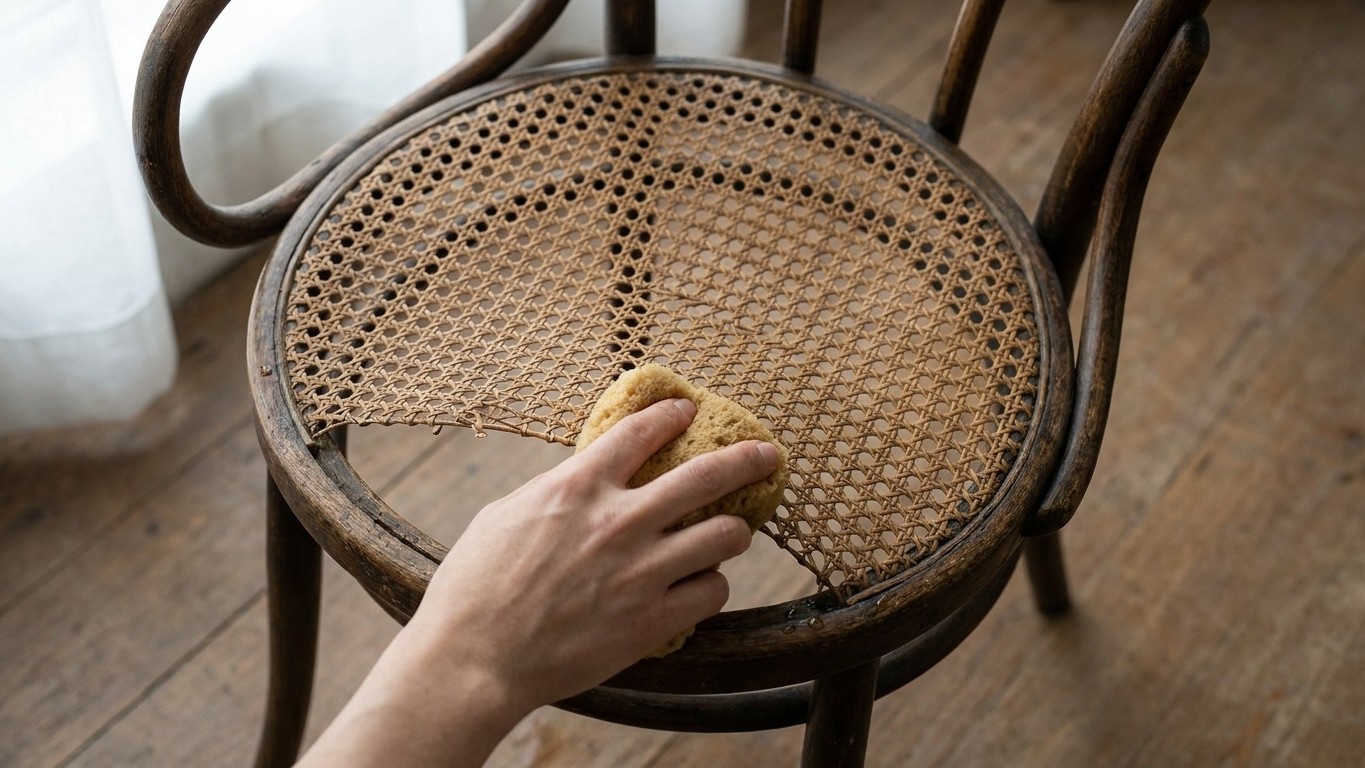
That sagging, uncomfortable dip in a cane seat isn’t caused by damage at all, it’s simply thirsty fibres crying out for moisture. Natural cane stretches with years of sitting, but it hasn’t snapped or worn out. It has just relaxed, the way an old jumper goes baggy at the elbows. Sponge it with hot water, let it dry away from direct sun, and by morning the whole seat can be drum-tight again. No tools, no upholsterer’s bill, no fuss.
I still remember the first time someone told me this trick, years ago at a car boot sale where I’d just bought a wobbly bentwood chair for next to nothing. I thought the seller was having me on. Wet the seat to fix it? Surely water is the enemy of anything woven from plant fibre. But cane is not wood, and it doesn’t behave the way you’d expect.
Key takeaways
- Cane doesn’t snap or wear out; it simply relaxes and sags under weight and time
- Hot water causes the fibres to swell, then shrink as they dry—pulling the entire weave taut again
- The drying must happen slowly in shade, never direct sun, or the result will be uneven and weak
Why hot water tightens what gravity has loosened
Cane is a natural material that swells when it takes on water and then absorbs water and then contracts as it dries, and this shrinking action pulls the weave tight again. Every strand running through those little drilled holes is behaving like a tiny muscle: soak it, and it plumps up and goes slack and pliable; let it dry out slowly, and it clenches back down to something close to its original size. That’s precisely the mechanism chair caners rely on when they weave a brand new seat, since the strands are threaded while still wet from soaking and only reach their final, characteristic tautness once they’ve dried out over a day or two.
This is also why professional restorers warn against ever pulling cane too tight while it’s still damp. If you wet a length of cane and stretch it drum-taut there and then, once it dries and shrinks further it can tighten so much it can actually break the chair at the holes drilled for the cane. The lesson for your sagging seat at home is a gentle one: work the water in, then simply leave it be. The fibres will do the tightening themselves, without any help from your hands.
Heat plays its own quiet part too. Warmth encourages the moisture to travel deeper into the strand and then evaporate more evenly as it dries, which is why the classic advice calls for a warm, damp cloth rather than a cold splash from the tap. Cane furniture sags in the first place partly because rattan and cane strands can start to sag over time, as a combination of weight and heat causes the material to expand and contract, reshaping it. Turning that same expansion and contraction to your advantage, deliberately and briefly, is really all this trick amounts to.
What actually happened while your chair dried in the shade
Overnight, invisibly, every strand you sponged began pulling itself back toward its original length. Restorers who do this professionally describe hearing the process happen: as the cane dries completely, you’ll actually hear it tighten, little creaks and pops as it dries. If your chair seemed to settle with a faint tick or two in the night, that wasn’t the frame protesting, that was the cane doing exactly what it was designed to do.
The shade Matters More Than people assume. Direct sun or a radiator would dry the surface too fast, leaving the outer fibres tight while the core underneath is still swollen and soft, which risks an uneven, lopsided tension across the seat rather than one uniform pull. A shaded spot with decent airflow lets the moisture leave gradually from every strand at roughly the same rate, which is why the standard guidance is to let the treated seat rest for a full day or two before anyone sits on it, since leaving the warm, wet material in place overnight allows the cane to fully saturate and swell, and as the moisture evaporates over the next 24 to 48 hours, the fibres shrink, pulling the mesh taut. Sit on it too soon, while it’s still damp and pliable, and you’ll simply stretch it straight back out again, undoing your good work in seconds.
Getting the timing and technique right
The whole treatment is refreshingly simple, but a few small details separate a lovely tight seat from a cracked frame or a seat that’s no better than before. Restorers generally recommend this approach:
- Work from underneath where possible, since applying a warm, damp cloth or sponge to the underside of the cane seat works well because the underside absorbs moisture more readily than the finished top surface
- Keep the cloth or sponge damp, not sopping, and avoid letting water pool on the wooden frame itself
- Leave the chair completely alone, unsat-upon, for at least two full days while it dries
There is a limit to how many times this old trick will keep working, and it’s worth knowing before you get too attached to your bargain chair. The tightening treatment is most effective when used regularly within the first five years of recaning and won’t work at all if there are several broken strands. Cane is elastic, but not infinitely so, and once a strand has actually snapped, no amount of water is going to knit it back together. In that case you’re looking at a proper recaning rather than a quick sponge down, though that’s a satisfying weekend project in its own right if you fancy learning a genuinely old-fashioned skill.
For a second-hand chair whose history you don’t know, I’d treat this as gentle first aid rather than a permanent cure. Do it once, see how the seat responds, and repeat it perhaps three or four times a year if the sagging creeps back, much as you’d tighten a loose drawer knob rather than replace the whole cabinet. And do resist the urge to help matters along with a hairdryer or a spot on the windowsill in full sun. The chair doesn’t need speed. It just needs the same patient, unhurried drying that shaped it in the first place, back when someone first wove those strands wet and let time do the rest.
Sources : livingetc.com | lumberjocks.com