
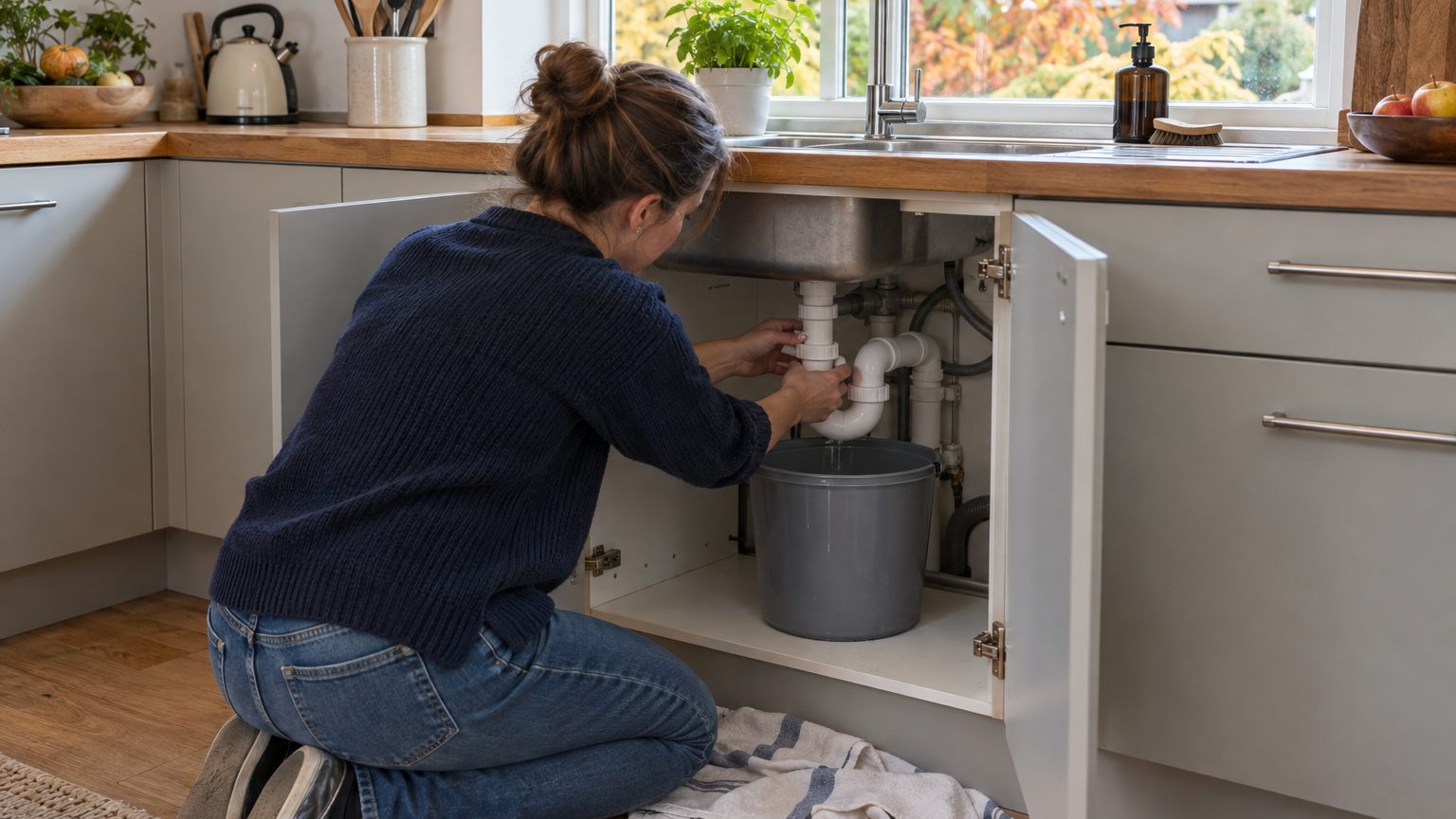
A sewage smell from the kitchen sink almost always comes from one of three places, and the order in which you check them saves you a great deal of time and money. Start with the U-bend (the trap) under the sink, then the hoses from your dishwasher or washing machine, then the air valve or vent that lets the pipework breathe. Most households find the culprit before they reach the third.
- Most kitchen sink sewage smells come from the U-bend trap, which collects grease and food sludge.
- Dishwasher and washing machine drain hoses without a high loop can siphon foul water back.
- A blocked or sticky air admittance valve lets the water seal break so gases rise into the room.
The trap: where most smells begin
The curved section of pipe beneath your sink is designed to hold a plug of water. That water forms a seal, stopping gases from the drain drifting up into the room.
If the smell is there every time you walk in, the seal is probably fine and the trap is simply dirty. Kitchen traps collect grease, coffee grounds, rice starch and tiny scraps of food, which rot into a sulphurous, egg-like pong. A trap that has not been cleaned in years can hold a surprising amount of grey sludge.
Cleaning it takes ten minutes.
Put a bucket under the trap, then unscrew the two large plastic collars by hand (they should turn anticlockwise without tools, though a rag over them gives a better grip). Tip the contents into the bucket, scrub the inside with an old bottle brush and hot water with a squirt of washing-up liquid, and check the rubber washers for cracks before you reassemble. Hand-tighten only. Over-tightening plastic collars is how people end up with a drip they did not have before.
If the sink is in a seldom-used kitchen, say a holiday cottage or a utility room, the water seal may have evaporated. Run the tap for thirty seconds and the smell often vanishes at once.
The appliance hoses: the sneaky second suspect
Dishwashers and washing machines usually drain into a spigot on the sink waste or a standpipe nearby. The hose that carries the dirty water away should rise into a high loop, well above the level of the trap, before dropping down to the connection.
Without that loop, dirty water can siphon back, or sit in a sagging hose and turn foul. Pull the cupboard contents out and have a look. Is the hose kinked, flattened against the back wall, or hanging in a low U-shape? Fixing it is often just a matter of securing the hose higher with a clip or a cable tie screwed to the cupboard wall.
The hose itself can also be the source. Old dishwasher drain hoses develop a slimy film inside, and food debris collects at the spigot connection where the hose meets the waste pipe. Disconnect the hose (with the appliance switched off and unplugged, and a towel ready for the dribble), look inside the end and clean it with a bottle brush.
A tip from my own kitchen: while you have the hose off, give the dishwasher filter a good rinse as well. It sits in the base of the drum and traps more rotting food than most people realise.
Worth a quick sniff test, too. Run the dishwasher empty on a hot cycle with a cup of white vinegar in the bottom, then check whether the smell worsens when the machine drains. If it does, the hose or the spigot is your answer.
The air valve: when the pipework cannot breathe
Drains need air to flow properly. When water rushes down a waste pipe without enough air behind it, it can pull the water out of the trap, leaving the seal broken and the smell free to rise.
Gurgling is the giveaway. If the sink makes a glugging noise as it empties, or you hear bubbling from another drain when the dishwasher runs, suspect poor ventilation. Many modern homes use an air admittance valve (sometimes called a Durgo valve, though not every one is that brand) fitted to the waste pipe, often hidden in a cupboard or in the loft. It lets air in while keeping gas out.
These valves are mechanical and wear out. A sticky or perished one will either let gas escape or refuse to open. If yours is accessible, unscrew it, rinse the rubber seal under the tap, check for dust and debris, and refit it. Replacement valves are inexpensive, though it is worth taking the old one to the shop so you buy one of the right diameter.
Older houses may have no valve at all. Instead the waste joins a vertical soil stack that vents through the roof, and a blocked vent, perhaps by a bird’s nest or leaves, produces the same symptoms. That is a job for a drainage professional with safe roof access, so do not climb up there yourself.
When to stop and call someone
Three situations call for a plumber rather than another weekend of trial and error. A smell that persists after the trap, hoses and valve are clean. Slow drainage in several fixtures at once. Damp patches or staining on walls or floors near the pipes.
Any of these can point to a cracked pipe, a blocked shared drain or a problem with the main sewer connection. In rented property, report it to your landlord before you start unscrewing things.
Small habits that keep the smell away
Prevention is cheaper than cure. Wipe greasy pans with kitchen paper before washing, and never pour cooking fat down the sink, because it cools and coats the pipe walls like candle wax. A kettle of hot water down the plughole once a week helps shift light build-up.
Bicarbonate of soda followed by white vinegar is the traditional remedy, and it does freshen a drain. Be realistic, though, because the fizz will not dissolve a solid lump of grease or fix a dry trap. Skip strong chemical drain cleaners if you can; they are harsh on old pipes and rubber seals, and mixing products is dangerous. Never combine bleach with other cleaners.
One last point that catches people out: a smell that appears only when the plug is out and the tap is running may be coming from the overflow slot or the underside of the plug itself, where grime hides. A bottle brush and hot soapy water will sort it.