
A burst washing machine hose can release around 400 litres of water per hour onto your kitchen floor. That figure doesn’t sink in until you’re standing in two inches of water at half past ten on a Tuesday evening, watching it creep under the skirting boards. That was my situation three winters ago, and the first thing my neighbour asked when he came to help was: “Have you turned the stopcock off?” I had absolutely no idea where it was, let alone whether it would actually turn.
The stopcock, for anyone equally uninitiated, is the master valve that controls all the water coming into your home from the mains supply. Turn it off, and water stops flowing to every tap, every cistern, every appliance in the house. It’s the single most important thing you can do in a water emergency, and a striking number of households have never once touched theirs. According to water industry surveys, a significant proportion of UK homeowners cannot locate their stopcock, let alone confirm it’s in working order. Mine was under the kitchen sink, buried behind a bottle of bleach and a collection of carrier bags I’d been meaning to sort out for years.
Key takeaways
- A seized stopcock from years of neglect becomes a dangerous liability in a water emergency
- The water industry reveals most UK homeowners can’t locate their stopcock or confirm it works
- A two-minute twice-yearly habit prevents catastrophic damage worth thousands in claims
Why a stiff stopcock is actually dangerous
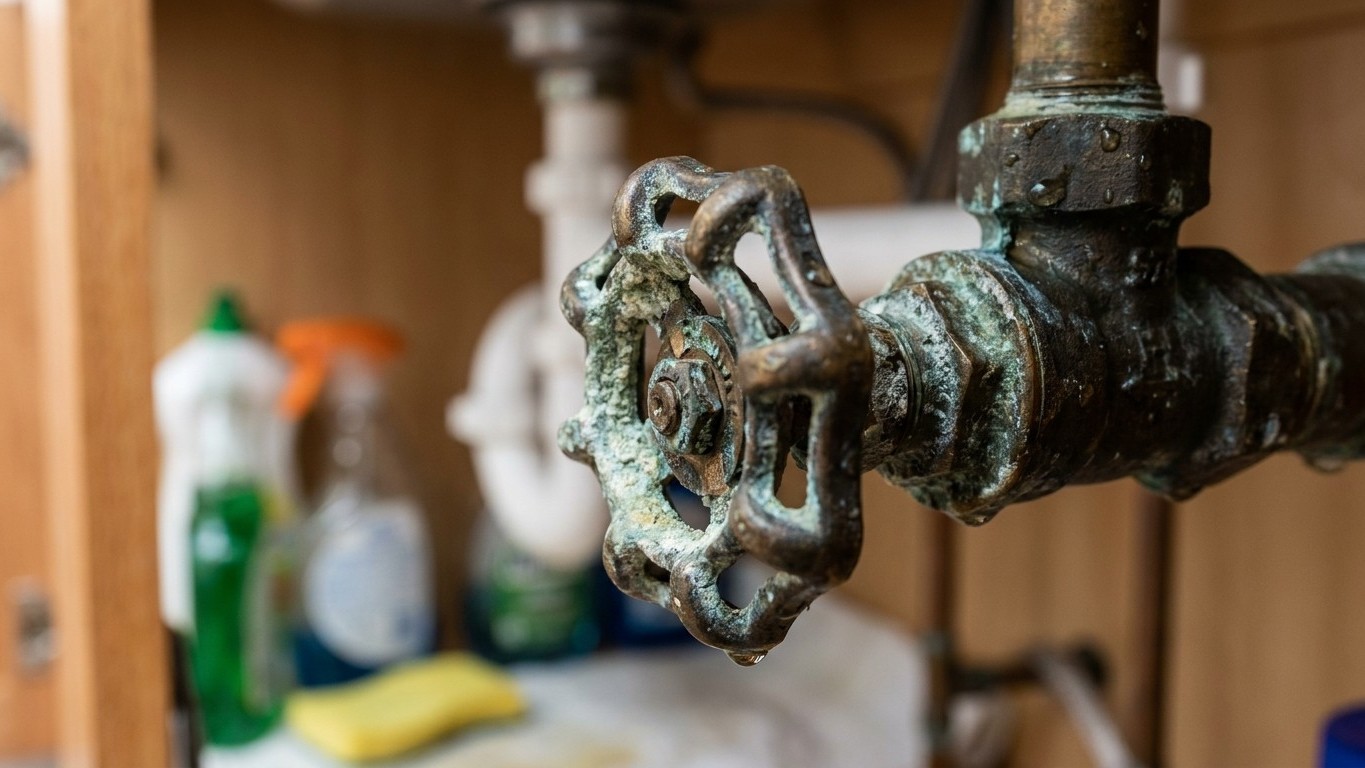
Here’s what nobody tells you when you move into a property: stopcocks seize up. The valve contains a washer and a spindle, and when left untouched for years, limescale and corrosion gradually bind them together. The handle, usually a brass crosshead or a flat-head slot, becomes almost impossible to turn by hand. In my case, twelve years of complete neglect had turned mine into something resembling a museum exhibit. My neighbour fetched an adjustable spanner and even then it took real effort to shift it. Meanwhile, the water continued its tour of my ground floor.
A seized stopcock isn’t just inconvenient in a crisis. If you force it too hard without care, you risk snapping the spindle entirely, which Transforms a manageable emergency into a job for an emergency plumber at midnight rates. The correct approach, if yours is stiff, is to apply gentle but firm pressure with a spanner and work it back and forth in small increments rather than wrenching it in one direction. A small amount of penetrating oil around the spindle, left for twenty minutes before trying again, can make a considerable difference.
The two-minute habit that could save your home
Plumbers and loss adjusters who deal with flood claims regularly recommend the same simple practice: turn your stopcock off and back on again once or twice a year. That’s genuinely all it takes. The movement prevents the internal components from seizing, keeps the washer flexible, and confirms that you, as the householder, know exactly where the thing is and how it behaves. Twice a year. The same day you check your smoke alarm batteries, perhaps, or whenever the clocks change.
Finding yours if you don’t know where it lives is the first step. In most UK homes built after the 1970s, the internal stopcock sits under the kitchen sink, where the mains pipe enters the property. In older houses, it can be elsewhere entirely: under the stairs, in a ground-floor bathroom, or sometimes in a cupboard that’s been boxed in by a well-meaning previous owner. If you genuinely cannot find it, your local water company can send someone to show you, and there’s usually a free service for this. The external stopcock, the one set into the pavement in a small chamber outside your front boundary, belongs to the water company and requires a special key (a long, slotted tool sometimes called a stopcock key or “T-bar key”) to operate, but it’s worth knowing where that is too.
What to do when a hose actually bursts
Washing machine hoses are made of reinforced rubber, and they don’t last forever. The industry guidance suggests replacing them every five to seven years as routine maintenance, yet most people only discover theirs has failed when it lets go spectacularly. The hot and cold inlet hoses, the flexible grey or black pipes connecting the machine to your wall valves, are under constant mains pressure whenever the machine is connected. A tiny crack in the rubber, a loose jubilee clip, a slightly corroded fitting: any of these can become a gush rather than a drip without much warning.
When it happens, the order of actions matters. Turn off the mains stopcock first. Then switch the washing machine off at the wall. Then start moving things out of the water if it’s safe to do so (electrics and standing water are not friends, so if there’s any doubt about whether water has reached a socket or appliance, don’t wade in). Once the stopcock is closed and the machine is isolated, the immediate crisis is contained and you can think clearly about what comes next.
The cost of doing nothing
Home insurance claims for escape of water, which is the official term for internal flooding from pipes and appliances, are among the most expensive and disruptive the industry handles. Average claims frequently run into thousands of pounds once you account for flooring, plasterwork, kitchen units and any possessions damaged. The drying-out process alone, using professional dehumidifiers and air movers, can take two to three weeks and leaves a home feeling invaded and unsettled for far longer than that.
Braided stainless steel hoses have largely replaced plain rubber ones in modern washing machines, and they’re substantially more resistant to bursting under pressure. If your current hoses are rubber and more than five years old, replacing them costs very little from any plumbing merchant or large DIY retailer. The fittings are standard across almost all machines. It’s the kind of small job that takes twenty minutes and gets put off indefinitely because nothing has gone wrong yet. That’s exactly the logic that kept me from sorting mine, right up until something did.