
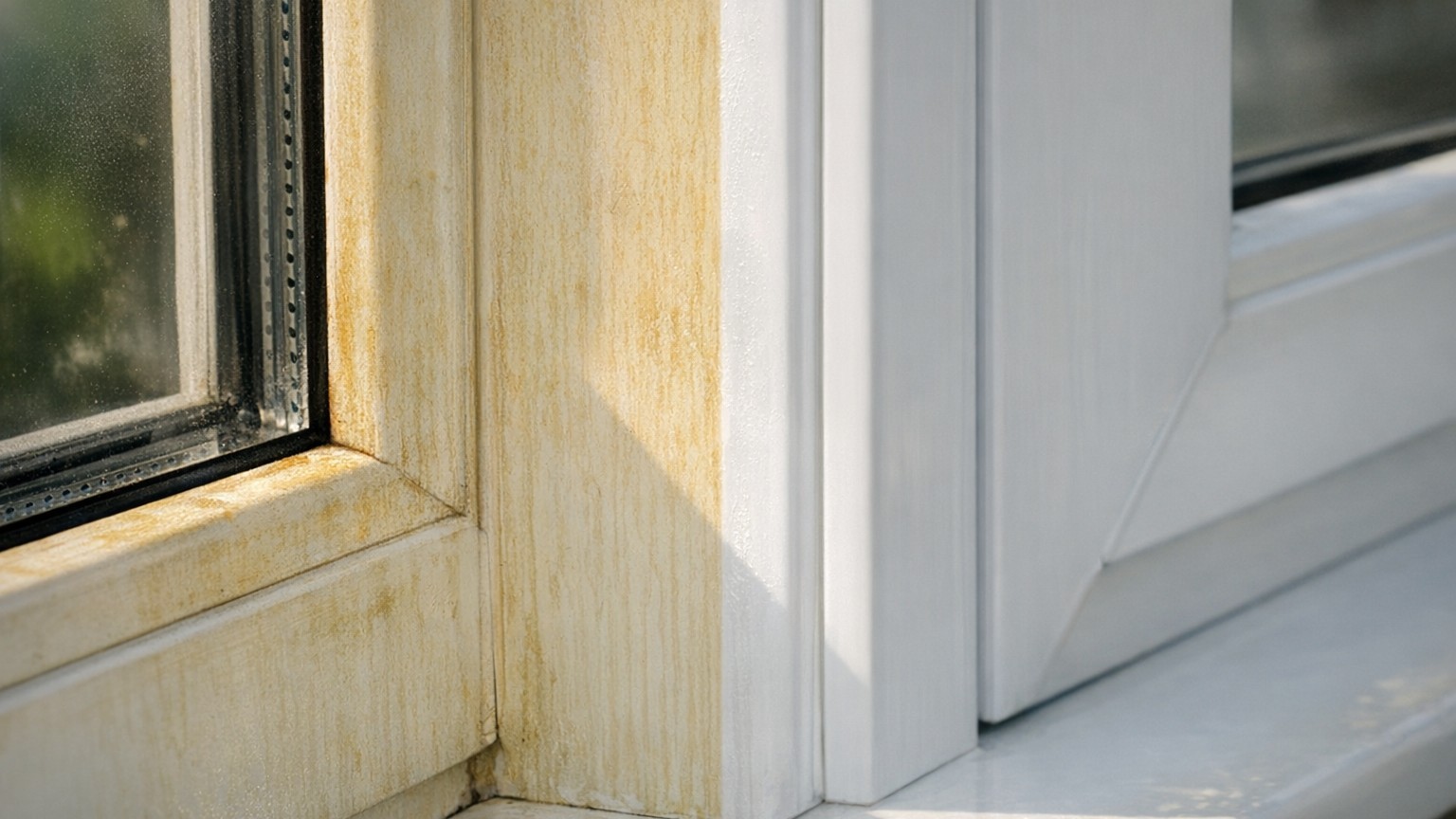
My south-facing uPVC window frames had been creeping from brilliant white to a rather depressing shade of custard for the better part of a decade. I tried everything: soap, a well-known cream cleaner, even a brief and deeply regrettable flirtation with diluted bleach. Nothing worked properly, and some things made matters distinctly worse. It was only when a joiner friend popped round and spotted what I was doing that the penny finally dropped. The problem wasn’t my effort, it was my understanding of what had actually happened to those frames.
Key takeaways
- Why conventional cleaning fails: it’s chemical oxidation, not surface dirt
- The surprising product a professional joiner recommended that restored years of damage
- When restoration isn’t enough and what your only realistic options become
Why uPVC Frames Turn Yellow in the First Place
The main reason uPVC windows turn yellow is oxidation. When uPVC frames are exposed to sunlight and UV radiation for years, the outer layer begins to break down, and this chemical reaction causes discoloration and dullness. Think of it less like getting dirty and more like the frame ageing at a chemical level, which is why a quick wipe with washing-up liquid never stood a chance.
UV radiation and oxygen degrade the outermost PVC layer, leading to colour change and a powdery “chalk” on the surface. UV degradation breaks polymer chains in PVC, and over years this alters how light reflects from the surface, shifting white to yellow or dull. You might notice that your windows aren’t so yellow in places where the sunlight is restricted, your south-facing windows, for example, might be most affected. That was certainly my experience: the north-facing bedroom windows looked almost as good as new, while the lounge frames faced front, full sun, all day long.
Airborne pollutants, insect sprays, fertilisers, and harsh cleaners also accelerate discolouration. If uPVC is installed in properties where smoking has taken place over the years, especially in enclosed spaces such as porches or conservatories, tar and nicotine can settle on surfaces and cause discolouration that can be quite stubborn and may require more than just a surface clean. And here is the uncomfortable truth that nobody mentions: lower-grade uPVC frames often lack proper UV stabilisers in the material, and as a result they oxidise more quickly and may turn yellow within a few years compared to high-quality, UV-resistant uPVC windows.
The Products That Work (and the Ones That Really Don’t)
Before getting to what actually helps, let me save you from a very costly mistake. Bleach will react with the PVC and turn it a disastrous shade of brown. If you use it, even in diluted form, you can expect a total catastrophe that can only be fixed by replacing the entire window. Sandpaper is equally tempting and equally ruinous: the topmost, glossy surface is created as the plastic is manufactured, the interior of the material is quite different. It’s dull and won’t repel water or stains in the same way. If you sand your uPVC window, you will ruin it.
For surface yellowing that hasn’t yet penetrated deeply into the plastic, a tiered approach works well. Start with the mildest option: white vinegar’s mild acidity loosens mineral films and grime, improving brightness without damaging PVC. A mix of roughly 70% warm water and 30% distilled white vinegar in a spray bottle is a perfectly sensible first attempt. Spray it on, leave it for 10 minutes, then wipe off with a soft microfibre cloth. If that shifts some of the dullness but not the deep yellowing, move on to a baking-soda paste. Baking soda provides controlled mechanical action to remove oxidised film safely when used with a soft applicator.
The product my joiner friend actually recommended, and the one that genuinely surprised me with its results, was a purpose-formulated uPVC cream restorer. These are solvent-free cleaning solutions developed to revive and protect uPVC and plastic surfaces, removing ingrained dirt, light staining, grease, and surface discolouration while restoring the original shine to white or foiled frames. Designed for both professional tradespeople and DIY users, non-abrasive versions are ideal for maintaining a fresh, like-new appearance across a wide range of applications. The technique is what matters: apply the product with the recommended pad or cloth, work in small sections, avoid getting product onto the glass or rubber seals, and buff off per instructions, assessing and applying a second pass if required.
Always, always spot-test on a hidden area first. Spot-test an inconspicuous area and wait for dry-down to judge the sheen and colour before committing to the whole frame. This is the step most of us skip, and the one we regret when it goes wrong.
When Cleaning Simply Won’t Be Enough
The UV light breaks down the composition of the uPVC, triggering a chemical reaction which yellows the white plastic at the surface, but not beneath. This yellowing cannot be removed with regular cleaning, because a chemical reaction has taken place in the plastic itself. If you’ve had your frames for more than ten or fifteen years and the yellow is deep and uniform rather than patchy, no cream restorer in the world will restore them to brilliant white. My joiner friend was honest about this, which I appreciated.
In these cases, the two realistic options are professional spray painting or full replacement. UPVC spray painting is an affordable, low-maintenance method of refreshing yellowed frames. The process involves thorough cleaning, light sanding to create adhesion, and applying specialised uPVC paint designed to withstand outdoor conditions. Professional spray painting gives windows and doors a fresh, uniform finish while providing additional UV protection to prevent future yellowing, and the paint typically lasts 10 to 15 years with proper preparation and application, making it a cost-effective alternative to full replacement.
Ammonia-based glass cleaners are harsh on seals and can lead to brittleness over time, bleach and methylated spirits can react with the material and cause discolouration, and high-pressure washers may force water into seals or joints, leading to leaks. These are mistakes professionals see every week. Stick to products actually designed for uPVC and you’ll avoid the grief.
Keeping Them White From Here On
UPVC specialists commonly advise cleaning exterior profiles at least every three months to keep pollutants from embedding permanently. That’s a job that takes perhaps twenty minutes per window with warm soapy water and a soft cloth, far less effort than trying to reverse five years of neglect in a single afternoon. After drying, a small amount of specialist uPVC restorer or cream (not solvent-based) can enhance the gloss and protect against dirt build-up.
A uPVC protection spray to protect the surface from UV rays and contaminants is worth considering, and most of these sprays come with a water-resistant layer. Think of it as a light sun cream for your window frames, not glamorous, but genuinely useful. UV-blocking window films, curtains, or shades on vulnerable openings can protect profiles from radiation and reduce long-term yellowing. A discreet film on the glass can dramatically cut the UV energy hitting the frame while still letting light flood your room.
One detail worth knowing if you’re ever replacing your frames: after many years, uPVC will naturally begin to photodegrade, and older uPVC has fewer stabilisers, compounds that boost strength, so it will also yellow with age. Modern uPVC formulations are significantly better at resisting this. If replacement ever becomes necessary, it’s worth asking manufacturers specifically about UV stabiliser content rather than simply accepting whatever is cheapest on offer that week.
Sources : sunluxroofwindows.co.uk | tradewindowsonline.com