
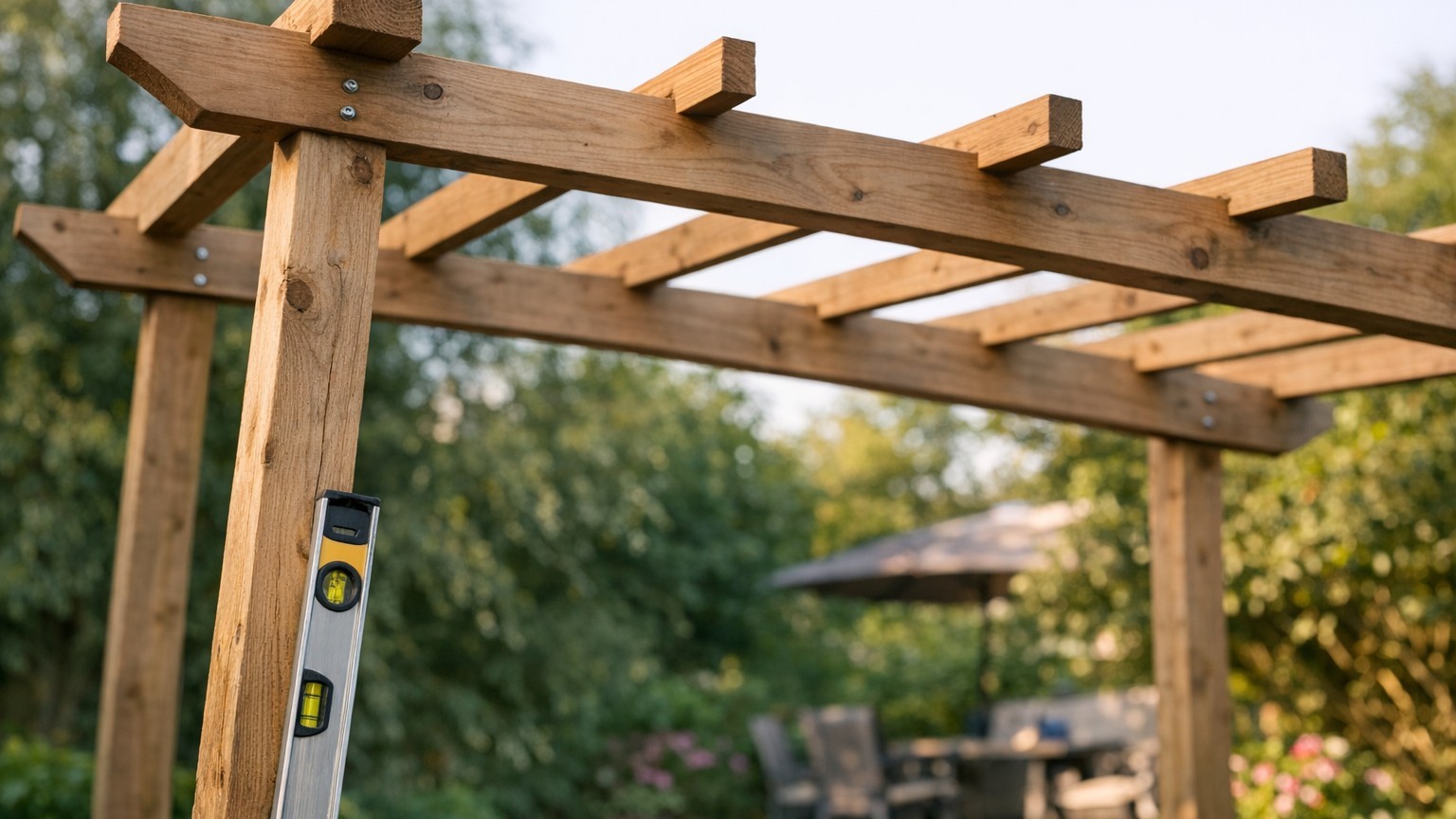
The pergola kit box promised a weekend project. You followed the instructions faithfully, step by step, tightening every bolt in order. Then you stepped back, looked at the finished structure sitting in your garden, and your heart sank a little. Something was off. Not dramatically wrong, perhaps, but wrong enough. One post leaned almost imperceptibly. A rafter sat slightly higher on one side. The whole frame had a subtle twist that caught the afternoon light in all the wrong ways.
You are not alone. The most common DIY pergola assembly mistakes aren’t about complicated carpentry, they’re about planning, layout, and following the sequence in the kit instructions. The depressing truth is that most people who go astray do so before a single bolt is tightened. The errors happen on the ground, quite literally.
Key takeaways
- A quarter-inch mistake at ground level becomes inches of error at the top—and most errors happen before the first bolt is tightened
- The ground beneath your pergola matters far more than the structure above it, yet it’s where nearly all DIYers cut corners
- One specific measurement trap catches even careful builders and isn’t obvious until the entire frame is already assembled
The Ground Never Lies (But It Does Mislead You)
The most costly DIY pergola foundation mistakes happen before the first post goes in: poor layout, uneven grade, and undersized or inconsistent footings. Your eye is a terrible level. What looks flat to you, standing there with a cup of tea, may actually slope by an inch or two across a twelve-foot span. That sounds trivial. It is not.
Even a modest slope of 1 to 2 inches across a 12-foot span can leave posts out of plumb, racking the frame and stressing connections over time. You’ll also fight misaligned rafters, gaps at privacy walls, and uneven shade slats. The structure above gets all the attention, of course. Most pergola failures aren’t pergola failures, they’re ground failures. The structure above gets the photos. The dirt below decides whether it’s still standing in twenty years.
One very specific trap catches out a surprising number of careful builders: measuring to the outside of posts when the plan calls for centre-to-centre spacing. Inaccurate reference points drive many errors, builders often measure to the outside of posts while the plan calls for centre-to-centre spacing. The resulting footprint looks almost right. The assembled pergola tells you exactly where you went wrong.
If you are pouring concrete footings, patience matters more than anything else. Rushing anchors into green concrete or skipping cure time results in weak hold-downs. The instructions will give you a waiting period. That waiting period is not a suggestion.
The Post Problem: A Quarter-Inch That Becomes Three Inches
A post that is just 1/4 inch off plumb at the base will be 1 inch or more off at the top. That compounds when you try to mount beams and rafters. This is the cruel geometry of pergola building. Every small error doubles, then triples, as you build upward. Letting posts or beams go out of square or out of level is one of the most costly DIY pergola assembly mistakes, even small errors can compound, leading to racking, gaps where beams meet brackets, uneven rafter spacing, and a pergola that sways in the wind.
The fix is almost embarrassingly simple: check plumb constantly, from two different faces. Check plumb on every post, on two axes, at every stage. Check it when you first stand the post. Check it again after tightening the base bolts. Check it a third time after mounting beams. If anything shifted, loosen and adjust before moving forward. A spirit level costs very little. Using it obsessively costs nothing.
There is also the question of the 3-4-5 rule, which carpenters have used since before any of us were born. The 3-4-5 triangle is a field-friendly way to guarantee a 90-degree corner using the Pythagorean theorem. Measure three equal units along one layout line and four units along the intersecting line; if the diagonal between those points is five units, the angle is square. String lines, pegs, and this simple calculation will tell you more about your layout than any amount of eyeballing.
What the Instructions Don’t Shout Loudly Enough
The instruction manual that came with your kit is not optional reading. It’s tailored to your exact kit configuration, free-standing, wall-mounted, or corner; 4×4 or 6×6 brackets; roof style; and any privacy walls — so even small deviations can create big alignment and stability issues. Read it end to end the evening before you start, not while you’re kneeling on cold patio slabs with a drill in your hand.
Hardware sorting is another step most people skip. Mixing 4×4 and 6×6 hardware, or grabbing fasteners from the wrong roof-style pack, is a common source of rework. Lay everything out, group by assembly stage, and confirm you have each component before you begin. Too many DIY builders make the mistake of “winging it.” Missing parts lead to structural instability. Misaligned holes cause stress on joints. Time doubles because pieces need reassembly.
Misplaced rafters or roof elements are among the most costly DIY pergola assembly mistakes because they compound later steps, causing uneven shade, racking under wind, or water running the wrong way on solid roof options. The direction your rafters run matters more than it looks. Rafters typically run perpendicular to the primary beams; reversing that can throw off spacing, interfere with privacy walls, and leave brackets misaligned. This is the mistake that photographs well on the day and makes you wince for years afterwards.
Sun and shade planning is the other detail that trips people up well before assembly. Sunlight can hit the wrong angle, the shade doesn’t fall where you want it. Ideally, you’ll want a location that enhances your outdoor living experience while also considering the sun’s path and your backyard’s wind patterns. Walk the spot at different times of day before you commit to a position. June sun in Britain is nothing like October sun, and a structure placed for summer afternoon shade may leave you squinting through breakfast by September.
After the Build: The Maintenance Step Everyone Forgets
Once you step back and decide the pergola looks, broadly, as it should, the temptation is to declare victory and pour a glass of something cold. Reasonable. But slightly out-of-plumb posts make roof rafters sit unevenly, privacy walls fight your layout, and hardware starts to loosen as the structure twists under use. In wet climates or on sloped yards, an unplanned base can also trap water against wood, accelerating decay even if you’ve used treated lumber.
Some pergola kits aren’t designed to withstand high winds or heavy rain and snow. Check your product information for steps for dealing with inclement weather, for example, you may need to keep snow from accumulating on the pergola and take down sidewalls and the canopy to avoid damage. British winters, with their combination of wet and occasional sharp frost, are particularly unkind to a structure that was assembled with the best of intentions but no thought for what comes after August.
One final thing worth knowing: by far the worst material choice for a pergola is untreated wood, especially softwoods like pine that are prone to rot, warping, and insect damage. If your kit used timber, check whether it came pre-treated. If it didn’t, treat it yourself before the first autumn rain arrives. The usual rule of thumb for pergola posts is to bury them at least one-third of their length, and deeper if the frost line is lower than this. A pergola that stands solidly for a decade is one built with an honest respect for what the ground beneath it, and the weather above, will do over time.
Sources : homesandgardens.com | zenpergolas.com