
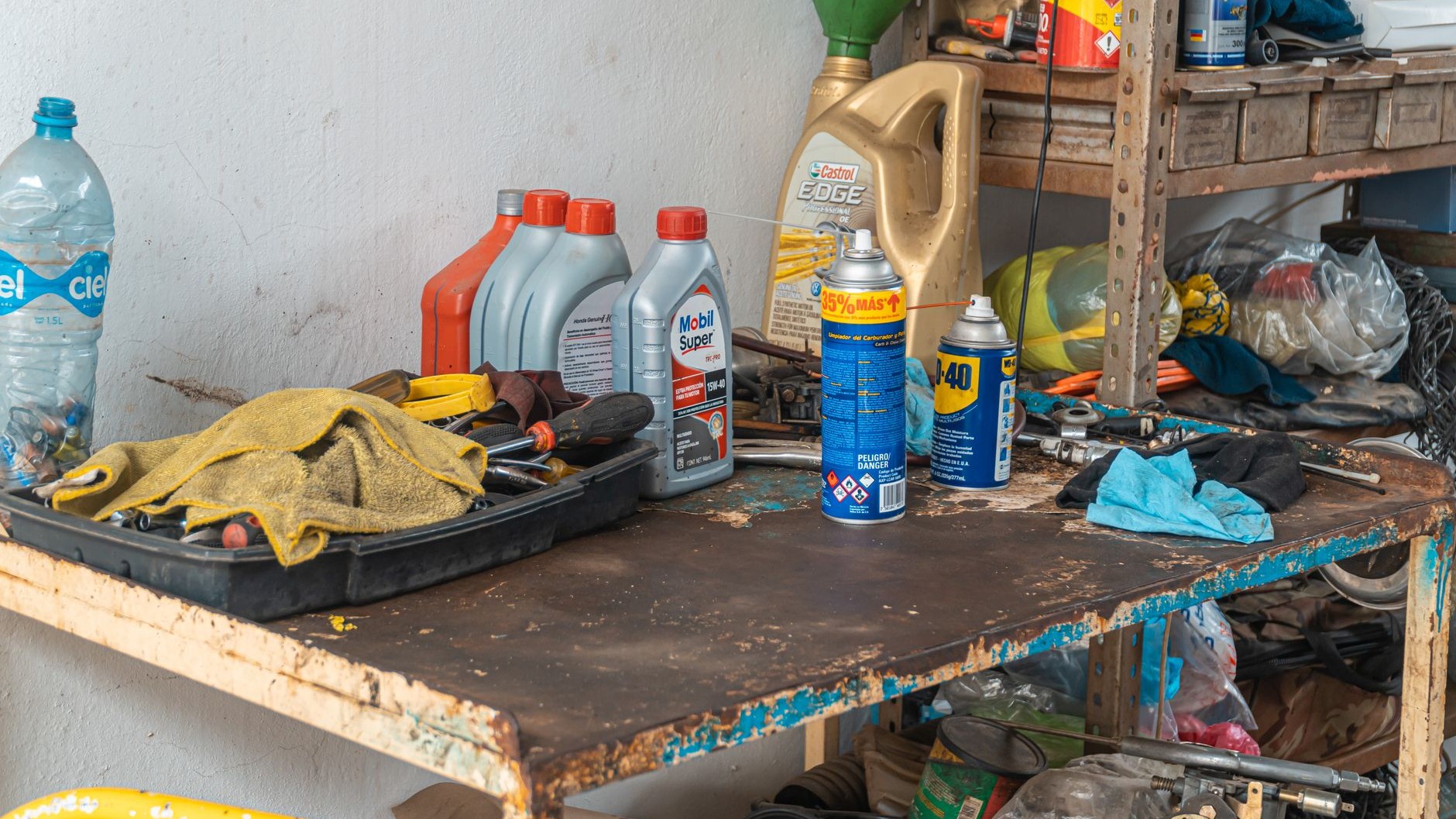
A locksmith friend once watched me reach for the blue and yellow can under my sink, sighed, and asked how many times a year I was doing this. Twice a month, easily, on the back door hinge alone. That’s when he told me something that made me put the can down for good: WD-40 doesn’t lubricate your hinges so much as it cleans them, and every spray was washing away whatever grease was left, leaving bare metal to grind against bare metal within days.
WD-40 stands for “Water Displacement, 40th formula”, developed in the 1950s primarily to prevent corrosion on aerospace parts. Its main job is displacing moisture and dissolving grime, dust and old, gummed-up lubricant. That’s brilliant if you’re loosening a rusted bolt or cleaning gunk off a bicycle chain before proper oiling. It’s a solvent first, a lubricant a distant second. The thin film it leaves behind evaporates surprisingly fast, especially outdoors or on a door that gets opened dozens of times a day, and once that film is gone, you’re left with less protection than before you started, because the original grease has been stripped away along with the dirt.
That explains the pattern so many of us have lived through without questioning it: spray the hinge, enjoy silence for a week or two, then the squeak returns, often sounding worse than before. It’s not your imagination and it’s not a faulty hinge. You’ve been degreasing metal joints and calling it maintenance.
Key takeaways
- WD-40 was designed to displace moisture and clean, not lubricate—and it was washing away the protective grease your hinges needed
- A locksmith showed the author’s hinge pin covered in metal dust instead of grease, revealing years of damage from repeated solvent use
- The real fix is embarrassingly simple and costs almost nothing—but it requires a different approach entirely
What was actually happening inside my hinges
My locksmith friend unscrewed the offending hinge pin and showed me the barrel underneath. Years of WD-40 had left almost nothing inside it, just fine metal dust where the pin had been rubbing directly against the knuckle of the hinge with no cushioning at all. That friction is what creates the squeak in the first place, tiny high-frequency vibrations as two dry metal surfaces catch and release against each other thousands of times. Each spray of solvent had been washing that metal dust out along with any residual oil, so the pin was essentially wearing itself down a little more each time, rather than being protected.
He explained that repeated solvent use can also flush out whatever manufacturer grease was originally packed into the hinge at the factory, something you only get once. After that, you’re relying entirely on whatever you apply yourself. If what you’re applying evaporates within days, you’re leaving that hinge unprotected far more often than protected. It’s a bit like washing your hands with soap and never moisturising afterwards: clean, yes, but increasingly dry and prone to cracking.
What actually stops a hinge squeaking for months, not days
The fix is almost embarrassingly simple, and it costs very little. A proper lubricating oil, the kind sold specifically for household hinges, locks and mechanisms, sits and clings rather than evaporating. Plain white petroleum jelly works well too, and most kitchens already have a tub of it or something similar tucked in a cupboard. So does a light machine oil of the type used for sewing machines or clippers, sold cheaply in most hardware shops.
The method matters as much as the product. Wipe the hinge pin and barrel clean first, ideally removing the pin entirely if it lifts out, which most standard door hinges allow. Apply a small amount of oil directly onto the pin, working it around fully, then work the door back and forth a dozen times so the lubricant distributes evenly through the barrel rather than sitting on the surface. A little kitchen roll wiped over afterwards catches any excess before it drips onto your paintwork or floor.
For hinges that can’t be removed, a few drops applied at the top of the barrel and allowed to work downward with gravity does a reasonable job, though it’s less thorough than a full pin removal and clean.
Silicone-based lubricant sprays are another option worth knowing about, and they behave rather differently from WD-40. Silicone forms a longer-lasting film that resists washing away and doesn’t attract dust the way oil sometimes can, which makes it a sensible choice for outdoor hinges, gates, and anything exposed to rain. It costs a bit more than a basic oil but for a squeaky garden gate that gets soaked every other week, it earns its keep.
Where WD-40 still genuinely earns its place
None of this means the can should be thrown out. It remains genuinely useful for what it was designed for: loosening a seized or rusted screw, displacing water from a damp lock after a downpour, or shifting grime off tools before you oil them properly. Treat it as step one of a two-step job rather than the whole job. Spray to clean and loosen, wipe away the excess, then follow with an actual lubricant for anything that needs to keep moving smoothly and quietly over time, hinges included.
I still keep a can under the sink. I just don’t reach for it on hinges anymore, and the back door hasn’t squeaked in months, not weeks. The pin gets a proper coating of petroleum jelly perhaps twice a year now, not twice a month, which says something about how much unnecessary spraying I’d been doing for years without ever solving the actual problem. Worth checking your own hinge pins next time one starts complaining: if there’s fine grey dust on the pin when you pull it out, that’s metal wearing away, not dirt, and it’s a clear sign the joint has been running dry for longer than you’d think.