
Blocking a wasps’ entry hole while the nest behind it is still very much alive ranks among the most spectacularly wrong “fixes” a homeowner can attempt, and pest controllers up and down the country hear the same panicked phone call every summer: filler went into the gap under the roof tiles, everything went quiet for a night or two, and then wasps started dropping out of a hole in the bedroom ceiling. If that’s the situation you’ve found yourself in, you haven’t done anything foolish exactly, you’ve just made the mistake almost everyone makes the first time. Understanding why it happens is the only way to stop it happening again.
Key takeaways
- What happens when you plug a wasp hole while the colony is still alive and thriving inside
- The surprising way wasps can breach your bedroom ceiling without chewing through anything
- The golden rule pest controllers repeat: why treatment order determines success or disaster
Why sealing an active hole almost always backfires
A wasp colony behind a roof tile or in a loft void isn’t a static thing sitting quietly in one spot. It’s thousands of workers coming and going constantly, and when their usual route out is suddenly blocked with expanding foam or caulk, they don’t simply give up. Many people’s first instinct is to plug the hole where wasps enter the wall, but if you trap live wasps inside, they will look for or create another way out, often into your house. Wasps have surprisingly strong jaws for chewing wood pulp to build their papery nests, and that same equipment makes short work of thin plasterboard. Wasps, especially yellowjackets, can chew through drywall or plaster if desperate for an exit, using strong mandibles built for chewing wood pulp.
This isn’t a rare fluke either. The biggest mistake homeowners make is plugging the entry hole before the colony is dead, because when wasps can’t get out the way they came in, they chew through the drywall and into the living space, sometimes flooding bedrooms and kitchens with hundreds of wasps at once after the hole was sealed too soon. Several UK pest control firms report exactly the same pattern from lofts and roof voids specifically. You should not block the hole, because blocking the entrance can force wasps further into the structure or cause them to find another route into the property.
How a loft nest actually breaks into a bedroom
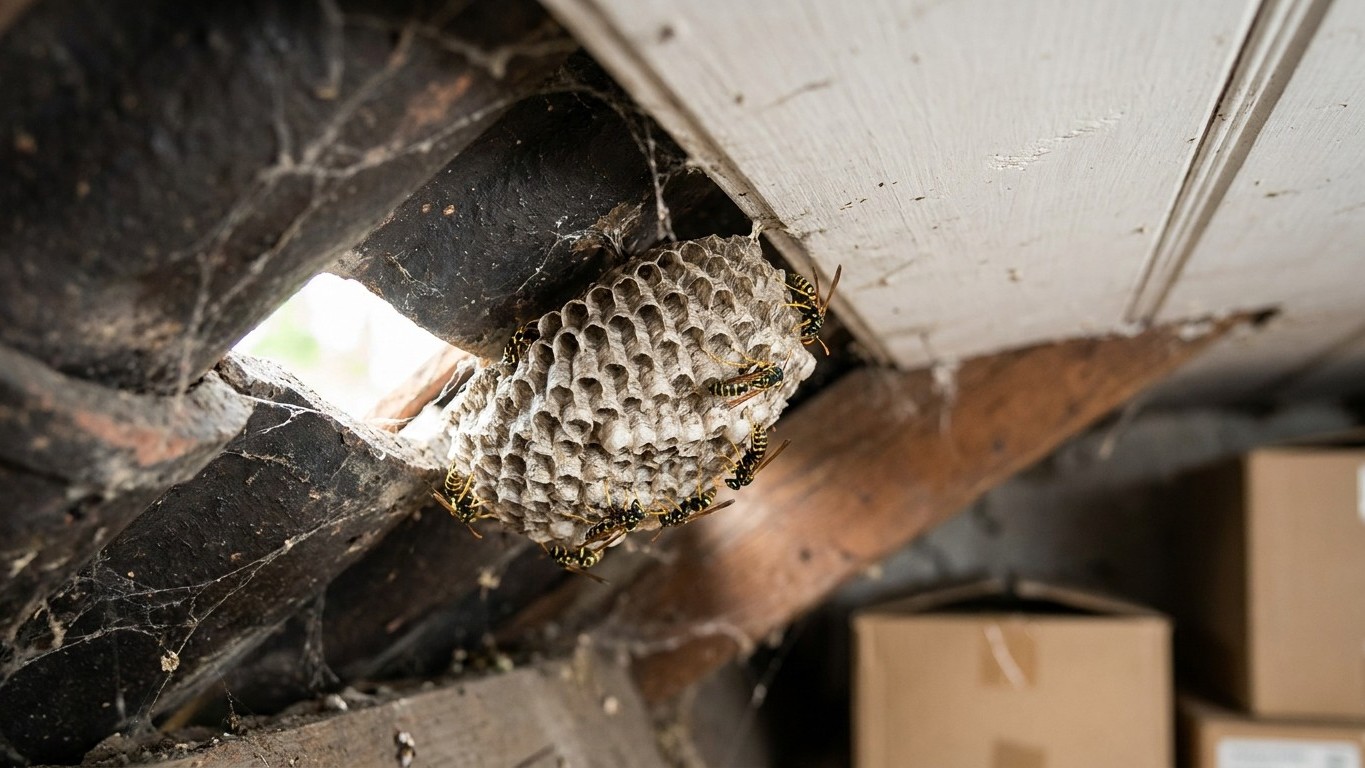
Here’s the part that genuinely surprised me when I first read about it: sometimes the wasps don’t even need to chew their own way through. Nature does some of the work for them. The nest sits on top of the ceiling in the loft, and the liquid the nest produces has, over time, rotted the plasterboard, which then gives way, leaving a hole directly into the nest out of which tumble hundreds of wasps. That’s a slow, quiet process happening for weeks before anyone notices, which is why the timing of these calls follows a pattern. Wasps coming through ceilings is a common problem that usually occurs later in the wasp season, often in late August, September and October, with most cases involving wasps going from the ceiling into a bedroom.
Fortunately, ceilings tend to give a warning before they give way completely. Staining will occur some weeks before the nest actually breaks through the ceiling. A brownish patch or damp-looking mark spreading across an upstairs ceiling, especially in a room directly under the loft, is worth investigating long before you ever see a wasp indoors. Sound is another giveaway. In most cases the occupier is aware they have a wasp nest in the loft due to the booing and fringe of wasps and the noise, because on warm nights wasps fan the nest to keep it cool and the sound of thousands of wasps fanning the nest makes some noise. If you’ve heard something like a faint, persistent hum from the loft on a still summer evening, that’s not your water tank.
What to do instead, step by step
The golden rule, repeated by every pest control source I checked, is treat first, seal second, never the other way round. Do not block roofline gaps while the nest is active, because wasps may find another route into the property. For a nest tucked under tiles or behind a soffit, professionals typically don’t need to remove the whole structure. If the nest hides behind the fascia, under tiles, or inside a void, treatment may focus on the outdoor entry point, with the technician applying insecticidal dust into the route used by the wasps. The dust has a clever trick to it: it’s more effective than sprays for nests inside gaps or hard-to-reach places, because dust can penetrate deep into the nest and be carried by the wasps into their tunnels themselves. Within a day or two the whole colony, including the queen, is dealt with from the inside out.
Patience matters just as much as the treatment itself. Wasps can remain inside for days after treatment, so it’s important to watch for any activity around the entry point, and you should wait at least a few days or even weeks after noticing no wasp activity before sealing the hole. Only once that flight path has been dead quiet for a good stretch should caulk, expanding foam or a dab of mortar go anywhere near the gap. Spring is actually the best time to get ahead of the whole problem rather than firefighting it in August. Checking lofts, garages, sheds and under eaves in spring is worthwhile because that is when nests start small and are easier to spot, and queens emerge in spring and start new colonies in sheltered locations such as roof spaces and cavities, with nests growing rapidly through summer.
One detail worth tucking away for next spring: a nest the size of a satsuma in April can become a football-sized colony of several thousand workers by late summer, so the roof tile gap that looks harmless enough to ignore in May is exactly the one that’s worth a proper look with a torch, from a safe distance, before the warm weather really gets going.
Sources : bcpestcontrol.com | rocklandbeeremoval.com