
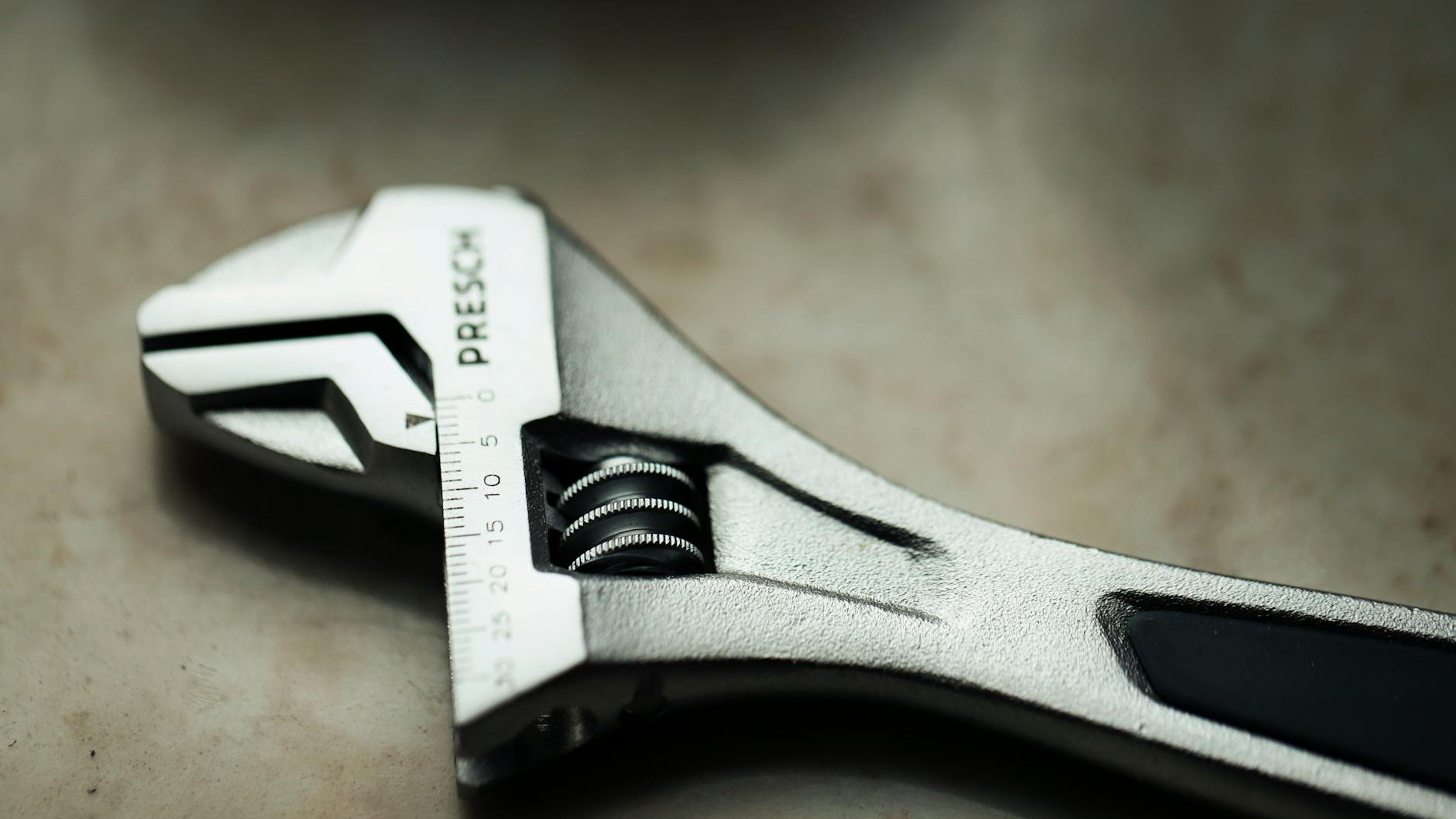
Brass fittings are genuinely forgiving, up to a point. That soft golden metal tolerates a fair bit of mishandling before it gives up. But apply an adjustable wrench incorrectly, even once, and the flat faces of the fitting can be crushed, rounded, or split in ways that no amount of PTFE tape, thread sealant, or determination will fix. The fitting must come out. And that, especially on older pipework, is rarely a simple job.
Key takeaways
- One careless turn with the wrong wrench can crush brass flats beyond any repair—why does this metal fail so easily?
- The adjustment mechanism in your wrench might already be creating micro-movements that damage fittings before you even know it
- There’s a forgotten plumbing rule that prevents 90% of brass fitting destruction, and almost nobody knows it
Why Brass Behaves Differently Under a Wrench
Steel fittings are tough enough to shrug off a slightly loose wrench jaw. Brass is a softer alloy, roughly two to three times less hard than mild steel, which is exactly why it’s used for water fittings in the first place, it machines beautifully, resists corrosion, and doesn’t corrode the way iron does. The trade-off is that it deforms under concentrated pressure rather than resisting it. When your adjustable wrench has even a millimetre of play in the jaw, that slack doesn’t stay still while you turn. The jaw rocks, and instead of gripping flat against flat, it bears down on the corner edges of the hexagon. Those edges are what give way.
The flats on a compression fitting or a locknut aren’t just there to give you purchase, they’re structural. The geometry of the hex means force is distributed across the face, not concentrated at a single line. Crush the flat into a curve, and that geometry is gone. A spanner (or wrench) applied to a rounded flat transmits force as a tangential shove rather than a firm grip. You get slip, you get more damage, and eventually you get a fitting that spins freely while remaining completely immovable.
How to Check Your Adjustable Wrench Before It Touches the Fitting
The adjustment mechanism is the weak point. On cheaper worm-drive adjustable wrenches, the jaw worm gear wears over time, allowing the jaw to creep open under load. Before you put a wrench on any brass fitting, close the jaw snugly onto the flat and try to wiggle it. If there’s perceptible movement, don’t use that wrench on brass, use a fixed spanner of the correct size instead.
When you must use an adjustable wrench, set the jaw so it bites on the widest faces of the hex and apply force in the direction that closes the jaw, not opens it. Rotating the handle so the moving jaw faces the direction of rotation means the load pushes the jaw tighter onto the flat rather than levering it open. This is the single most useful thing most home plumbers have never been told. The fixed jaw should be on the side that takes the primary load; the moving jaw is the follower.
Grip length matters too. A long-handled adjustable wrench used on a small brass fitting generates far more torque than the fitting was designed for. Plumbers use the phrase “hand tight plus a quarter turn” for compression fittings for a reason, it sounds almost offensively simple, but brass compression joints sealed that way routinely outlast the buildings they’re in. Over-tightening splits the olive (the small brass ring inside the fitting) or, worse, cracks the fitting body itself. That crack might not weep for months, then one morning you have a cupboard full of water.
Once the Flats Are Gone, Your Options Are Limited
Rounding the flats on a brass fitting creates a genuinely awkward situation because you now need to remove something you can no longer grip. Slip-joint pliers tend to make things worse by crushing further. The most reliable approach for a lightly rounded fitting is a set of pipe grips or stillsons applied firmly to the body of the fitting rather than the hex, though this risks twisting the fitting off the pipe if the pipework is soldered or push-fit.
For severely damaged fittings, especially in tight spaces, plumbers sometimes use a bolt extractor socket, the kind with left-hand spiral teeth that bite harder the more you turn. These work surprisingly well on soft brass precisely because the metal deforms into the extractor’s teeth. You can find them in sets at most hardware shops, and they’re worth keeping in the toolkit if you do any plumbing work at all.
There is one common mistake worth naming plainly: wrapping PTFE tape around a damaged fitting and retightening it. The tape compresses, the leak seems to stop, and three weeks later it’s dripping again because the deformed surface doesn’t hold a seal. Thread sealants (the paste type) can sometimes compensate for minor thread imperfections, but they cannot bridge the gap created by a physically deformed fitting face or a collapsed olive. The underlying structure has to be sound.
Choosing the Right Tool Makes the Job Shorter
A complete set of fixed combination spanners in the sizes commonly found on domestic plumbing (typically 22mm, 25mm, and 32mm in British standard fittings, plus the smaller sizes for radiator valves and isolation valves) costs less than a single emergency plumber callout. Open-ended spanners give more flexibility in tight spaces; ring spanners give better grip. For compression fittings under sinks and in airing cupboards where space is genuinely awkward, a basin wrench, that long-handled tool with a pivoting jaw at one end, grips where a standard spanner simply can’t reach.
One thing that doesn’t get mentioned often enough: the condition of your tools matters as much as having the right type. A 22mm spanner that’s been dropped repeatedly and has a slightly sprung jaw will round a brass fitting just as effectively as a poorly adjusted wrench. Run your finger along the inside faces of your spanners occasionally. If you can feel a pronounced ridge or rounding on the contact surfaces, that spanner belongs in the recycling bin, not in your plumbing toolkit. Worn tools are how good fittings become expensive problems.