
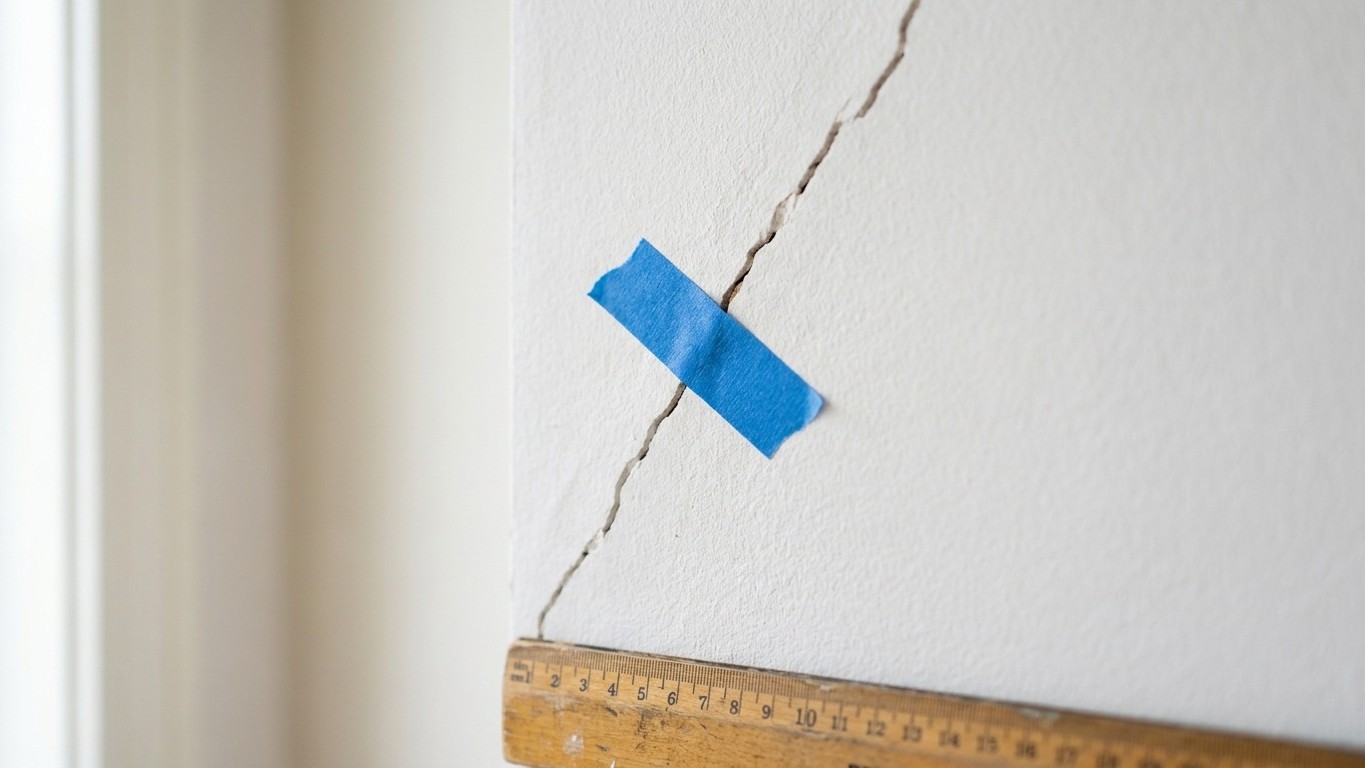
One small hole. That was all it took. A single pilot drill into the dining room wall to hang a new set of shelves, and there it was, a thin crack running out from the hole like a hair on a white shirt. Easy to dismiss. Easy to fill with a bit of Polyfilla and forget about. Many of us do exactly that. The trouble is, what you cannot see behind that plaster can cost you far more than the shelves were ever worth.
The honest truth is that most cracks caused by everyday drilling into solid masonry walls are entirely cosmetic. Fine hairline cracks in plaster are very common and are usually caused by the plaster drying or minor seasonal expansion and contraction of the building. As long as they are not growing or accompanied by other warning signs, they are typically just a cosmetic issue. So if you put up a picture hook last Saturday and noticed a hairline spider, you can breathe. But the moment you notice the crack is doing something, getting longer, going diagonal, widening, the calculation changes entirely.
Key takeaways
- That tiny crack might not be from the drill at all — it could have been waiting in your wall for years
- The direction and width of cracks tell wildly different stories about your home’s structural health
- A £300 structural engineer visit now could save you £10,000+ later — or prove the crack is harmless
The crack that was already there waiting for you
Here is what catches so many homeowners off guard: drilling a hole does not always cause the damage, it reveals it. The vibration of a hammer drill, particularly on older solid brick or stone walls, can dislodge or extend a crack that was already under stress. Structural damage doesn’t always announce itself with dramatic collapses or obvious failures. Sometimes it sneaks in quietly through small cracks, slight shifts in foundation, or subtle changes in how your doors and windows function. These seemingly minor issues often point to more serious underlying problems.
The majority of structural defects stem from negligent or deliberately poor-quality construction work, but they often aren’t obvious. A latent defect can take a long time to develop, only becoming a serious problem months or years down the line. your wall may have been quietly accumulating stress for years, and the drill bit simply provided the final nudge for things to show themselves.
The direction and shape of a crack tells you a great deal. Horizontal cracks in walls can be more serious. A horizontal crack could indicate a problem with the foundation or, in some cases, a sign of moisture damage causing the wall studs to bow. Diagonal ones are more alarming still. Diagonal cracks often appear suddenly, running out from the corners of windows and doors. They are typically wider at one end and may look like a ‘stair-step’ pattern in brickwork. If you see a diagonal crack in an internal or external wall, it is a strong signal that your home’s foundation may be moving.
There is a deceptively simple trick worth knowing before you ring anyone. A super helpful trick can help you know whether crack or wall issues are due to a foundation problem: use blue paint tape. Take a piece of blue painter’s tape and bridge the crack in the wall. If the piece of tape is torn, there’s still movement. But if the piece of tape is still intact, then the crack is just that, a crack. Check it weekly for a month. A stable crack is a manageable crack. A growing one is not.
Reading the severity: a practical scale
Not all cracks are born equal, and having a rough sense of the scale matters. Negligible hairline cracks under 1mm wide can be easily dealt with by redecorating, slight cracks of 1–5mm can be rectified with interior filler or external repointing, moderate cracks of 5–15mm wide may need professional building work, and severe large cracks up to 25mm may indicate structural damage. A crack wider than a 10p coin, roughly 3mm, is the point at which many professionals say your gut instinct to investigate should override any temptation to just sand it flat and repaint.
If a crack becomes longer or wider over time, it may signal ongoing structural movement. Beyond the crack itself, pay attention to the rest of the room. The crack is accompanied by other signs of movement, such as sticking doors, sloping floors, or gaps appearing around skirting boards, any of these in combination means you should stop speculating and get someone qualified to look. Contact structural specialists immediately if you notice sudden crack appearance, doors or windows that suddenly won’t close, new floor sagging, or any signs of rapid structural movement. These symptoms may indicate serious foundation problems requiring urgent attention.
In older UK homes, the picture can be more complicated still. In older pre-war buildings, a small amount of cracked mortar that barely warrants attention can, after several wet winters, allow moisture to penetrate deeper into walls. This leads to plaster falling off interior walls, bricks popping or spalling on visible brick faces, erosion on window frames, and bricks shifting out of place, disturbing the overall structural balance beyond cosmetic damage. The Victorians built solidly, but their mortars were lime-based and behave very differently from the hard cement used in modern repairs, a mismatch that can, ironically, accelerate cracking rather than stop it.
What the structural engineer’s bill actually looks like
This is where things get sobering. A structural engineer report typically costs between £200 and £1,200 in the UK depending on what is being inspected. A crack assessment starts from £200. A full structural report or subsidence investigation costs £500–£1,200. That is the bill for finding out what the problem is, not for fixing it. For a straightforward domestic inspection and short written report on a single issue, you can often expect to pay somewhere between £300 and £500, which usually covers the site visit, basic checks and a summary of the engineer’s findings and recommendations.
If those findings reveal something deeper, the numbers rise steeply. Minor structural repairs such as localised stitch or wall tie work typically run from around £500 to £2,000. Major structural work including underpinning or rebuilding sections can reach £2,000 to £30,000 or more, depending on severity and property size. The homeowner who ignores a crack for eighteen months often ends up paying far more than the one who called someone in at three months. It’s important to nip these defects in the bud before they get any worse and cause damage to the structural integrity of your home. The longer you leave them to deteriorate, the more difficult and costly they’ll be to fix, and it could even cause parts of your house to collapse.
Most subsidence is historic, not active. Victorian and Edwardian properties in particular often show old movement that stopped decades ago. A structural engineer can usually distinguish between cosmetic cracking and genuine ongoing subsidence from site evidence alone, saving you the cost of unnecessary further investigation. That is the other side of the coin that often gets forgotten: getting the engineer in early might save you money by ruling things out, not just by catching problems sooner.
What to actually do after drilling, right now
Before reaching for the Polyfilla, take a photograph of the crack against a ruler or a coin. Photograph the crack and measure its width, a coin can help estimate millimetres. Mark the ends and date them so you can check for movement over time. Check for related signs: sticking doors, sloping floors or damp patches. This monitoring process costs you nothing and gives any professional you consult a genuinely useful baseline.
Although hairline wall cracks are worrying, in most cases they’re normal and just part of the cosmetic changes when a home ages and settles. Stable, superficial cracks in walls can be easily repaired with filler or other simple DIY solutions, however, if you notice the cracks widen or recur over time, or are accompanied by other warning signs such as uneven floors, then you should seek expert guidance.
One thing worth checking before you drill anywhere near a kitchen or bathroom wall: being unsure about what lies beneath the wall you’re drilling into can be a massive safety hazard if mains pipes or electrical wires are hidden behind the wall. These are likely to be most prevalent in walls that connect to bathrooms and kitchens, so check the blueprints of your home to be sure. A cable detection tool costs less than a takeaway pizza and has saved many a homeowner from a very unpleasant afternoon.
The parting thought is this: a structural engineer’s report, even at the upper end, is cheaper than a solicitor’s letter from a buyer who discovers undisclosed crack damage during conveyancing. A surveyor might identify a crack, but a structural engineer will be able to establish what has caused it and if it’s a significant issue. This assessment can save you from unexpected costs in the future. Similarly, if you are selling your home, having a structural engineer’s report can reassure potential buyers about the home’s condition, potentially speeding up the sale process and securing a better price. One small hole in a wall, one sensible response, and you keep control of the story.
Sources : oladecorator.co.uk | coseyhomes.co.uk