
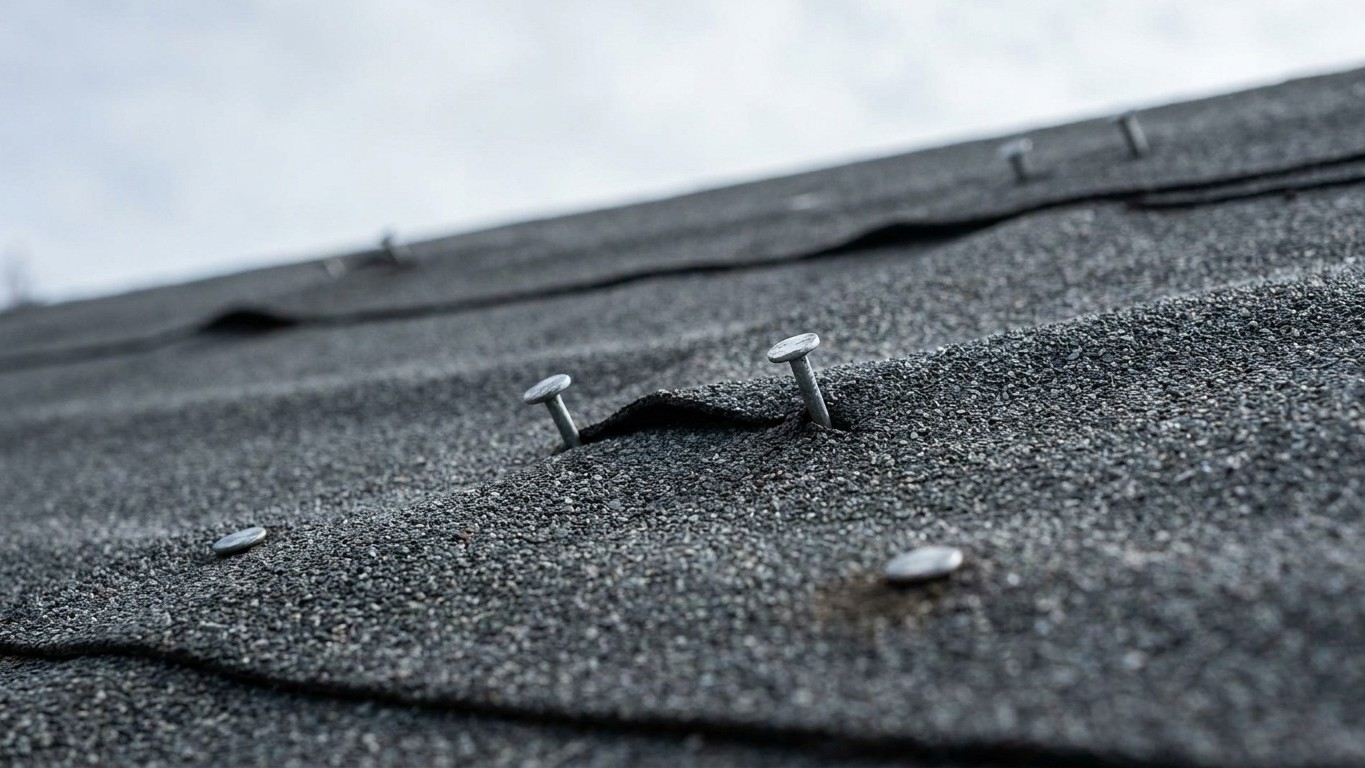
Shed felt applied on a sweltering July afternoon looks perfect by teatime. By October, those neat rows of clout nails are sitting proud of the surface, the felt is pulling away at the edges, and the first proper downpour of autumn is finding its way through every tiny gap. A roofer friend of mine explained why this happens, and once you understand the physics of it, you cannot unsee it.
Key takeaways
- Roofing felt expands when hot and contracts when cold—but nails stay fixed, creating movement that works them loose over time
- Installing felt on a sweltering day means using an over-stretched template that shrinks away from its fixed points all winter long
- The ideal temperature for laying shed felt is mild and overcast (10–18°C), not the sunny weekend most homeowners choose
What heat actually does to shed felt
Roofing felt, the standard mineral-surface bitumen type sold at every builder’s merchant, expands when it’s warm and contracts when it cools. On a hot day, the material is already at or near its maximum expanded state. When you stretch it across the roof, cut it neatly, and drive in your clout nails, Everything sits flat and flush because the felt is soft, pliable, and slightly stretched by the heat.
The problem arrives when temperatures drop. The felt contracts, pulling back toward its relaxed state, but the nails are fixed points. The material cannot move freely, so instead of contracting evenly, it bunches slightly between fixing points and pulls taut over others. Over a season of warming and cooling, this repeated movement works each nail loose from below. By the time the first frosts arrive, many nails are sitting proud by a millimetre or two, creating small tented ridges in the felt that funnel water rather than shed it. Each one is a potential leak.
My roofer acquaintance put it memorably: “You’ve used the warmest, most expanded version of that sheet as your template. Every cold day after that, it’s trying to shrink away from what you’ve done to it.” The analogy that stuck with me was this, fitting felt on a very hot day is a little like cutting a pair of trousers to fit someone after a large Christmas dinner. Come January, the fit is quite different.
The right conditions for laying shed felt
The ideal temperature for laying standard bitumen shed felt is a mild, overcast day when temperatures sit somewhere between 10°C and 18°C. Not cold enough for the felt to be brittle, not warm enough for it to be stretched beyond its natural resting state. Many professional roofers prefer working in these conditions precisely because the material behaves predictably and the finished job stays stable through both summer heat and winter cold.
Avoid frost, obviously. Below about 5°C, bitumen felt becomes stiff and will crack rather than conform to the roof surface. Cracking during installation is an instant failure point, and no amount of careful nailing rescues a felt sheet with a fracture running through it. But the risks of cold are well understood; it’s the risks of working in heat that catch most shed-owners out.
One practical trick worth knowing: if you buy felt in the summer and store it in a cool shed or garage overnight before laying it, you give it a chance to return closer to its natural dimensions. Unrolling it on the roof and leaving it to settle for 20 to 30 minutes before nailing also helps, allowing any residual tension from storage to relax. Neither of these costs anything. They just require a little patience, which is admittedly harder to come by on the first sunny weekend of the year.
Nailing technique matters more than most people realise
The standard recommendation is to use large-headed galvanised clout nails, typically 20mm or 25mm in length, spaced no more than 150mm apart along edges and overlaps, with rows at roughly 300mm centres across the field of the felt. Those spacings are not arbitrary. They come from calculations about how much movement force each nail head needs to resist across a thermal cycle. Go wider, and each nail is asked to hold a larger patch of contracting felt.
Drive the nails flush, not countersunk. A nail driven too deep tears a small hole in the mineral surface coating, which then becomes a point where water sits and works its way through the bitumen layer beneath. The nail head should sit firmly on the surface, compressing it slightly, not punching through it. If you’re using a hammer rather than a dedicated clout nailer, a light final tap rather than a full swing gives you much better control over depth.
Overlaps deserve particular attention. The standard overlap for shed felt is 75mm on horizontal runs and 150mm at any side or end joins. Seal these overlaps with a bitumen lap adhesive rather than relying on nails alone. The adhesive is inexpensive, comes in cartridges or tins, and makes an enormous difference to longevity. A nailed overlap without adhesive is essentially a flap waiting to lift in the wind; with adhesive it becomes a bonded seam.
When to re-felt and how to check what you have
A well-laid shed roof, done in appropriate conditions with proper nailing and sealed overlaps, should last between ten and fifteen years before it needs attention. One fitted on a scorching August afternoon with nails spaced too widely and no lap adhesive might start showing problems within two or three seasons.
Checking your shed roof in early autumn, before the serious rain arrives, takes about ten minutes. Run your hand along the felt surface feeling for proud nail heads. Look along the roof from one end to spot any rippling or lifting at the edges. Press gently on overlaps to see whether they flex or feel bonded. If you find two or three proud nails but the felt is otherwise sound, you can tap them back and apply a small dab of bitumen repair compound over each one. If there are dozens, the thermal cycling has done its work and a re-felt is more economical than patching.
One thing worth knowing before you buy replacement felt: the standard green mineral-surface shed felt sold in most DIY sheds has a nominal life expectancy of around five to seven years, regardless of installation conditions. There are heavier-duty modified bitumen felts, thicker and with better UV resistance, that carry longer guarantees. The price difference is usually modest relative to the labour of re-felting every few years.