
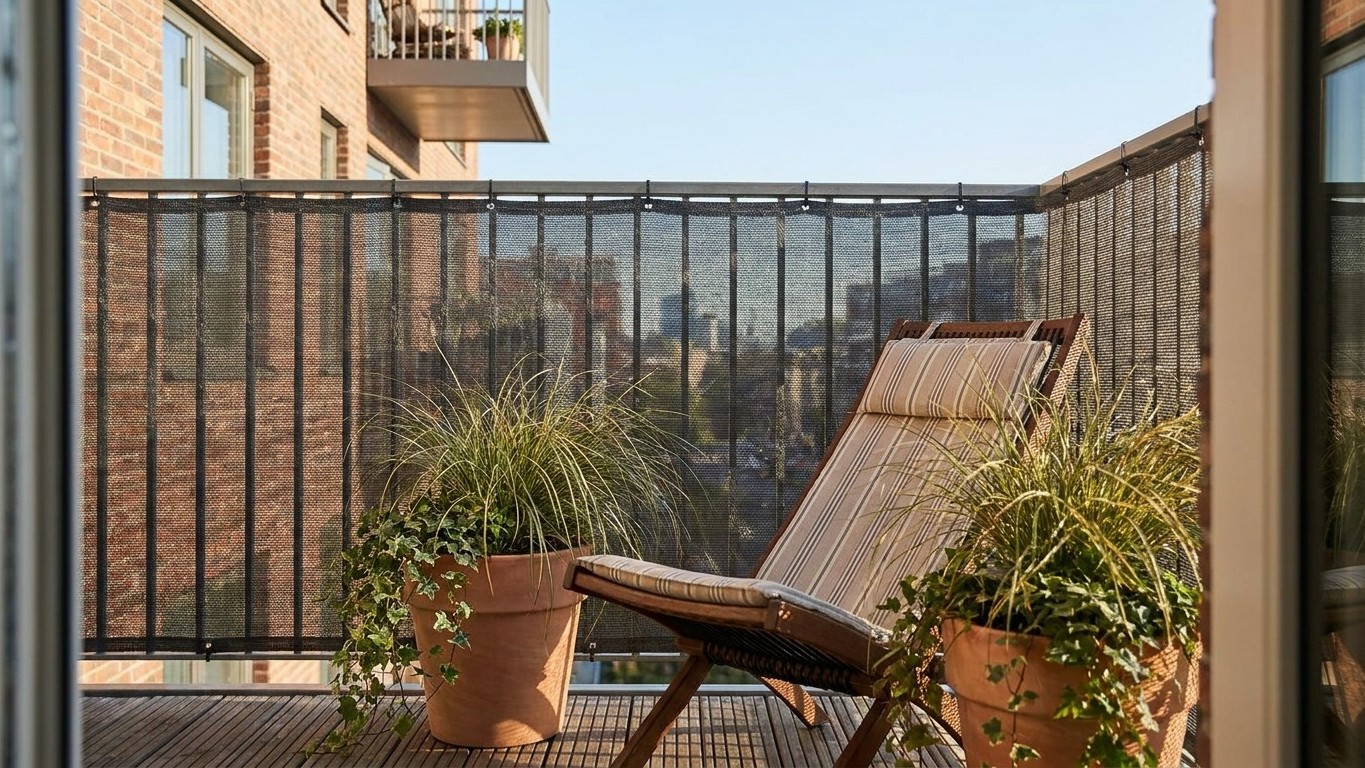
For anyone renting a flat with a balcony, summer can feel like a peculiar performance. You step outside for a bit of peace, and there’s your neighbour, three metres away, silently watching you eat your cereal. The good news is that a single, inexpensive item, a balcony privacy screen attached with zip ties, solves the problem completely, without a single hole drilled, a screw driven, or an awkward conversation with your landlord.
Key takeaways
- A single item can block your neighbor’s sightlines from three different angles simultaneously
- Installation takes just twenty minutes and requires only scissors—no tools, no damage, no landlord approval needed
- The same durable plastic used in water pipes keeps your privacy intact through British weather all summer long
The item that does all the work: a railing privacy screen
A balcony privacy screen is a highly effective privacy barrier made from durable plastic mesh, and it has become one of the most popular privacy solutions for apartment balconies. Its easy installation requires no drilling or structural modifications, which allows it to bypass restrictions from landlords, and it can be effortlessly secured to the railing, creating a barrier that gives residents genuine peace of mind. That last point matters enormously in the UK, where most assured shorthold tenancy agreements prohibit any alterations to the exterior of the property.
The classic version is a UV-resistant mesh that attaches to your railing with zip ties, and HDPE mesh railing screens with zip ties are the easiest and most common privacy solution for renters because they install fast and remove cleanly. HDPE stands for high-density polyethylene, the same tough plastic used for water pipes and food containers, so it laughs at British drizzle. Mesh offers a good compromise between visibility and privacy: coverage can be up to 90% while still letting light through, and you’ll have good options for height and length, making them suitable for most balconies.
Balconies in residential complexes often sit close enough to neighbouring units that someone standing at their window sees directly into your sitting area without trying. The exposure isn’t paranoia, it’s sight geometry. At 40 to 60 square feet, typical apartment balconies position furniture within three feet of railings, meaning your chair sits in unobstructed view of three neighbouring sightlines: the unit beside you, the unit diagonal across, and any walkway below if you’re above ground level. A railing screen tackles all three at once.
How to fit it properly, and what to buy
Fitting one of these screens takes about twenty minutes, and the only tool you’ll need is a pair of scissors to trim excess ties. Start by using a measuring tape to confirm the dimensions of the screen. Confirm the inside and outside, the hem should hang toward the railing with the smooth side facing outward. Use a cable tie to secure one corner through its grommet, then continue securing the screen along one side, pulling it tight as you go to ensure a neat, wrinkle-free fit. Review your work and adjust the ties for the best result, then trim any excess zip tie with scissors. Proper installation keeps the screen taut, achieving optimal stability.
If you use zip ties or Velcro straps on the railing, it typically won’t cause damage. Do avoid metal wire, though, as it can scratch or rust-stain surfaces, which would be rather a shame given that avoiding damage is the whole point. Aim for a height that effectively blocks the view you want to obscure, usually between four and six feet tall, and consider your seating height and the sightlines from neighbouring areas. If you’re sitting down in a deckchair, you need far less height than if you’re standing at the railing with a cup of tea.
Beyond the standard mesh, there are prettier options worth considering. A bamboo or reed roll gives you privacy and a warm, resort-like feel, and it’s one of the nicest-looking ideas for renters who want something less apartment-y. Artificial hedge panels tend to be thicker and provide more privacy compared to a single layer, and you can attach them to your balcony railing or build a frame to make your own hedge wall. If your balcony faces the street rather than a neighbour, frosted or patterned window film can be cut to size and applied directly to glass railings using soapy water and a squeegee, diffusing light beautifully while making faces and movement completely invisible from outside.
What about the wind, and the landlord?
Wind is the one thing that catches people out. Some screens block too much wind and can act like a sail, so mesh or slatted designs often work better on exposed balconies. This is worth thinking about carefully before you buy. A solid bamboo roll on a high floor facing south-west, the prevailing wind direction for much of England, can billow and pull against its ties alarmingly. Breathable mesh is far better in those conditions.
Most landlords oppose installations that could cause damage to the building. Since privacy screens do not cause any damage, they are an ideal solution for renters. That said, some buildings limit what can be attached to railings or what’s visible from the street, and neutral colours tend to pass more easily. Charcoal or sage green are safe bets; bright orange might invite a pointed note through the door.
Renters especially need solutions that are removable, non-damaging, and easy to take with them when they move, and that’s another quiet virtue of the zip-tie screen. When moving day comes, you snip the ties, roll the screen, and it goes straight into the van with you. No repairs, no redecorating, no withheld deposit.
Making the space feel genuinely yours
A privacy screen isn’t just a barrier, it’s a starting point for creativity. In the limited space of flat living, combining it with plants and decorations can breathe new life into your balcony, greatly enhancing your quality of life. A reed screen along the railing, a couple of tall ornamental grasses in heavy pots, and a string of solar lights across the top Transforms a place you’ve been avoiding into somewhere you actually want to be. Tall planters with bamboo, ornamental grasses or dwarf evergreens create an instant screen without taking up too much floor space, and hanging planters with trailing vines such as pothos or ivy are another good way to create visual separation, especially if your railing feels exposed.
The true advantage of balcony privacy screens lies in their ability to block external views but also reduce noise interference to some extent, while providing sun protection and shielding against the elements. That last benefit surprises people. A well-fitted mesh screen takes the edge off afternoon sun on a south-facing balcony, meaning you can sit out in comfort during those increasingly warm British summers without squinting into the glare. A nice bonus, all things considered, for something that costs less than a round of drinks at the pub.
Sources : sustainlifejournal.com | homedecorefiy.com