
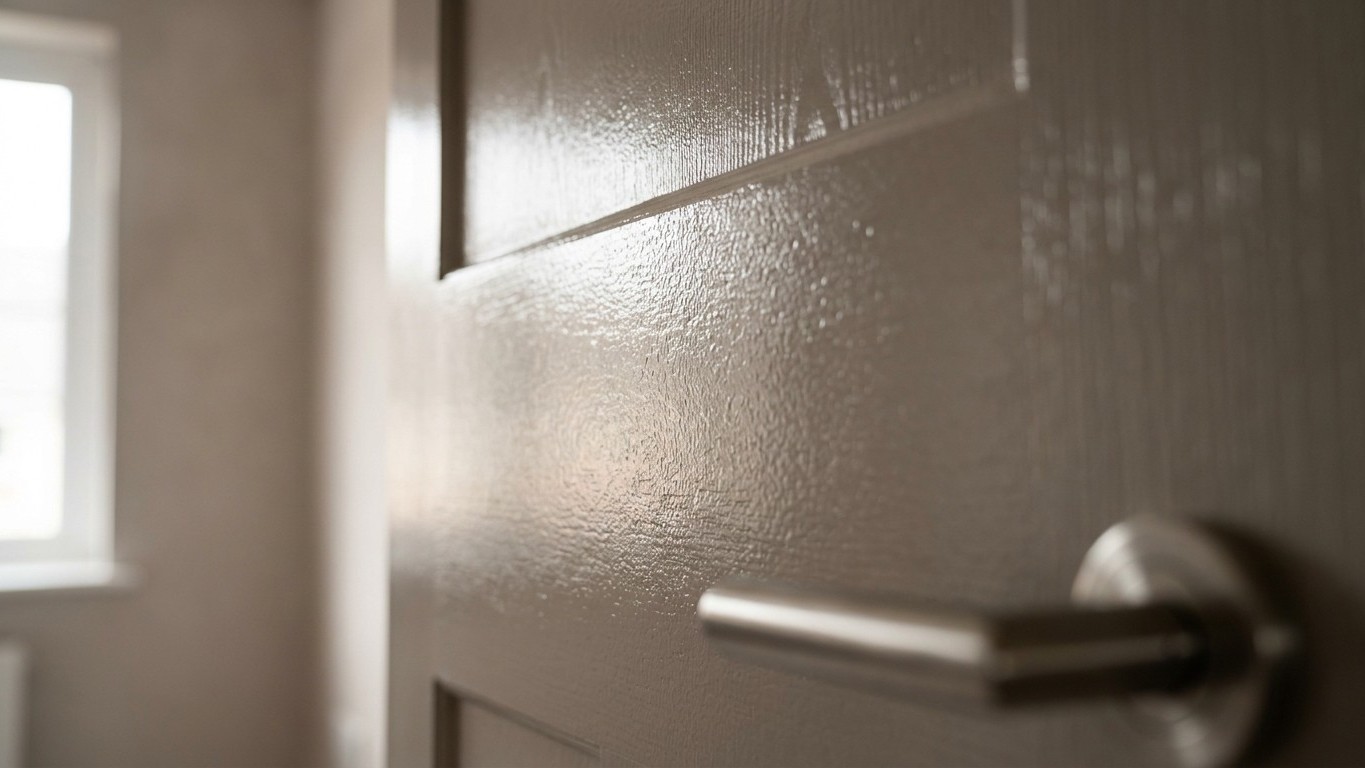
Orange peel texture on a freshly painted door is one of those results that feels deeply unfair. You followed the instructions, you stirred the paint, you applied it carefully, and yet the finish looks like the skin of a citrus fruit rather than the smooth gloss you were expecting. The good news is that this is one of the most common painting complaints in the country, and it has a handful of very fixable causes.
Key takeaways
- Temperature control is the single biggest factor affecting gloss paint flow and finish quality
- The wrong brush type, worn bristles, or applying too thick a coat locks in texture before the paint can level
- A damaged gloss door can be rescued with methodical sanding and a second attempt using proper technique
Why following the label isn’t always enough
Paint manufacturers write their instructions for ideal conditions: a temperature-controlled factory or a professional’s workshop. In a real British home in spring, you might be painting a hallway door with the heating on full blast, a draught coming under the letterbox, and paint that has been sitting in the garage since last autumn. The label cannot account for all of that.
Gloss paint, whether oil-based or water-based, needs to flow out and level itself after the brush leaves the surface. This levelling window is extremely short if the paint is too thick, the room is too warm, or the surface absorbed the paint faster than expected. When the paint starts to dry before it has had time to flatten, it locks in every small ridge and bubble left by the bristles. The result is that characteristic dimpled, bumpy finish. Some painters call it “brushing badly”; decorators more kindly call it “poor flow-out.”
Stirring matters enormously, but technique matters just as much as duration. A good stir for gloss paint means lifting the stirrer from the bottom of the tin in a figure-of-eight pattern for at least two to three minutes, making sure the pigment and binder that have settled to the bottom are fully reincorporated. A quick circular stir on the surface barely touches the settled solids beneath. That said, over-stirring introduces air bubbles, and if you then apply the paint without letting it rest for a few minutes, those bubbles can contribute to surface texture too.
The four most likely culprits on your door
Temperature is the single biggest offender. Gloss paint applied in a room above roughly 25°C dries so fast that levelling becomes almost impossible. Below about 10°C, the paint becomes too viscous to spread properly and the same problem occurs from the opposite direction. The sweet spot for most gloss paints sold in the UK is between 10°C and 20°C, with the surface itself (not just the air) sitting within that range. A door that has been baking in afternoon sun through a south-facing window can easily be 30°C on its surface even when the room feels comfortable.
The second culprit is applying too thick a coat. A gloss finish built up in three thin coats will almost always look smoother than one thick coat, because each thin layer has time and space to level before the next is added. Many people, eager to get the job done, load the brush heavily and try to cover in one pass. The paint simply cannot flow out quickly enough before the skin forms on top.
Third on the list is the wrong brush or a worn-out one. A synthetic bristle brush designed for water-based paints used with an oil-based gloss will leave a much more textured finish than the correct natural-bristle brush. The reverse is also true. Old brushes with splayed, uneven tips apply paint unevenly by definition. A decent brush is one of those tools worth spending a little more on, it genuinely changes the outcome.
Finally, the primer or undercoat beneath the topcoat makes a real difference. A porous or rough undercoat draws the gloss in unevenly, creating patches where the paint dries at different rates. If the undercoat was not fully sanded smooth with a fine-grit paper (220-grit is typical for this stage) and wiped clean of dust before the gloss went on, the topcoat never stood much chance of a mirror finish.
How to rescue a door that has already gone wrong
The orange peel is already dry, so the path forward is to sand it back and repaint. There is no shortcut, but the process is entirely manageable over a weekend. Start with 240-grit wet-and-dry sandpaper, used wet, and work methodically across the door in the direction of the grain (or in long vertical strokes on flat panels). You are not trying to strip everything, just knocking back the texture to a flat, dull surface. Wipe away all residue with a clean damp cloth and allow the surface to dry completely.
Before repainting, check your conditions. Open a window slightly to keep the temperature moderate, and avoid painting in direct sunlight. Decant a small amount of paint into a separate container rather than working from the full tin, this reduces the risk of contaminating the bulk with dirty solvent from your brush. Apply the paint in thin, confident strokes, finishing each section with a light “laying off” pass: hold the brush almost parallel to the surface and draw it gently upward in one long stroke to smooth the paint and eliminate brush marks. Two thin coats, properly laid off, will give a far better result than one heavy one.
One thing worth knowing for next time: water-based gloss paints, which now dominate the shelves in most UK hardware shops, are considerably more sensitive to temperature and application speed than traditional oil-based formulas. They dry faster, which sounds like an advantage, but it leaves a shorter window for the paint to self-level. If you have repeatedly struggled with orange peel using a water-based gloss, switching to an alkyd or oil-based alternative (or a hybrid formula) on your next project might be the single change that finally gets you that smooth finish you are after.