
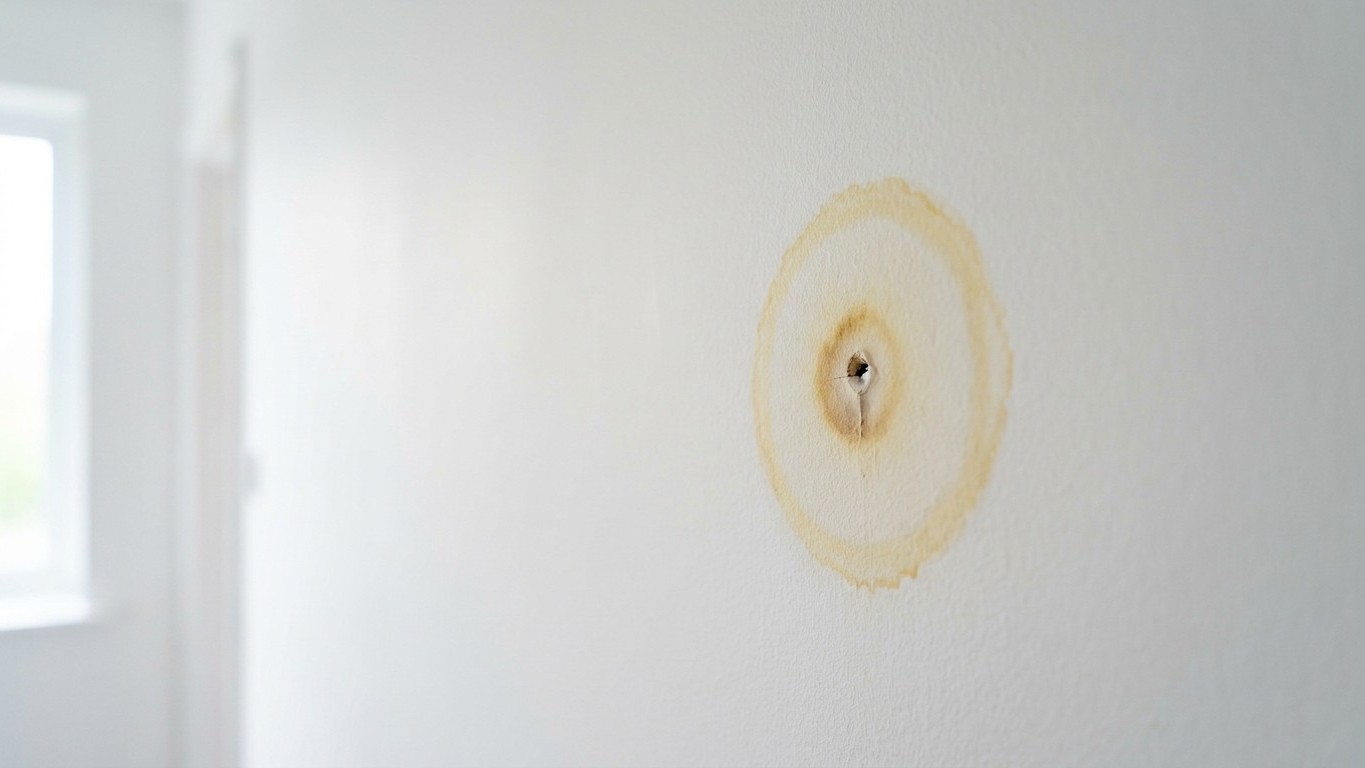
Toothpaste fills a nail hole beautifully, at first. It goes in smooth, dries hard, sands down flat, and you can barely see the repair before you roll on the paint. Then, roughly two to three weeks later, the yellow rings appear. Not immediately, not while the paint is wet, but once everything has fully cured and the moisture has redistributed through the wall. Those rings are not a painting error. They are a chemistry problem, and understanding what causes them will save you from repainting that hallway a second time.
Key takeaways
- Toothpaste contains hygroscopic compounds that continue absorbing moisture long after appearing dry
- These oils and flavoring agents migrate through water-based paint, creating yellow halos around repairs
- Repainting over the rings without removing the toothpaste only makes the problem worse
What toothpaste actually does inside a wall
Most standard toothpastes contain glycerine, sodium lauryl sulphate, various humectants, and a combination of flavouring compounds, including the oils responsible for that minty freshness. These ingredients are designed to stay moist and workable in your mouth, which is precisely the opposite of what you want inside a sealed wall cavity. Once you paint over toothpaste and trap those compounds beneath an emulsion barrier, they do not simply cure and disappear. They migrate. The technical term for this kind of movement through a coating is “bleeding,” and it happens because the oils and organic compounds in toothpaste are hygroscopic, meaning they continue to interact with ambient moisture long after they appear dry.
The yellow or brown ring that develops around a toothpaste repair is typically caused by two things working together. The glycerine pulls moisture from the surrounding plaster and the air, keeping the toothpaste slightly damp beneath the paint film. Meanwhile, the flavouring oils and dye compounds (some pastes contain quite a bit of colouring) slowly leach outward through the paint. Standard emulsion paint is water-based and relatively porous, especially when applied over an unprepared surface. It offers almost no barrier to oil migration. The result is a soft, yellowish halo that appears a few centimetres around each filled hole, usually more pronounced in hallways where temperatures fluctuate and moisture levels vary through the day.
Why the problem gets worse before it gets better
Repainting over the rings without treating the source is the most common mistake, and I have seen it repeated enough times to speak with some certainty on the matter. A fresh coat of emulsion simply traps the migrating compounds again, and within another two to three weeks, the rings return, often slightly larger, because the new coat of paint has introduced additional moisture that accelerated the migration. Some people repaint three or four times before realising the toothpaste needs to come out entirely.
Removing it is straightforward but requires patience. Score around the repair with a sharp craft knife, then use a small flat-head screwdriver or a narrow filling knife to work the toothpaste out of the hole. It tends to come away in a single plug once you get underneath the edge. Give the hole a quick clean with a damp cloth, allow it to dry completely (forty-eight hours in a well-ventilated hallway is sensible), and then fill it properly with a purpose-made filler.
Choosing the right filler for painted walls
For nail holes in plasterboard or plaster walls, a lightweight ready-mixed filler is generally the most forgiving option for DIY repairs. These products are water-based, shrink very little, and sand cleanly without crumbling. Deeper holes, anything over about five millimetres, are better served by a two-part powder filler that you mix with water, as these produce a harder set less prone to shrinkage cracks over time.
The step that most people skip, and the one that prevents the whole problem of uneven patches under paint, is priming the repair before top-coating. A small amount of diluted PVA (roughly one part PVA to four parts water, brushed on and allowed to dry) seals the porous filler surface and gives the emulsion something consistent to grip. Without this, the paint soaks differently into the filler than into the surrounding wall, leaving a subtle sheen difference, what decorators call “flashing”, that shows up clearly in raking light. One coat of diluted PVA, ten minutes to dry, then your topcoat. The repair becomes genuinely invisible.
The toothpaste myth and where it comes from
The advice circulates persistently on social media and in DIY forums, usually framed as a clever money-saving shortcut. The logic seems sound on the surface: toothpaste is white, it dries hard, it is always in the house. And for one specific application, filling a hole in a rental property the night before a landlord inspection, with no intention of painting over it — it works tolerably well. The problem is that this context rarely makes it into the advice. The shortcut gets passed on without the caveat, and homeowners apply it to permanent repairs under paint, where the chemistry becomes a real issue over time.
White bathroom caulk, often sitting in the same cupboard as the toothpaste, is a marginally better emergency option for very small holes. It is paintable once cured, it does not contain flavouring oils, and most modern formulations are mould-resistant, which matters in hallways near exterior doors. But caulk is elastic rather than rigid, so it does not sand flat, it tends to smear rather than dust away. For anything you plan to paint properly, a proper filler remains the right tool.
One thing worth knowing: the same bleeding problem can occur with certain decorators’ caulks that contain high levels of plasticisers, and with some silicone-modified products used around window frames. If you ever see soft yellow or brown halos appearing around architectural details rather than nail holes, that is likely the cause. Shellac-based primer, applied directly to the stained area before repainting, is the standard trade solution for stopping bleed-through from any organic compound, it forms a genuine barrier that water-based emulsions simply cannot.