
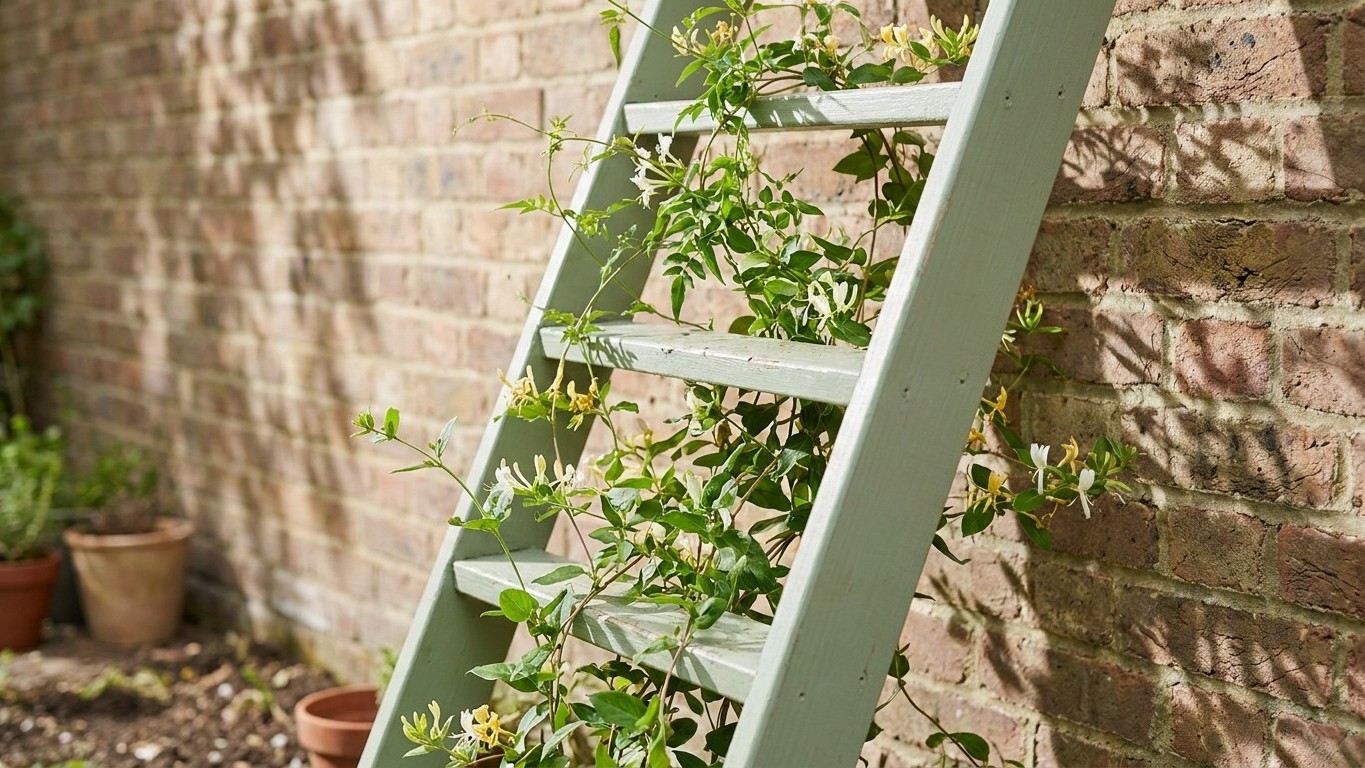
A single leaning frame placed against a bare garden wall can do what three coats of paint and two weekends of scrubbing simply cannot: make the whole garden feel designed. No drilling into brickwork, no professional bill, no planning permission. Just a well-chosen structure, a climbing plant, and a little patience, and suddenly that sorry expanse of render or old brick becomes the best thing in your garden.
Key takeaways
- A leaning frame creates instant visual interest and makes walls look professionally designed—but what’s the hidden trick that makes it work better than paint?
- You can build a functional garden trellis from items already in your shed for under £10—but placement matters more than most people realize
- The right climbing plant can flower almost year-round, but choosing the wrong one for your wall’s light exposure could leave you with just green leaves
Why a leaning frame works where nothing else does
The beauty of a leaning frame (think ladder-style trellis, reclaimed wooden panels, or even a good old-fashioned lattice sheet propped at a slight angle) is that it creates an immediate visual layer between you and the wall. The eye stops at the frame before it ever reaches the surface behind it. The visual line stays strong even in winter when the foliage is gone, a professional advantage many homeowners don’t consider. A trellis should still look good when the plant is dormant. That’s something a bucket of masonry paint will never give you.
There is also the sheer practicality. Leaning ladder gardens free up floor space like a vertical garden, but you can use potted plants you already have instead of buying brand new plants and containers. These structures are also moveable and don’t have to be permanently attached to a building or fence. For anyone renting, or simply reluctant to commit to drilling into a Victorian wall, that flexibility is genuinely liberating. No landlord’s wrath. No permanent holes. Move the whole thing on a whim.
The kind of trellis you choose depends on the space and layout of your garden. For smaller gardens, a leaning trellis is often an ideal option. It draws the eye upward, tricks the mind into perceiving more depth, and, perhaps most satisfyingly, it costs very little to achieve.
What to use and how to build it
Almost any sturdy, open-framed structure can work as a garden trellis. That old stepladder in the shed. A sash window frame stripped of glass. A section of wooden pallet boards reassembled with wider spacing. The principle is the same throughout: something with gaps large enough for tendrils or stems to weave through, sturdy enough to hold its own weight plus a plant’s, and tall enough to create genuine impact.
Give an old wooden ladder new life by leaning it against a wall or fence. Plants weave through the rungs naturally, creating layered visual interest. This vintage-inspired option works beautifully in cottage gardens and adds instant character without any construction required. If your ladder has seen better days, a coat of outdoor paint in sage green or off-white takes it from scruffy to intentional in under an hour.
Old window frames are another option well worth raiding the reclamation yard for. Old window frames, stripped of glass, find new purpose as trellises. Leaned against a wall, they offer a grid for plants to climb, framing nature itself. The open panes allow vines to extend through and around, creating a dynamic display. Two frames side by side, slightly overlapping, can cover an impressive stretch of wall for next to nothing.
For those who want something purpose-built but still budget-friendly, a simple lean-to trellis made from three or four wooden stakes and garden twine costs under £10 and takes about 20 minutes. Cedar is worth considering if you have the budget for slightly better timber: cedar naturally resists rot, making it ideal for long-term outdoor use without chemical treatments. Treat softwood with a good outdoor oil or decking stain and it will last far longer than most people expect.
One small but important detail: position the base of the frame so it sits about 30cm out from the wall, not flat against it. This creates an air gap behind the plants, which improves air circulation around plants, reducing the risk of fungal diseases, and makes it harder for some pests to reach the plants. It also means climbing stems have genuine room to grip the frame rather than simply pressing against brickwork.
Choosing the right climber for your wall
A beautiful frame with the wrong plant is a wasted opportunity. The aspect of your wall matters enormously here. For a sunny, south- or west-facing wall, go for wisteria, jasmine, climbing roses, or trumpet vine. These climbers love warmth, bring bold colour and fragrance, and thrive with plenty of sun.
A shadier wall is not the disadvantage it might seem. The best shade-tolerant climbers for UK gardens are climbing hydrangea, ivy, honeysuckle, and the alpina and montana groups of clematis, all of which will flower on a wall that gets less than four hours of direct sun. Honeysuckle in particular is a wise choice for a leaning frame near a seating area: honeysuckle brings so much to the party in dark corners. Perfect for a fence, arbour or pergola, plant it near your seating area so you’ll have a cool retreat and the glorious heady scent of honeysuckle too.
For small gardens, plants like clematis and honeysuckle work well, providing vibrant flowers without overtaking space. Compact varieties of roses and jasmine are also excellent choices, offering lush growth in limited areas. Clematis, personally, is the one I would recommend to anyone starting out. It comes in flower for virtually every month of the year if you choose varieties carefully, with species and varieties flowering in every season, finishing the year with an evergreen clematis such as Clematis cirrhosa ‘Wisley Cream’ which not only provides privacy when grown up trellis, but flowers in the depths of winter.
One practical tip that catches many people out: plant 30–45cm away from the wall to avoid the dry ‘rain shadow’ caused by roof eaves. This ensures roots receive enough moisture, particularly during a dry British summer (yes, they do occasionally happen).
Making it look properly considered
The difference between a garden that looks designed and one that looks assembled is mostly in the small decisions. A leaning frame painted to match your garden furniture or the colour of your back door reads as deliberate. A bare wooden structure leaning haphazardly against flaking render looks, well, exactly like what it is.
Trellis adds privacy, acts as extra storage, zones a space and allows you to grow many different plants. When choosing a trellis, look for square, diamond-shaped, expanding and decorative designs that look beautiful while they are busy being practical. Some designs even come backed by mirrored panels, which can trick the eye into believing your garden is bigger, and more romantic, than it really is. That particular trick is very popular with urban courtyard gardens, where every centimetre counts.
Stability is the other thing to get right. The key requirement is that the material can support the mature weight of your climbing plant without bending or collapsing. A lightweight frame holding a well-established wisteria will eventually lose that battle. For heavier climbers, pound two short metal stakes into the ground and rest the legs of the frame against them, it keeps everything from shifting in a gust without requiring a single rawl plug.
One final thought worth having before you start: an important consideration is deciding if you want to maximise sunlight for your plants or provide them with some shade. To maximise sunlight, position the ladder on the north edge of your garden bed or next to a fence or wall. Getting that orientation right at the start means the plants will reward you properly, rather than producing a lot of enthusiastic green growth and very little flower. Which, if you have gone to the trouble of convincing the neighbours you hired a landscaper, would be a shame.
Sources : idealhome.co.uk | webgardencentre.com