
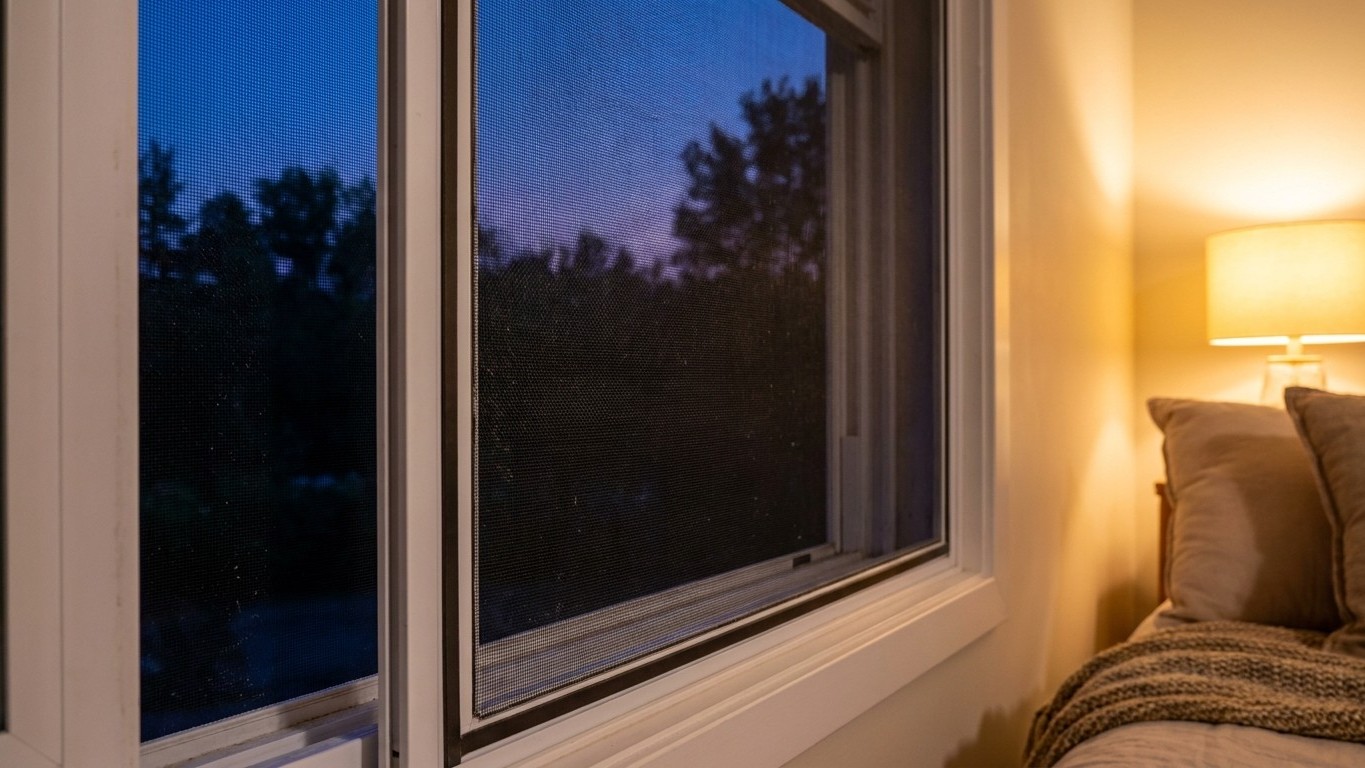
A no-drill fly screen fixed to a window frame using self-adhesive hook-and-loop tape or magnetic strips is the most reliable solution for keeping mosquitoes out of a bedroom at night, without touching a single tool or risking your landlord’s deposit. The fix takes under 30 minutes, costs a fraction of a professional insect screen, and can be removed without leaving so much as a mark on the paintwork. If you’ve been lying awake listening to that telltale high-pitched whine circling your ear, this is the moment it stops.
Key takeaways
- Two proven no-drill methods exist—but one has a hidden weakness most people miss until it’s too late
- The UK’s mosquito threat is quietly changing, and it’s not just about comfort anymore
- Most people fail at the installation step that matters most, and their screens fail by Thursday
Why Britain Now Has a Genuine Mosquito Problem
We’ve always had them, of course, but many people assume the British mosquito is a mild nuisance compared to its tropical cousins. That’s largely still true, but the picture is changing. The UK is home to over 30 native mosquito species, active every year from roughly late April through to September. The one most likely to drive you mad in your bedroom is Culiseta annulata, a large, bold biter that has absolutely no interest in birds.
The wider context is worth knowing, not to cause alarm, but because it explains why a simple mesh screen is no longer just about comfort. In August 2024, the tiger mosquito (Aedes albopictus) was detected for the first time since 2019, near a fast-food drive-through at a service station on the M20 motorway in Kent. This is the species responsible for local dengue outbreaks in France and Italy. Tiger mosquitoes have not yet become established in the UK, but the surveillance tells its own story. Meanwhile, West Nile virus has been detected in UK mosquitoes for the first time, with fragments identified in mosquitoes collected from wetlands in Nottinghamshire. The risk to the public remains very low. But “very low” is not the same as zero, and a mesh screen on your bedroom window costs you nothing in peace of mind.
Two No-Drill Methods That Actually Work
The good news is that you don’t need a landlord’s permission, a drill, or a Saturday afternoon wrestling with a toolbox. There are two main approaches, each suited to slightly different windows and budgets.
The first is the hook-and-loop (Velcro-style) mesh screen. Removable mesh Velcro fly screens are a cost-effective, DIY, removable mesh screen solution, available in a range of sizes for standard and skylight windows, and affix to the window frame using adhesive-backed hook tape. You cut the mesh to size with ordinary scissors, press the adhesive strip firmly around a clean window frame, and attach the mesh. The whole job is done before your kettle has boiled twice. One honest caveat: some users report issues with adhesive strength, noting it can come off when removing the material. The solution is simple: wipe the frame thoroughly with a damp cloth, then a dry one, before pressing the tape down. Grease and dust are the enemy of any self-adhesive product.
The second approach is the magnetic fly screen, and this is the one worth considering if you want something a little more robust. A magnetic fly screen is made of a fine mesh material attached to the window frame using magnetic strips. These screens utilise high-strength neodymium magnets embedded in flexible strips; when properly positioned, they create a magnetic field strong enough to hold the screen securely in place, yet gentle enough that you can easily open and close the screen when needed. You can pop the screen off to clean the glass, then snap it back. No residue, no drama. UK magnetic fly screens typically allow 80–90% airflow retention for natural ventilation, so the breeze you were seeking in the first place is still very much there.
For bedrooms specifically, mesh density matters. Night-time ventilation is when mosquitoes are most active; a magnetic screen on bedroom windows lets you sleep with windows open throughout warm nights while maintaining a complete insect barrier. For bedrooms, prioritise a screen with fine mesh density to ensure the magnetic seal is strong and gap-free, since even one mosquito in a bedroom can ruin a night’s sleep. Standard mesh with openings under 1.5mm handles mosquitoes perfectly well. Higher density mesh, sometimes called no-see-um or fine mesh, features smaller openings that block tiny biting insects such as gnats, midges, and sand flies, which is worth considering if you live near a river, canal, or boggy ground.
Getting the Installation Right: Step by Step
Measure your window opening first. Both types of screen can be trimmed to fit, but you want to start slightly oversized. Simply stick the upgraded Velcro strips onto a clean window frame, trim the mesh to fit your window, and hang. Straightforward enough, but the preparation step is where most people cut corners and then wonder why the tape peels off by Thursday.
Clean the frame properly. Clean the surface of your window frame to remove any dust, grease, or oil, then use an alcohol-based cleaner as a final wipe to ensure the surface is spotless, and allow to dry. This single step makes the difference between a screen that holds firm through a windy August night and one that sags by morning. Once the tape or magnetic strip is applied, press it firmly along every centimetre of the perimeter. The screen should hang evenly and create a complete seal around the window frame; if you notice any gaps, simply adjust the screen position.
The fly screen can be easily removed whenever you need to open or close windows, and is space-efficient enough to be folded for convenient storage. At the end of the summer, take it down, give it a rinse with soapy water, and tuck it in a drawer until next May. This versatile insect screen can be applied to a variety of window types, including wooden, steel, aluminium alloy, and curved or moulded windows, without leaving any permanent marks or damage on your window frames. That last point matters enormously for renters.
A Few Things Worth Knowing Before You Buy
Both types of screen come in standard sizes, but windows are not always standard. Measure the inside of your window recess (the opening itself, not the whole frame), and buy a screen slightly larger than that measurement, since you’ll trim it down for an exact fit. Most kits sold in the UK cover openings up to around 130cm x 150cm, which suits the vast majority of bedroom and living room windows.
Premium polyester mesh is typically fine at 1.5mm or under, effectively blocking all common insects. Fiberglass mesh is the more durable option over multiple seasons, as it resists UV degradation and doesn’t stretch or sag the way cheaper polyester can after repeated use. Look for high-density fibreglass mesh, which is washable and resistant to UV degradation and chemical corrosion. Fibreglass is also fire-retardant, an important consideration for kitchen and bedroom windows.
One thing people rarely consider: the frame surface matters as much as the screen itself. Magnetic screens work best when the adhesive magnetic strip is applied to a flat, smooth surface around the window opening. Most modern window frames in aluminium, vinyl, and painted wood provide suitable mounting surfaces. Heavily textured or peeling paint frames are harder to seal neatly, and worth sanding lightly before you start.
The detail that genuinely surprised me when researching this: mosquitoes locate hosts partly by detecting the carbon dioxide we exhale, which means they tend to hover near the gap between a window sash and its frame, not just the open pane itself. A screen that leaves even a 3–4mm gap at the corner is enough for a determined mosquito to squeeze through. This is precisely why the corner seals on better-quality magnetic frames are worth paying attention to, and why some reviewers with cheaper kits still report the odd bite despite having a screen fitted.