
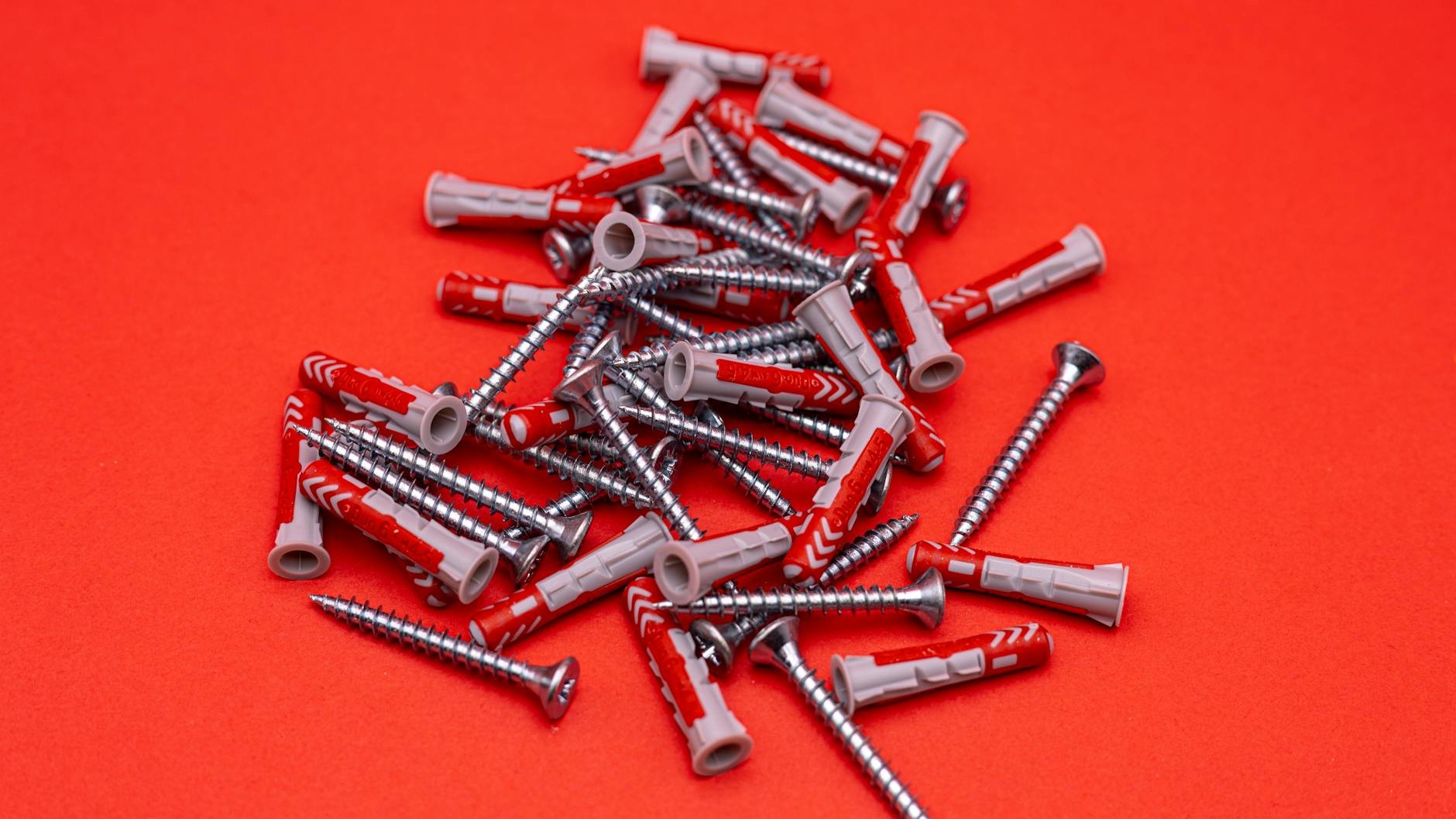
Plastic rawl plugs and plasterboard have never been friends. Push one of those little yellow or red plugs into a hollow cavity wall, hang something heavier than a framed photo, and within weeks you’ll hear that dreadful slow creak followed by a picture frame, mirror or shelf bracket pulling clean away from the wall. The fixing didn’t fail because you did something wrong. It failed because it was never designed for the job in the first place.
Key takeaways
- Why the cavity behind your plasterboard wall is the real enemy of ordinary plastic plugs
- The metal device that opens on the far side of the wall—and why it changes everything
- A forgotten magnet trick that reveals exactly where to drill without any specialist tools
Why ordinary plugs simply cannot grip hollow walls
Solid masonry walls are forgiving. Drill a hole, push in a plug, drive in a screw, and the plug expands against dense brick or block. Plasterboard walls are an entirely different beast. Behind that smooth surface, there is often nothing but air, a timber stud every 400 to 600mm, and a second sheet of board on the other side. A standard plastic plug driven into that cavity has nothing to grip. It sits in a hole roughly 12.5mm deep, held in place by friction against a material that crumbles under lateral load.
The board itself is the key variable most DIYers overlook. Standard plasterboard is 12.5mm thick, though some older homes have 9.5mm board and newer builds increasingly use 15mm. None of these thicknesses give a conventional plug enough purchase to hold meaningful weight. A small hook bearing a light coat might stay put for years. A bathroom cabinet, a television bracket, a towel radiator, anything above roughly 10kg, will almost certainly pull through eventually.
Cavity fixings: the one solution that actually works
The fixing that genuinely solves this problem is the metal cavity anchor, sometimes called a spring toggle, a gravity toggle, or a metal hollow wall anchor depending on the design. The principle behind all of them is the same: instead of gripping the face of the board, the fixing passes through it and opens up on the other side, clamping the plasterboard between a metal collar at the front and an expanded wing or plate at the back. The wall cavity, previously a liability, becomes an asset.
Spring toggles are the oldest and simplest version. You drill a hole large enough for the folded toggle to pass through, thread your screw, attach the toggle wings, push the whole assembly through the hole, pull back gently so the wings open against the back of the board, then tighten. The wings cannot be retrieved if you ever remove the screw, which is a minor inconvenience, but the holding strength is quite extraordinary for such a simple device. A properly installed spring toggle in 12.5mm plasterboard can typically hold in excess of 50kg in shear load, compared with 10kg or less for a standard plastic plug in the same board. That is the fivefold difference mentioned in the title, and in practice the gap is often wider still.
Metal hollow wall anchors, the kind that look like a short sleeve with a flange, work slightly differently. You insert them into a pre-drilled hole with a setting tool or a screwdriver, and as you tighten the central bolt, the back of the sleeve buckles and collapses outward, forming a broad metal collar behind the board. These are tidier to look at, easier to use repeatedly in the same hole, and particularly well suited to kitchen and bathroom fittings where the fixing needs to be removed and replaced over the years. Brands vary, so always check the manufacturer’s stated load rating for the specific board thickness you are working with.
Hitting a stud: when the best fixing is no fixing at all
Before reaching for any plug or anchor, spend two minutes with a stud finder. Timber studs typically run vertically at 400mm or 600mm centres behind plasterboard, and a screw driven directly into a stud needs nothing else: no plug, no anchor, just a decent wood screw of adequate length. The holding power is incomparably better than even the finest cavity fixing. For heavy items like wall-mounted televisions or full bookshelves, positioning the bracket to land on two studs should be the first ambition, with cavity fixings used only where stud positions make that impossible.
A simple trick that costs nothing: drag a magnet slowly across the wall surface. The screws holding the plasterboard to the studs will attract it, marking the stud line clearly. Run the magnet vertically once you have found a screw and you will find the next one above or below it, confirming the stud position exactly. A pencil mark at that point, and you can drill with confidence.
A few things worth getting right before you drill
Check the void depth before buying fixings. Some internal walls are dry-lined, meaning plasterboard fixed to a thin timber batten against a solid wall, with only 25 to 50mm of space behind. A long spring toggle in a shallow void will not open properly. Manufacturers print the required cavity depth on the packaging; take thirty seconds to read it.
Hole size matters more with cavity fixings than with ordinary plugs. Too small and the anchor will not pass through cleanly; too large and the collar will not seat properly against the board face. A sharp drill bit and the correct diameter (printed on the packaging) are the two non-negotiables.
One detail that surprises many people: plasterboard fixings are rated separately for shear load (weight pulling the fixing downward, as with a shelf) and pull-out load (weight pulling the fixing straight out from the wall, as with a coat hook bearing a heavy bag). The pull-out figure is always lower. A fixing rated at 50kg in shear might only manage 20kg in direct pull. Match the rating to the actual direction of force your fitting will experience, not just the headline number on the box.
One last thing: if you are working in a bathroom or kitchen, check whether your plasterboard is moisture-resistant before you buy. The green-faced variety used in damp areas is slightly denser and can behave differently under load, and some cavity fixings have specific variants designed for it. A small detail, but one that can matter when a bathroom cabinet is holding bottles of shampoo and a hairdryer.