
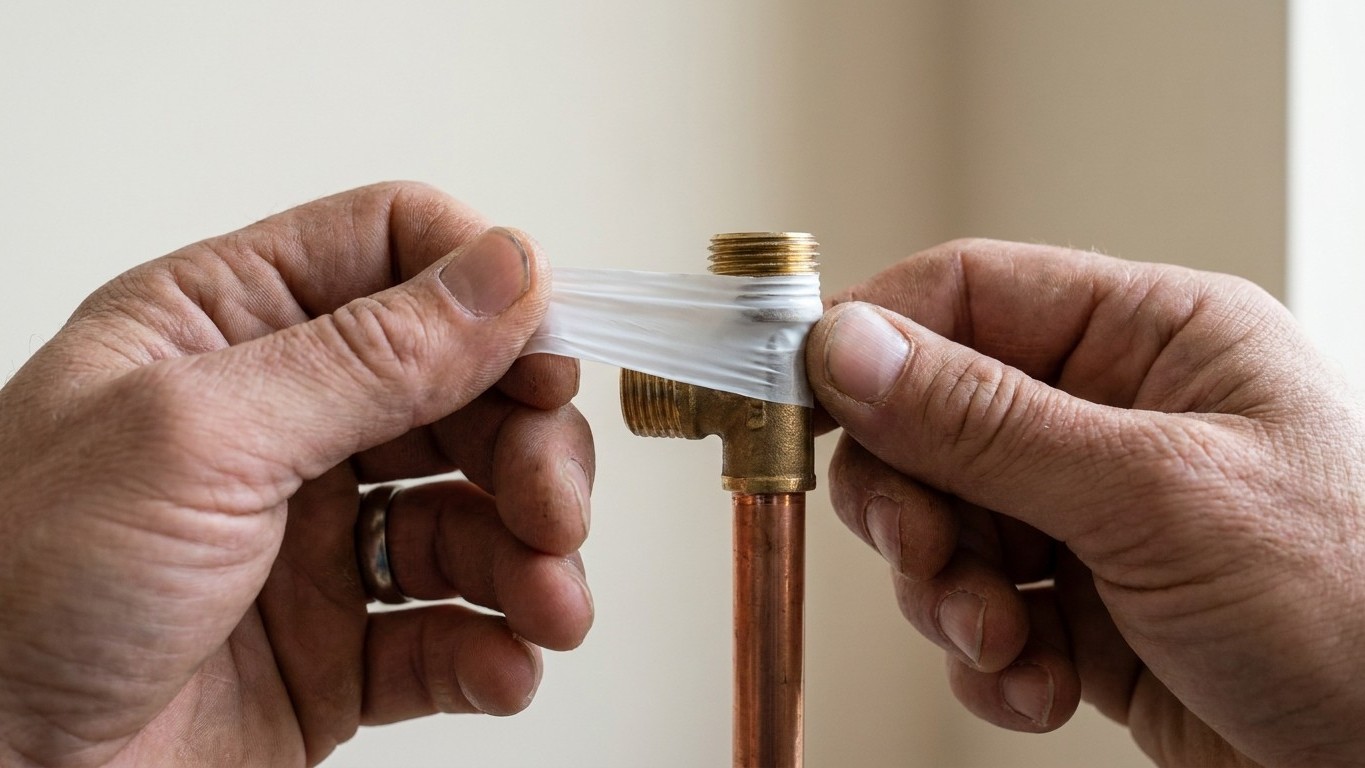
Wind PTFE tape the wrong way round a fitting and you won’t see a single drop of trouble at first. It can take weeks, sometimes months, before that slow drip appears under the sink, and by then most people have long forgotten which direction they wrapped it in. The fix, once you know it, takes about ten seconds. The direction matters because of the way the threads themselves are cut, not because of any fussy rule someone invented to catch people out.
Here’s what actually happens. Plumbing threads are cut in a spiral, and when you tighten a fitting, you’re turning it clockwise (looking at the end of the pipe). If your tape is wound anticlockwise, that tightening motion physically unwinds the tape as you screw the joint together, bunching it up or peeling it back rather than compressing it into the gaps between the threads. Wind it clockwise, in the same direction as the tightening, and each turn of the fitting presses the tape further into those threads instead of fighting against it. I’d wrapped mine the way that “felt” natural, holding the pipe and winding towards myself, which turned out to be exactly backwards.
Key takeaways
- Most people wrap PTFE tape the way that ‘feels natural’—which is often exactly backwards
- A plumber demonstrated why the direction matters by showing tape visibly loosen on one fitting and flatten on another
- The delayed leak that appeared weeks later was the giveaway that tape failure, not a cracked fitting, was to blame
The trick for getting the direction right every time
Hold the pipe or fitting with the open end facing you, the bit you’re about to screw something onto. Wrap the tape moving away from you, over the top of the pipe. If you’re right-handed, that usually means winding clockwise when viewed from the end of the pipe. It sounds like a small detail, and it is, but it’s the whole difference between a joint that seals and one that quietly weeps for weeks before anyone notices the damp patch under a cabinet.
A plumber I spoke to about my own leak explained it with a simple physical demonstration: he wound tape the wrong way round a spare fitting, then tightened it by hand while I watched the tape visibly loosen and fold. Do the same thing the correct way, and the tape stays put, flattening into the thread valleys as it should. No special tool needed, just eyes on what you’re doing before you reach for the wrench.
Why the tape is doing more than you think
PTFE tape (that’s polytetrafluoroethylene, the same slippery, chemically inert material used in non-stick cookware coatings) isn’t there to plug a gap the way a rubber washer does. It’s a thread lubricant and filler at the same time. Metal threads, even good ones, have microscopic imperfections and irregular gaps where the male and female threads meet. Wound correctly, the tape squeezes into those gaps under the pressure of tightening and creates a seal that also lets the fitting slide together more smoothly, which is why over-tightening a taped joint can actually make leaks worse by distorting the thread rather than sealing it better.
Most DIY sites and hardware store staff recommend two to three wraps for standard fittings, going up to four or five on larger pipe threads where the gaps are wider. Too little tape and you leave gaps unfilled. Too much and the fitting won’t thread on properly, which is its own kind of leak waiting to happen. I’d used a generous four wraps on mine, which felt safe at the time, wound the wrong direction, and undid all that generosity in one move.
Reading the leak before you take anything apart
A slow drip that starts weeks after installation, rather than immediately, is a classic sign of tape failure rather than a cracked fitting or a faulty washer. Immediate leaks tend to mean something structural, a hairline crack, a fitting that was never fully tightened, threads that don’t match. Delayed leaks like mine usually point to the tape shifting under vibration, temperature changes, or the general settling that happens as pipework expands and contracts with hot and cold water use over time. If you’re troubleshooting your own drip, that timeline is worth paying attention to before you start dismantling anything.
Turn off the water supply, dry the fitting thoroughly, and unscrew it. If the old tape looks shredded, balled up, or pushed to one side rather than sitting flat in the threads, that’s your answer. Scrape off every trace of the old tape with a cloth or an old toothbrush, since any leftover fragments will stop new tape sitting properly. Re-wrap in the correct direction, tighten by hand until snug, then give it a final quarter to half turn with a wrench, no more. Overtightening is one of the most common ways people turn a fixable leak into a fitting that needs replacing altogether.
A few pounds of tape, a lot of avoided grief
A roll of PTFE tape costs very little, and one roll will see most households through years of odd jobs, tap washers, shower head fittings, garden hose connections. It’s one of those items worth keeping in a kitchen drawer alongside the spare fuses and the roll of electrical tape, because the moment you need it is rarely a convenient one. Yellow tape, thicker and rated for gas fittings, is a different product from the white tape used on water fittings, and the two shouldn’t be swapped for each other. Reading the packaging takes a moment and saves a headache later.
What surprised me most, talking this through afterwards, was how often the wrong-direction mistake gets made precisely by people who are being careful. Rushing rarely causes this particular error. It’s the deliberate, thoughtful wrap, the one where you’re concentrating and doing your best, that goes wrong most often, simply because “away from the body, towards the direction of tightening” isn’t something most of us have ever been taught to check. Now I glance at the end of the pipe every single time, and it’s become as automatic as checking a socket is switched off before I plug something in.