
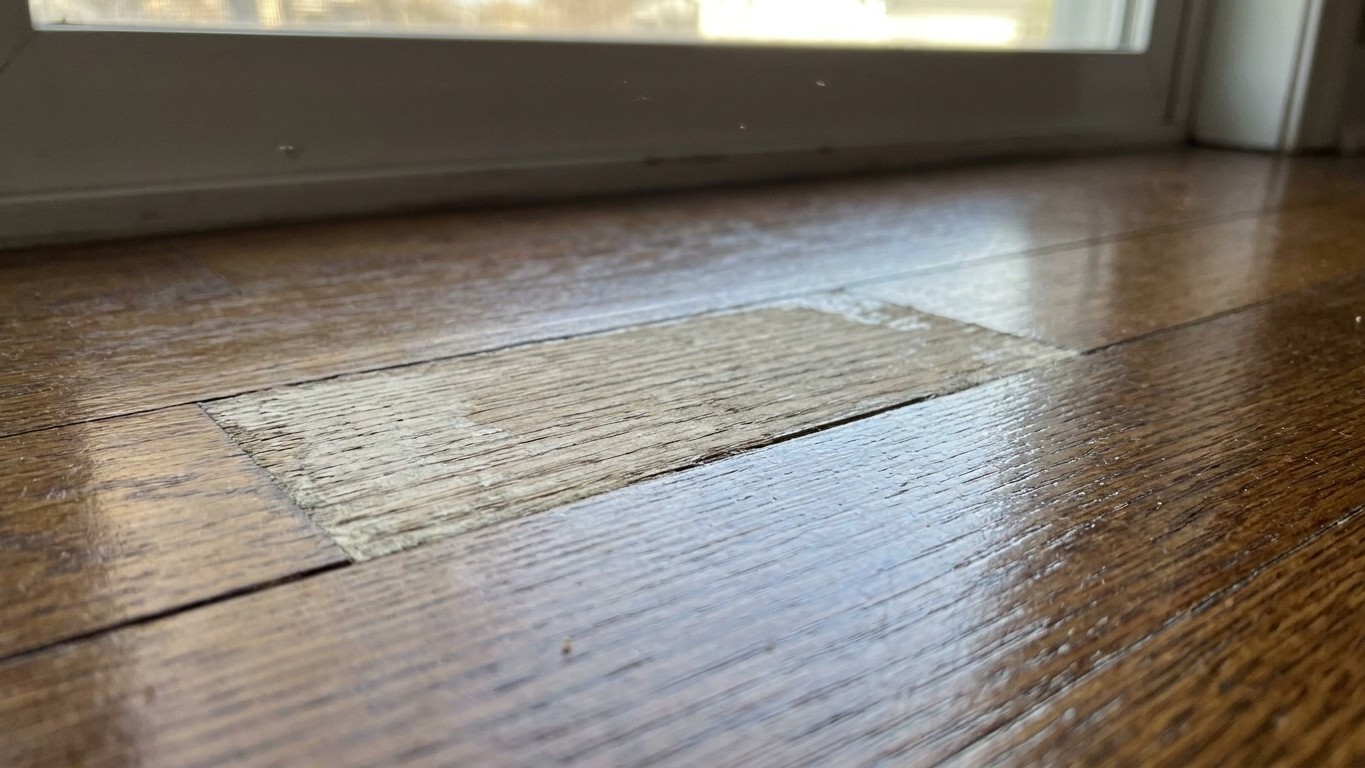
Peel back a strip of old double-sided tape from a varnished floorboard and you may well lift away more than sticky residue. Sometimes it takes a thin skin of the varnish itself, leaving a dull, pale patch exactly the shape of the tape. Other times, if you were fixing tape to the rug rather than the floor, it’s the rug backing or a few tufts of fibre that come away instead. Either way, that satisfying rip is rarely as harmless as it feels at the time.
Key takeaways
- Peeling off old double-sided tape can strip varnish, damage wood floors, or rip carpet fibres—but many people don’t realize until it’s too late
- Synthetic rubber adhesives behave very differently from silicone-based alternatives, and the label won’t always tell you which you’re buying
- Professional-grade rug pads, corner grippers, and even silicone sealant offer safer, longer-lasting solutions that won’t haunt your floors
Why the tape does this in the first place
Rug tape isn’t one single product with one single behaviour. The trouble is that cheaper varieties often rely on synthetic rubber adhesives, and they might leave adhesive residue behind when removed, or flake off onto the floor over time, and can even damage the finish of wood floors or cause warping as moisture gets trapped between the tape and the wood. Manufacturers sometimes add plasticisers to make these rubber-based adhesives grip harder or last longer, and these chemicals can end up damaging the floor itself. On a rug, the same aggressive glue can work the other way, and a carpet tape with harsh adhesives can ruin an area rug as the material disintegrates over time and reacts with the fibres, ripping them off when the tape is removed.
Silicone-based tapes behave rather differently, and this is worth knowing before you buy your next roll. Silicone is more durable than rubber for this purpose and, unlike rubber, doesn’t leave a sticky residue, being just as easy to apply and remove without ripping off carpet fibres or damaging the floor’s surface. It’s the difference between a firm handshake and someone gripping your wrist and not letting go. I’ve always found it a bit of a lottery reading the packaging on tape at the DIY shop, since “extra strong” is sometimes code for “extra stubborn to remove later.” If a label doesn’t mention silicone or say it’s residue-free, treat it with suspicion, especially on anything varnished, waxed, or otherwise finished.
Making good the damage
If you’re staring at a sticky ghost mark on your boards right now, don’t reach for anything harsh straight away. Start by gently scraping the tape edges with a plastic scraper to avoid scratching the floor, then apply a small amount of adhesive remover or rubbing alcohol on a soft cloth, letting it sit for a few minutes before wiping away the sticky remnants. Heat is your friend here too. Applying heat loosens the adhesive, so a hairdryer or heat gun on a low setting, moved back and forth over the tape for several minutes, will soften it considerably. Once it’s pliable, a credit card or plastic scraper works well: as soon as the adhesive softens and loosens you can start scraping, and once one side lifts you can grab the tape and pull as you scrape.
For the residue that always seems to linger after the tape itself is gone, household cupboards usually have something suitable. WD-40, rubbing alcohol, Goo Gone, nonstick cooking spray or white distilled vinegar can all be poured over the remains to saturate and weaken the adhesive before you lift it off with a credit card or plastic scraper. For the last stubborn traces, a pencil eraser or a melamine foam sponge moved back and forth across the sticky patch will usually finish the job. Whatever you reach for, do test it somewhere hidden first, because testing any solvent on a concealed spot beforehand helps prevent discolouration. I learned that one the hard way on a hallway floor years ago, when a splash of white spirit left a faint tide mark I still notice on grey afternoons.
Kinder ways to keep a rug in its place
Having been through the palaver of scraping and sponging, I’d steer most people away from tape altogether unless it’s clearly labelled for the job. A proper non-slip rug pad remains the gentlest option going, because non-slip rug pads made from rubber or felt-and-rubber combinations provide strong grip without damaging finished surfaces such as hardwood, tile, laminate or vinyl. They also do more than one job at once, since a rug pad stops slipping. Also, protects the rug, adds cushioning and helps it last longer.
Runners and small rugs that only curl or shuffle at the corners don’t need a full pad at all. Small grippers tucked underneath are usually enough, and these adhesive or silicone pads applied to each corner hold the rug edges flat to the floor while remaining completely invisible from above. Choose ones marketed as reusable and washable rather than permanent, since permanent adhesive options can leave residue or damage the flooring, whereas reusable, washable grippers are far safer.
For anyone happy with a slightly messier weekend job, a bead of silicone sealant on the underside works surprisingly well as a budget fix, particularly on inexpensive rugs you’re not too precious about. Apply it to the edges and a few lines across the centre, flatten the beads with a putty knife so they don’t feel like a hard ridge underfoot, then leave it to air dry for at least 24 hours. It’s not glamorous, but it costs next to nothing and holds a rug firmly without the drama of peeling tape off a good floor in five years’ time.
One last thing worth knowing: even the gentlest fix works better on a rug that’s actually clean underneath. Over time, dust, dirt and debris build up on the underside of a rug, making it less effective at staying in place, whatever you’ve stuck to it. So before you tape, pad, or caulk anything, give the rug a proper turn-over and a hoover on the back. It sounds like a small thing, but it’s often the difference between a rug that behaves itself and one that keeps you reaching for the tape all over again.
Sources : oldhouse.blog | justanswer.com