
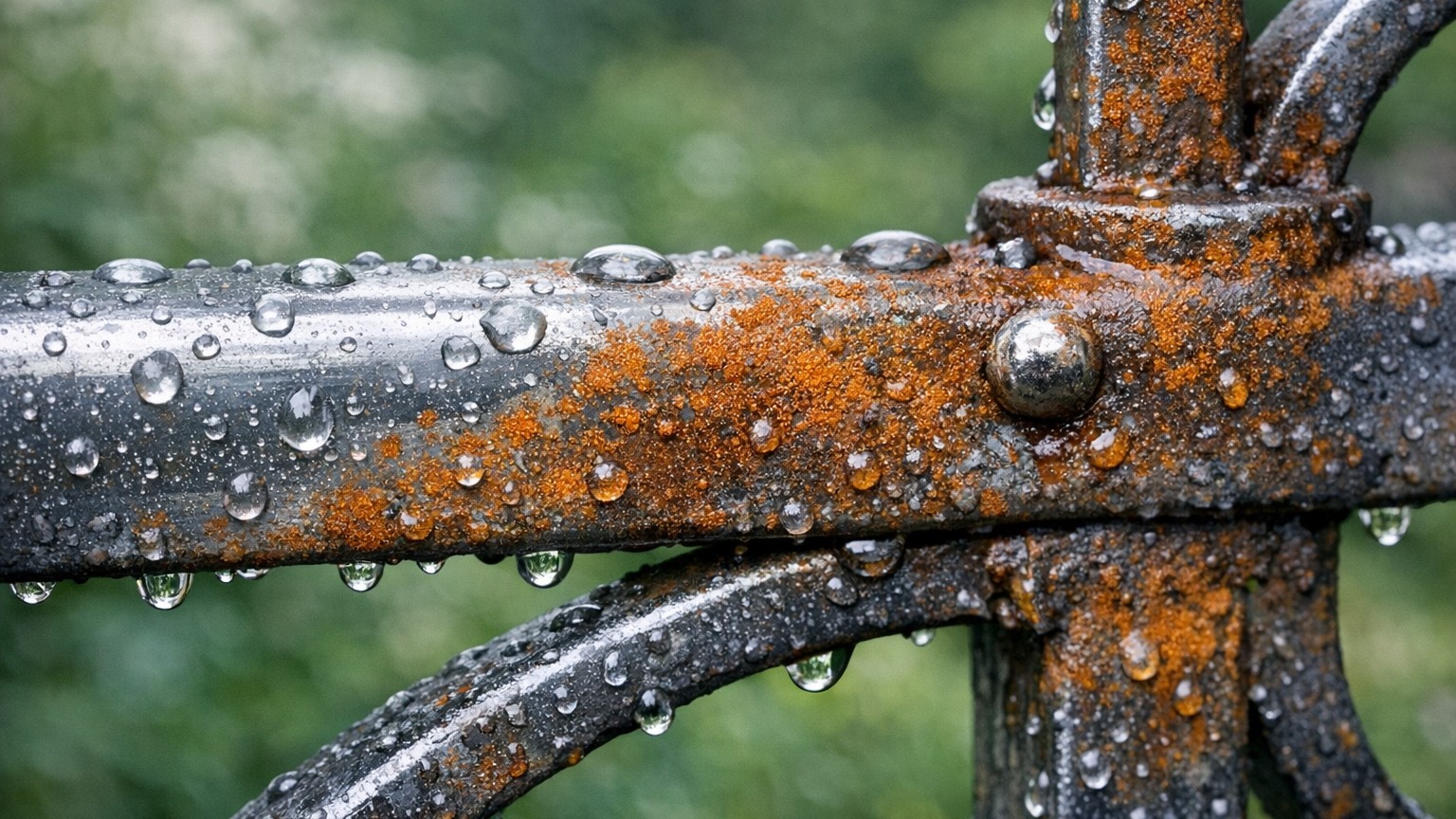
A freshly sanded gate looks magnificent for about twenty-four hours. Then, seemingly from nowhere, a fine orange bloom creeps across the bare metal, and by the end of the week it can look worse than when you started. That orange mist has a name, flash rust, and understanding why it happens is the difference between a gate that lasts a decade and one that needs doing all over again before summer is out.
Key takeaways
- Bare steel can show visible rust within just 2-4 hours depending on humidity—most people don’t prime fast enough
- Sanding too aggressively creates deeper scratches that accelerate rust, and removing all rust defeats rust converters
- The coating fails 60-80% of the time due to poor prep timing, not bad paint—but this is fixable with the right sequence
Why Bare Metal Rusts So Fast (Faster Than You’d Think)
The standard advice, sand it back, prime it, paint it, is perfectly sound in theory. The problem is the gap between those three steps. Once a part is bare steel, there is no coating, no protection, and nothing stopping moisture in the air from reacting with the surface. That is exactly why flash rust happens. Steel does not stay inert once you expose it. The sanding process itself removes the passive layer that was slowing corrosion down, leaving a surface that is, chemically speaking, ravenously hungry for oxygen.
The timing is sobering. In cool, dry conditions, bare steel can begin showing a fresh oxide layer within four hours. In humid coastal weather, that window shrinks to just two hours. Most of us in Britain are not working in cool, dry conditions. We are working in drizzle, or on an overcast afternoon in October when the relative humidity is already nudging eighty per cent. Working with bare metal in high humidity accelerates the oxidation process considerably. That week you waited before getting round to the primer coat? The gate had already been quietly rusting for days.
There is another factor that catches people out: the sanding itself can make things worse if you are not careful. Abrasives like sandpaper and flap discs can physically scrub flash rust from the surface, but they also introduce new scratches that may require further smoothing before moving on to finishing. Deeper scratches mean more surface area, and more surface area means more metal exposed to the damp British air. Going at your gate with the coarsest grit disc you own is satisfying in the moment, but it can actually accelerate the problem.
The Mistake Nobody Warns You About
Here is the part that trips up even experienced DIYers. Going too aggressive too soon, stripping back to shiny bare steel, removes the adherent rust the converter needs to react with. The chemistry then has no substrate to work on. So if your plan was to sand to bare metal and then reach for a rust converter product, you may have inadvertently sabotaged your own treatment. Rust converters work by reacting chemically with iron oxide. Give them nothing to react with, and they perform poorly.
Industry research from AMPP and Sherwin-Williams attributes roughly 60% to 80% of all coating failures to poor surface preparation, not bad product. So when a carefully applied coat of primer blisters or peels, the tin gets blamed unfairly. The real culprit was what happened, or did not happen, in the hours after the sanding stopped. Coastal and salt-belt steel also carries invisible salt deposits in every pit, and rinsing with fresh water before any coating goes on is not optional, salt wins every time. This applies just as much to a garden gate in Scarborough as to a ship’s hull.
There is also a trap with certain primers. Using a rust primer on bare, clean metal can cause it to separate, since rusty primers need rust to penetrate properly. On bare metal, a clean metal primer is the correct choice. Using the wrong product on perfectly prepared metal is a waste of an afternoon’s work.
Rescuing a Gate That Has Already Flashed
Good news first: all is not lost. Light surface rust on bare steel that has been left exposed is normal. It does not mean the metal is ruined. The approach depends entirely on how far things have gone.
For light flash rust that appeared within a week, the surface generally responds well to a careful clean-up. A rust remover product and fine steel wool will clean off flash rust quickly and bring the metal back to bare metal, after which the next step is sealing it with epoxy primer before it has a chance to rust again. The key word there is “immediately.” Do the whole sequence in a single session if you possibly can. Time your prep so the primer or converter goes on within four hours of final cleaning.
If the rust has gone deeper, into pits rather than just sitting on the surface, an acid etch treatment is worth considering. Acid etch products not only dissolve light surface rust, but they also leave behind a protective phosphate coating to prevent future rust from starting. This phosphate layer buys you a little more time before primer must go on, which is genuinely useful if you cannot complete the whole job in one go. Apply it, let it do its work, neutralise it properly, and then prime the same day.
For heavier corrosion where the gate is deeply pitted, sandblasting is often the most practical route, particularly if the gate features intricate details or scrollwork that a grinder cannot reach. But even after sandblasting, best practice is to treat the blasted metal as soon as possible, same day is ideal.
The Right Way to Finish the Job
The sequence matters enormously. Sand or treat the rust. Degrease. Prime with the correct primer for the surface condition. Paint with a proper direct-to-metal paint, not ordinary exterior emulsion. Regular exterior paint does not contain the rust-inhibiting components that direct-to-metal paints do. Each coat needs to be fully dry before the next one goes on, and below about 10°C or in high humidity, coatings will not cure properly, causing tackiness and poor adhesion. A damp November afternoon is genuinely the wrong time to paint your gate, however keen you are to tick it off the list.
For the long term, regular inspections make an enormous difference. Small scratches and dents expose bare metal to moisture, joints and hinges collect standing water, and catching a rust spot early means a five-minute job with a wire brush rather than a whole weekend of sanding. One overlooked detail worth knowing: high concentrations of salt, sulphur dioxide, and carbon dioxide all accelerate the rusting process, so gates near coastal locations or busy roads will always need more frequent attention than those in sheltered inland gardens. If yours sits beside a main road, checking it every spring rather than every couple of years is not overcaution, it is just being realistic about chemistry.
Sources : xionlab.com | zumiaccess.com