
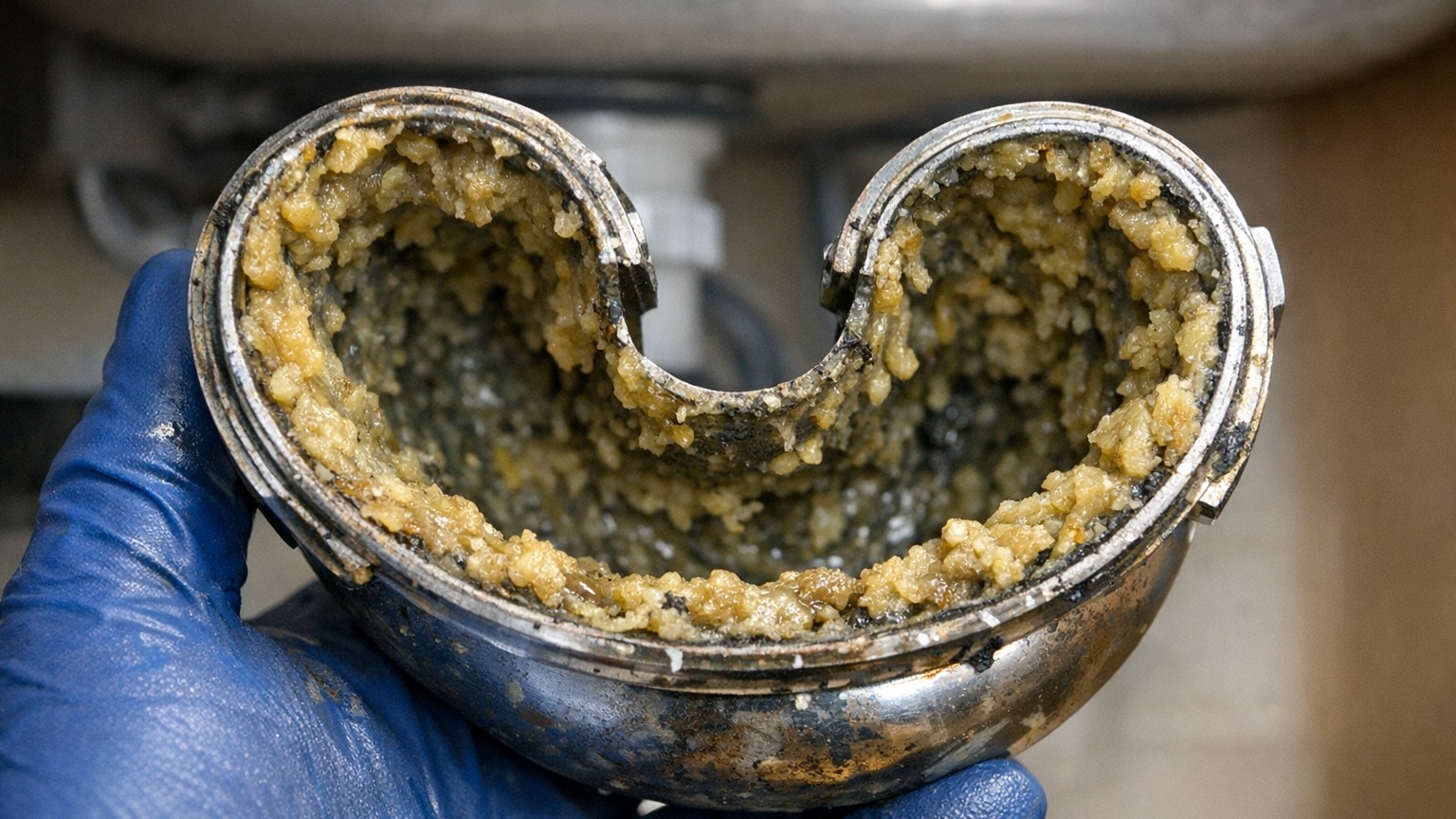
The morning after I unblocked my kitchen sink, I crouched under the cabinet with a torch and peered into the open U-bend. What I saw explained everything: a thick, yellowish-grey coating lining the inside of the pipe, like the rings of a very unappetising tree. That waxy build-up was the real problem, and it had been growing quietly for months. The good news? I had just cleared it in under twenty minutes, no call-out fee, no plumber standing in my kitchen, and no bill to ruin my Tuesday.
Key takeaways
- A mysterious yellowish-grey coating was silently building up in the pipes for months
- The culprit is hiding in your kitchen right now, and it costs pennies to eliminate
- One discovery under the sink exposed why plumbers charge £80-£270 for what takes 20 minutes
What is actually blocking your sink
The usual suspects are fats, oils, and grease (FOG) that solidify in your pipes, creating stubborn blockages. Most of us know this in theory, but the practical reality is still surprising. Leftover cooking oil or bacon grease might be liquid when hot, but it cools and solidifies inside your pipes, creating a sticky trap for Everything else. Soap makes it worse, too. Most soaps are made from animal or vegetable fats, which behave in an identical way to the grease from food, the soap fat clumps together with food scraps and they conspire to cause a stinking grease-clogged drain.
Grease build-up starts with small amounts of cooking oil and fat being washed down the sink during food preparation or dishwashing. Over time, these tiny amounts add up, solidifying and sticking to the sides of pipes. Hair and other debris get caught in the grease, and as the grease continues to accumulate, it attracts soap scum and food particles, causing the clog to grow until it blocks the pipe completely. Coffee grounds, surprisingly, are also guilty: they clump together when rinsed down the sink and can seriously disrupt your water flow.
The warning signs are easy to miss at first. Initial warning signs of a grease-clogged drain include a gurgling noise, standing water in your kitchen sink, and foul odours. By the time water is pooling in the basin, the build-up is already well established. It only takes a few weeks for grease accumulation to cause serious plumbing issues. A sobering thought, given how routinely we rinse a greasy frying pan under the hot tap.
The 20-minute fix, step by step
The simplest method to try first costs almost nothing. Before anything more complex, pour boiling water down your plughole. If the blockage has been caused by a grease build-up, the boiling water may melt it away and help clear your pipes. A word of caution here: if you have PVC pipes, the extreme heat of boiling water may potentially damage them, so use water that has just gone off the boil rather than a full rolling boil if you’re unsure of your pipework.
If that alone doesn’t shift it, move straight to bicarbonate of soda and white vinegar. Start by pouring a couple of teaspoons of bicarbonate of soda into the plughole, followed by around one cup of white vinegar. Let the two ingredients fizz for about five minutes, this fizzing action is the key to shifting blockages, as the chemical reaction helps break down grease, food particles, and debris. After the fizzing settles, pour hot water down the drain to flush everything away. Both items already live in most kitchen cupboards, and between them they cost pennies.
For a more stubborn blockage, washing powder is an underrated ally. If your sink is blocked with grease or oily substances like cooking oil, washing powder can be a surprisingly effective solution, as its ingredients are designed to break down fats. Two tablespoons down the drain followed by a kettle of hot water will often do the job. And if none of those methods work, the next step is to go directly to the source: the P-trap is that bent piece of drainpipe underneath the sink. Debris can build up in the bend, and sometimes it just needs a good cleaning. Lay down an old towel and position a bucket underneath the U-bend to catch any water that spills out. Unscrew the fitting where the U-bend connects to the bottom of the sink, let it drain, remove the U-bend, and have a look inside to see if anything is clogging it, then clean it out fully. This is the moment you discover exactly what has been lurking in there. Gloves are not optional.
The real cost of reaching for the bottle
Many people, faced with a slow drain, grab a bottle of chemical unblocker from the supermarket shelf and think nothing more of it. The problem is what those chemicals are doing to the pipework over time. Most drain unblockers cause a chemical reaction to eat through the blockage, but it doesn’t stop at fat, soap, and hair. The combination of caustic soda, sulphuric acid, and hydrochloric acid can simply melt plastic pipes, and these chemicals also corrode metal pipes, making cracks and leaks more likely in future.
While PVC pipes, widely used in modern plumbing, are known for their durability and resistance to corrosion, the heat generated by the chemical reaction of drain cleaners can sometimes soften or even warp these pipes, especially with strong, acid-based cleaners, which can cause significant damage over time. There is also a subtler problem: when chemical cleaners break down FOG clogs, the clog material just moves further down the drain, creating a build-up elsewhere in the drain line that usually requires expensive professional services to clear properly. You feel better, the water runs, and the problem has quietly migrated somewhere harder to reach.
Then there is the question of calling a professional in the first place. According to Checkatrade’s guide for 2025, the average call-out fee alone is £60, rising to £180 for an out-of-hours or emergency call-out. For kitchen sink clogs, you can expect rates to range between £80 and £150 depending on severity. If the blockage turns out to need drain rodding or jetting, a simple drain cleaning will typically set you back around £80–£100, while drain rodding averages around £270. Compare that to a kettle of boiling water, a cup of white vinegar, and twenty minutes of your Saturday morning.
Making sure it doesn’t happen again
Prevention is genuinely easier than the cure here. The single most effective habit is to stop tipping cooking fat down the drain. Save your excess fats and oils from cooking and reuse them next time you cook, or capture them using foil or a suitable container, once cooled, you can dispose of them at your local waste and recycling centre. A cheap silicone drain strainer over the plughole will catch food particles before they enter the pipes. Installing strainers in all kitchen sinks prevents food particles from mixing with grease residue — when food debris combines with grease, it creates thick blockages that are very difficult to remove.
A simple weekly flush costs nothing at all. For routine maintenance, pour equal parts vinegar and baking soda down the drain before flushing with hot water. Do this every Sunday evening and the chances of a full blockage drop considerably. Hot water can help loosen debris, but coarse salt actually scours the inside of your pipes, removing more material. After removing any standing water, pour about half a cup of table salt down the drain before following with hot water, let it sit for a few minutes, and flush to clear the mixture.
One thing worth keeping in mind: a recurring blockage, or one that returns within a few weeks of being cleared, can signal something deeper. If you haven’t been pouring fats or coffee grounds down the drain, a much more likely cause could be cracked or damaged pipes, rats in your drainage system, or obstructions caused by tree roots further down the pipework. Hearing gurgling from other drains in the house is a classic sign of a significant blockage forcing trapped air through your pipes, at that point, a professional’s CCTV drain camera is exactly the right tool, and no amount of bicarbonate of soda will substitute for it. The twenty-minute fix works beautifully for ordinary grease and food build-up. Knowing when it isn’t enough is the other half of the skill.
Sources : jamesdrainssolutions.co.uk | maintaindrains.co.uk