
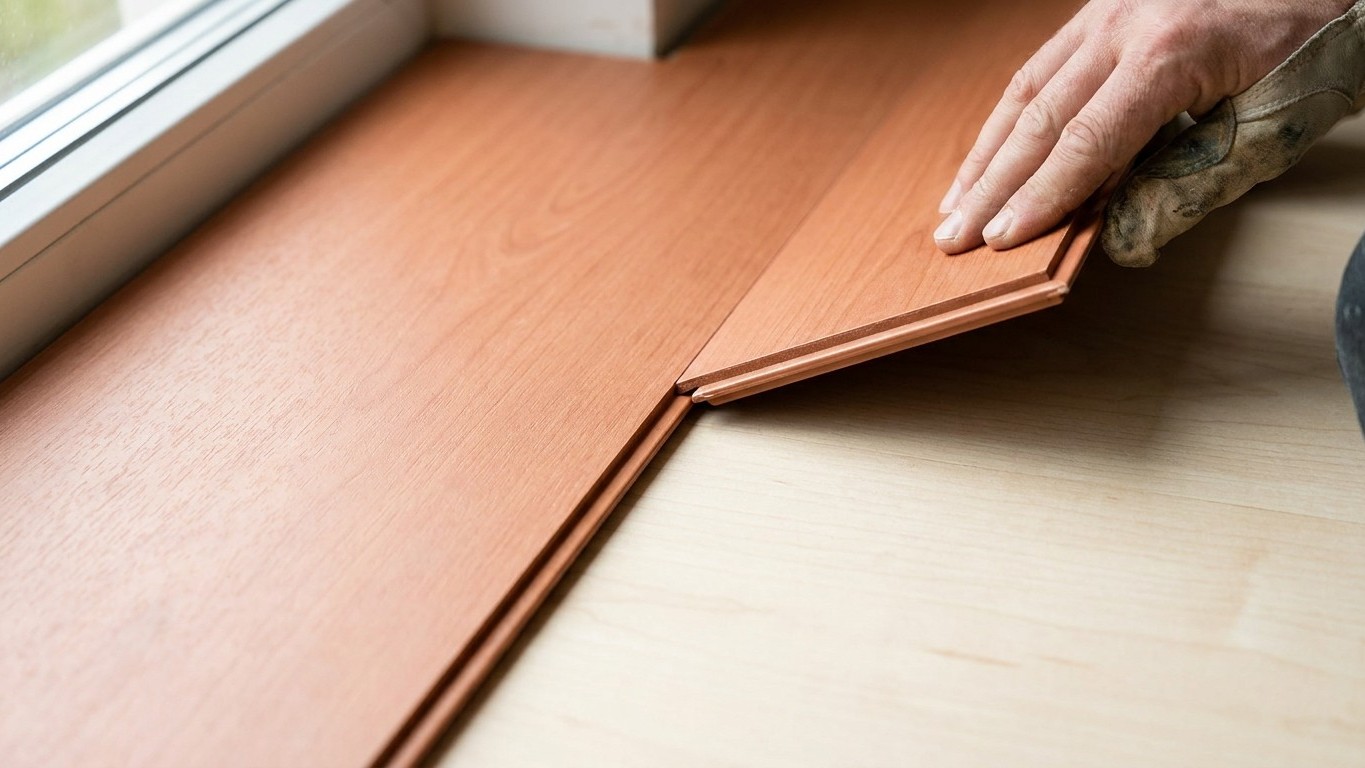
Linoleum is back. Not the tired, yellowing sheet your gran peeled off her kitchen floor in 1987, real linoleum, now available in click-lock planks that need no glue, no grout, no professional fitter, and no weekend lost to fumes. After decades of being elbowed aside by synthetic vinyl, natural linoleum, often confused with its synthetic cousin vinyl, is regaining popularity as people rediscover its durability and biodegradability. The flooring your grandparents walked on every day of their lives turns out to be one of the cleverest materials ever made for a home floor — and 2026 is the year everyone else is finally catching on.
Key takeaways
- A century-old flooring material is quietly becoming the smart choice for eco-conscious homes
- Click-lock linoleum installs like a puzzle—no professionals, no fumes, no weekend lost to drying time
- Scratch it and you find more linoleum; scratch vinyl and you expose bare plastic—one material simply outlasts the other
What linoleum actually is (and why it’s nothing like vinyl)
The confusion between linoleum and vinyl has persisted for decades, and it matters. Linoleum is a floor covering made from materials such as solidified linseed oil, pine resin, ground cork dust, sawdust, and mineral fillers such as calcium carbonate, most commonly on a hessian or canvas backing. There is not a drop of plastic in the recipe. Frederick Walton invented it in 1860 after noticing the rubbery film that forms on oxidised linseed oil, and his recipe has been virtually unchanged since then.
Vinyl, by contrast, is polyvinyl chloride: a petroleum-derived plastic that, however well it mimics wood or stone, is fundamentally a synthetic product. Made from natural, renewable materials like linseed oil and cork, linoleum is biodegradable, has a longer lifespan of 20 to 40 years, and emits fewer harmful chemicals, while vinyl is derived from PVC, a petroleum-based material that contributes to pollution and can release volatile organic compounds over time.
One fact that consistently surprises people: due to the pigment being mixed directly into the linoleum cement, the finished colour of the tile remains visible even after years of wear. Scratch the surface of vinyl and you reveal a bare plastic layer beneath. Scratch linoleum and you find more linoleum. That through-body colour is one of the reasons well-maintained linoleum floors in Victorian schools and 1940s hospitals are still going strong today.
There is also a hygiene angle that rather stuns people who assumed linoleum was a relic. The oxidisation process of linseed oil used in the fabrication of linoleum creates a binder which is naturally bactericidal, creating a natural defence against harmful germs, which is why linoleum flooring is a popular choice in high-bacterial areas such as schools, hospitals, kitchens and day cares.
The click-lock revolution: your grandparents’ floor, finally DIY-friendly
Sheet linoleum has always had one genuine drawback: you needed a professional fitter to lay it properly, and the seams required careful sealing. That barrier has now effectively disappeared. Modern linoleum comes in click-lock plank and tile formats that work on exactly the same principle as laminate flooring. An easy-to-install Valinge 5G locking system drops in and locks together, requiring no glue or nails, and installs easily over almost any existing flooring or flat surface, except carpet.
Click-lock flooring uses an interlocking system built into the edges of each plank; instead of using glue or nails, these planks connect to each other through a locking mechanism that, similar to piecing together a puzzle, snaps firmly into place when pressed together. The result is what flooring people call a floating floor, it simply rests on top of your subfloor, which means it can go over tiles, concrete, existing vinyl, or plywood. One advantage of click-lock flooring is that it is suitable for light foot traffic right after installation; because no glue or nails are used, there is no drying or curing time, allowing you to walk on your newly placed floor as soon as the final plank is snapped into place. A Saturday morning well spent.
The click format also solves a problem that plagued older glue-down linoleum: what happens when one section gets damaged? If a plank gets damaged, you can disassemble the floor back to the damaged area, replace the plank, and reassemble, whereas with glue-down vinyl, damaged sections require cutting out and patching, which rarely looks seamless. Click-lock’s disassembly advantage makes repairs straightforward.
One practical note before you dash off to the merchant: the subfloor must be clean, dry, and flat within 3/16 inch per 10 feet; fill low spots with self-levelling compound and sand or grind high spots. A lumpy subfloor will telegraph through any floating floor, linoleum or otherwise. Spend an hour levelling properly and you will thank yourself for years.
Why 2026 is linoleum’s moment
Classic linoleum is making a comeback, now in stylish shades and patterns, offering biodegradable, low-emission flooring that is remarkably durable. The timing is no accident. Homeowners and renters across the UK are increasingly uneasy about filling their homes with plastics, from food packaging to flooring. Today, more than ever before, homeowners are understanding and prioritising their carbon footprint and environmental impact when choosing materials for their homes, and this includes materials like linoleum made from renewable sources.
Linoleum contributes to creating healthy interior spaces; its total VOC emissions are 100 times lower than the most stringent industry requirements, which contributes to improving indoor air quality. For households with young children, pets, or anyone with respiratory sensitivities, that figure carries real weight. Marmoleum Click is a healthier alternative to vinyl, VCT or laminate flooring because it’s made with all-natural bio-based ingredients, linseed oil, limestone, tree rosins, wood flour, mineral pigments, and jute — and contains no added urea formaldehyde, phthalates, biocides, fungicides, or isocyanates, and emits zero VOCs.
The design offer has caught up with the sustainability story too. Modern linoleum comes in dozens of calm, muted tones, sage greens, warm terracottas, creamy whites, slate greys, that sit perfectly alongside the earthy, warm-toned interiors currently dominating British homes. The through-pattern wear layer provides durability and a consistent long-lasting wear appearance, and the floor is colourfast, even as it naturally wears down over time, the hue found on the surface does not fade. That matters enormously for a hallway or kitchen that takes a daily battering.
The honest case: what to watch for
Linoleum is not the answer to every flooring question, and pretending otherwise would be doing you a disservice. Linoleum works best in dry, everyday living spaces where comfort and durability matter most, kitchens, living rooms, bedrooms, hallways, and home offices, while vinyl is better suited for moisture-prone areas like bathrooms, basements, and mudrooms. The seams between click planks are not completely waterproof, so a wet room or a basement floor with rising damp is not where linoleum should go.
Maintenance is gentle but consistent. Linoleum must be sealed once or twice per year, and if your floor does not have a coating, it will also need waxing every two or three years. That said, the long-term maths are compelling. Linoleum often outlasts vinyl, lasting 30 to 40 years compared to vinyl’s 10 to 20 years, meaning a space might need two complete vinyl replacements during the lifetime of a single linoleum installation.
One quirk worth knowing before you unwrap your new planks: a yellow cast known as ambering can appear, caused by the oxidation of linoleum’s main ingredient, linseed oil, but linseed oil continues to harden over time, making the floor more durable. The yellow cast will fade naturally after one to two weeks as it is exposed to sunlight or artificial lighting in your home. Leave the boxes open in a bright room for a day or two before laying, and you will barely notice it. The linseed oil also develops natural anti-static properties over time, meaning less dust clings to the surface — a small but genuinely pleasant discovery on a Monday morning with a mop.
Sources : pkfloors.com | decorilla.com