
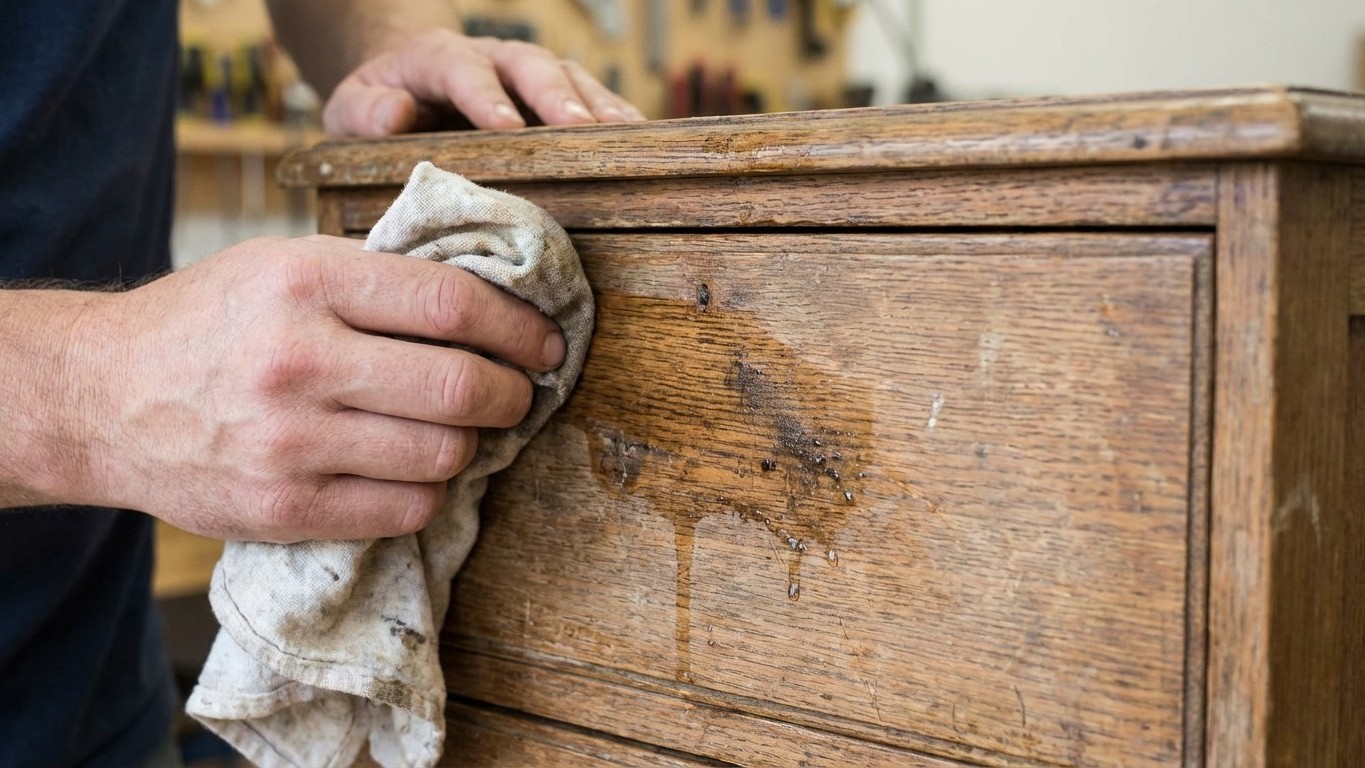
A battered chest of drawers for three pounds. A solid oak side table with a watermark. A perfectly proportioned bedside cabinet buried under someone else’s clutter. Charity shops are genuinely one of the best sources of furniture in Britain, and the pieces hidden in them often have far better bones than Anything flat-packed. The only thing standing between you and a beautiful room is a bit of courage and an afternoon’s work, and no, you really don’t need to sand anything.
Key takeaways
- What if the furniture restoration advice you’ve always heard is actually making the project harder than it needs to be?
- A single unexpected tool replaces hours of dusty work and changes everything about how fast this gets done
- The moment you realize three pounds of charity shop treasure just became the centerpiece everyone asks about
Why skipping the sander actually works
The traditional advice for furniture makeovers always seemed to involve hours of elbow grease, clouds of dust, and a sander borrowed from someone’s garage. That advice, though well-meaning, puts most people off entirely. The truth is that for painted finishes, which suit charity shop pieces beautifully, the preparation work that matters most has nothing to do with stripping back to bare wood.
What paint Actually needs to stick is a clean, slightly dull surface. A good degrease and a light key with fine wire wool (grade 0000, the very fine silvery kind that feels almost silky) will achieve this on most surfaces in under twenty minutes. The wire wool creates microscopic scratches the paint can grip without removing the existing finish or creating dust. Think of it less as Sanding and more as a handshake between old and new.
There’s one important caveat worth knowing: if the existing paint is flaking, peeling, or bubbling in places, you will need to address those spots first with a flexible filler, let it dry, and smooth it flat. But a piece in stable, just-tired condition? That’s your ideal candidate.
Getting the piece ready, the bit most people rush
Start by taking everything off and out. Remove handles, knobs, and any hardware you can unscrew, and drop them into a bowl of warm soapy water while you work. Cleaning the furniture itself comes before anything else, and this step deserves more time than it usually gets.
A solution of sugar soap mixed according to the packet instructions does a brilliant job on old furniture. Wipe every surface down firmly, rinse with clean water on a barely damp cloth, and let it dry completely. You’ll be surprised what comes off. Charity shop pieces often carry decades of furniture polish, cooking grease, and general life, and none of that belongs under your new paint.
Once dry, go over the whole thing with your fine wire wool, working in the direction of the grain if it’s wood. You’re not trying to remove anything, just pressing gently and consistently. Wipe off the resulting fine dust with a tack cloth or a barely damp cloth, and let it dry again. That’s your prep done. Genuinely.
Choosing paint and making it look intentional
Chalk paint became popular for exactly this kind of project, and it has earned its reputation. It adheres to most surfaces with minimal prep, dries quickly, and gives a lovely flat, velvety finish that suits vintage and charity shop pieces particularly well. You’ll find own-brand versions in most DIY and decorating shops that perform well at a fraction of the price of the well-known brands.
Milk paint is another option worth knowing about, especially if you want a slightly more aged, painterly quality. It’s less widely available but comes as a powder you mix with water, which makes it economical and reduces waste. Water-based eggshell is a third choice, giving a more durable, wipeable finish that’s ideal for anything that will see daily use like a kitchen unit or hall table.
Whatever you choose, apply two thin coats rather than one thick one. This single rule prevents more disasters than any other. A thin coat dries in thirty to forty minutes; a thick coat stays tacky, traps brush marks, and risks peeling. Use a decent quality brush with synthetic bristles for water-based paints, and you’ll get a smoother finish than you’d expect.
A small foam roller works wonderfully on flat panel surfaces like drawer fronts, giving an almost spray-paint-like smoothness. Keep the brush for edges, legs, and carved details. Between coats, a very light pass with fine wire wool and a wipe-down will take away any raised grain or bristle marks, and the second coat will look considerably more professional for it.
The finishing touches that make all the difference
New hardware transforms a piece out of all proportion to its cost. Original handles that have been cleaned up in vinegar and water often look perfectly charming and keep the character of the piece. But if you want something fresh, ceramic knobs, simple brass cup handles, and black iron t-bar pulls are all widely available at reasonable prices and can shift a piece from tired to intentional in seconds.
Sealing the paint is worth doing if the piece will have things placed on it regularly. A clear furniture wax rubbed in with a lint-free cloth and buffed off after five minutes gives a soft sheen and a protective layer. Wax over chalk paint in particular takes the finish from slightly powdery to genuinely lovely. For higher-traffic pieces, a water-based furniture varnish in a matte or satin finish offers more durability without changing the look significantly.
There’s something satisfying, almost quietly political, about taking a piece of solid furniture that someone else thought was finished and giving it a whole second life. Landfill gets a little lighter. Your home gets a piece with actual character. And somewhere down the line, someone will admire that little Cabinet or chest and ask where you got it, and the answer “three quid from the hospice shop, done in an afternoon” is honestly one of the best things you’ll ever say.