
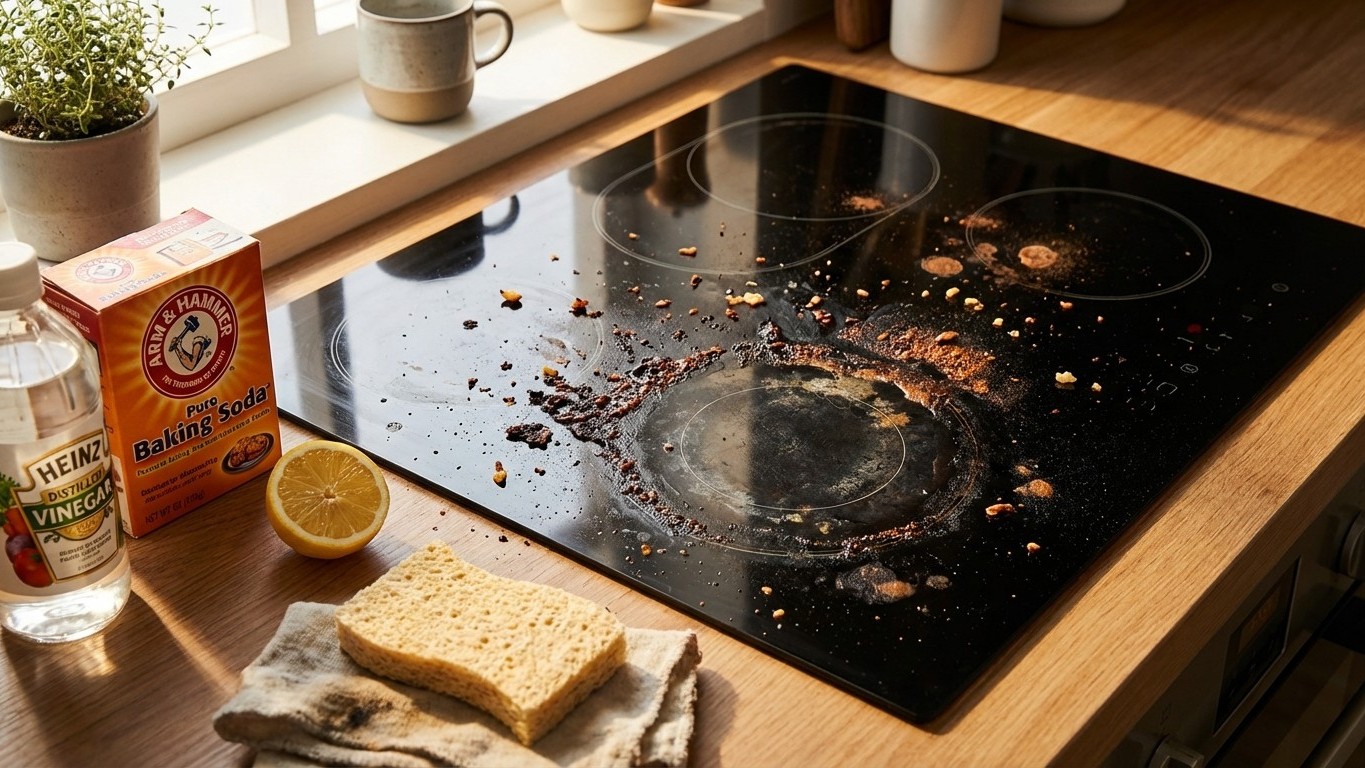
Burnt milk on an induction hob. Caramelised sugar welded to a glass ceramic ring. A gas burner drowning in yesterday’s soup. Every cook knows the sinking feeling of looking down at the stovetop and realising that a quick wipe simply will not cut it. The good news is that you almost certainly have everything you need to tackle even the most stubborn residue sitting quietly in your kitchen cupboards right now, no specialist chemicals required.
These natural cleaning hacks for stovetop burnt residue have been refined through years of practical use, and they work across all the main hob types common in British kitchens. More than a list of ingredients, what follows is a complete, step-by-step approach: how to prepare the surface safely, which natural mixtures to reach for, how to adapt your method depending on whether you have glass ceramic, induction, or gas, and how to keep things cleaner for longer without any extra effort.
Why natural cleaning hacks make sense for your stovetop
The hidden damage that burnt residue causes
A thin layer of carbonised food left on a glass ceramic hob is more than just unsightly. Over repeated heating and cooling cycles, burnt residue can bond more and more deeply with the surface, eventually causing discolouration that no cleaner, natural or otherwise, can fully reverse. On gas hob grates made of cast iron or enamel, accumulated grease and charred particles gradually clog the burner ports, affecting flame distribution and, in the long run, cooking efficiency. The longer you leave burnt residue in place, the harder the job becomes. Tackling it promptly with the right gentle method is genuinely less effort than a monthly deep-clean war.
The case against harsh chemical cleaners
Most commercial hob cleaners rely on strong alkaline compounds, abrasive microspheres, or solvents. Used occasionally and rinsed thoroughly, they are not catastrophic. Used regularly, though, they can strip protective coatings from glass ceramic surfaces, leave behind a faint chemical film that reactivates unpleasantly when the hob heats up, and release fumes that linger in a kitchen that may not be brilliantly ventilated. There is also the environmental angle: those bottles eventually go to landfill, and some of their ingredients are persistent in waterways. The natural alternatives cost a fraction of the price and create almost no waste. For a broader view of keeping your whole kitchen clean without relying on proprietary products, the natural kitchen cleaning hacks guide covers everything from worktops to appliances.
Your natural cleaning toolkit: ingredients and equipment
The key ingredients
Bicarbonate of soda (baking soda) is the workhorse of natural hob cleaning. Mildly alkaline, it dissolves grease and lifts burnt organic material through a gentle effervescent reaction, and because its particles are fine and soft, it does not scratch glass or enamel surfaces when used correctly. White wine vinegar provides the acidic counterpart: it dissolves limescale and mineral deposits, cuts through greasy films, and deodorises. A word of caution here: the fizzing reaction when bicarbonate meets vinegar is satisfying but brief. The two work better sequentially (bicarbonate paste first, then a vinegar spray to lift it) than simply mixed together in a bowl, where they largely neutralise each other before reaching the surface.
Lemon juice performs similarly to vinegar in terms of acidity, with the benefit of a far more pleasant smell. Coarse sea salt acts as a physical scrub without scratching, especially when combined with half a lemon used as an applicator. Castile soap, the old-fashioned pure vegetable soap now widely available in liquid form, is a gentle degreaser that rinses cleanly and leaves no residue. Hydrogen peroxide at the standard 3% concentration sold in pharmacies can help with particularly dark, oxidised stains on enamel surfaces.
Tools that protect while they clean
A dedicated hob scraper (the flat, handled type with a replaceable razor blade) is transformative for glass ceramic and induction surfaces. Held at a shallow angle, around 30 degrees, it removes solidified residue without scratching. You should only ever use one on a cold hob, and always keep the blade flat to the surface. Alongside the scraper, a soft microfibre cloth is your best friend: it picks up dissolved residue without leaving lint or streaking. Avoid anything described as “scouring” or “heavy duty” on glass ceramic. For gas grates and enamel, an old toothbrush reaches into burner ports and around the edges of rings where a cloth cannot. A small spray bottle makes applying diluted vinegar solutions quick and even.
Step-by-step methods for removing burnt residue naturally
Preparation first
This sounds obvious, but the hob must be completely cool before you begin. Even a surface that looks cool can retain heat for 20 minutes after use; glass ceramic in particular. Remove any loose grates, burner caps, or rings and set them aside to soak separately. Brush away any large, loose debris with a dry soft brush before applying any liquid, because wetting carbonised crumbs just creates a paste that spreads the mess further.
The bicarbonate and vinegar method
Sprinkle a generous layer of bicarbonate of soda directly over the affected area. Dampen it very slightly with a few drops of water to form a rough paste, then cover with a clean, damp cloth and leave for at least 15 minutes (30 minutes for older deposits). The moisture and mild alkalinity begin breaking down the carbonised material without any scrubbing from you. After the soaking time, remove the cloth and spray the paste lightly with white vinegar. Allow the fizzing to subside completely, then use a soft cloth or the hob scraper (on glass ceramic only) to work the loosened residue away in straight strokes. Rinse thoroughly with a clean damp cloth, then buff dry with a microfibre.
If you find yourself using this approach regularly, you might also appreciate the detailed method in the guide to clean oven naturally with baking soda and vinegar, which extends the same principles to your oven interior.
The lemon and coarse salt scrub for stubborn stains
Cut a lemon in half and dip the cut face into a small pile of coarse sea salt. Use this directly as a scrubbing pad on the burnt area, working in small circular motions. The acid attacks carbonised residue and dissolves mineral deposits, while the salt crystals provide just enough physical abrasion to shift material that bicarbonate alone struggles with. This method is particularly effective on enamel and cast iron grates, and on stainless steel trim around burners. Rinse well afterwards and dry completely, because leaving salt on metal surfaces overnight can encourage surface rust.
Castile soap for a thorough degrease
After removing the burnt residue itself, a light grease film often remains. A few drops of liquid Castile soap diluted in warm water, applied with a soft cloth, cuts through this beautifully. Work it in with gentle circular motions, leave for two minutes, then rinse with a clean damp cloth. The surface should feel completely clean rather than slightly tacky. This final step matters more than it might seem: residual grease left on the surface will carbonise again the next time you cook, creating the same problem faster than before.
Adapting your approach by hob type
Glass ceramic and induction hobs: cleaning without scratching
These surfaces look robust but are surprisingly vulnerable to scratches from abrasive materials, and even some microfibre cloths that have picked up grit from elsewhere. Always start with the hob scraper at a shallow angle for any solidified spills, then follow with the bicarbonate paste method described above. Never use wire wool, rough sponges, or the scratchy side of standard kitchen sponges. After cleaning, a tiny amount of specialist glass ceramic conditioner (or even a drop of baby oil on a cloth, buffed and then wiped off) forms a light protective barrier that makes future spills easier to remove.
Vinegar is safe on glass ceramic and induction surfaces, despite some online concern. The acidity is mild enough to cause no damage when used as described here and rinsed off promptly. Where you should be more careful is with the hob’s electrical components: keep liquids away from the control area and never spray directly onto the surface from close range.
Gas hobs with enamel or cast iron components
Gas hob grates and burner caps benefit from a proper soak. Place them in a sink of hot water with a generous squirt of Castile soap and half a cup of bicarbonate, and leave them for an hour. Most of what looked welded on will have loosened enough to remove with a soft brush. Burner ports (the small holes around the burner head) can be cleared with a wooden cocktail stick or an old toothbrush; avoid metal implements that could enlarge the holes and affect flame distribution. Enamel surfaces can handle slightly more vigorous scrubbing than glass ceramic, but they are not indestructible: chips expose the metal underneath to rust, so always use soft brushes rather than anything metallic.
For a comprehensive approach to degreasing the surrounding kitchen furniture as well, the guide on natural degreaser for kitchen cabinets completes the picture nicely.
Common mistakes worth avoiding
Cleaning a still-warm hob with cold water risks thermal shock on glass ceramic surfaces, which can cause cracking. Using neat vinegar on natural stone surrounds (not common around hobs, but not unheard of in renovated kitchens) will etch the surface. Leaving bicarbonate paste on an aluminium trim overnight can cause mild oxidation. And using too much water near gas ignition points can cause the igniter to click repeatedly and erratically for hours afterwards. None of these are disasters, but knowing about them saves frustration.
Prevention: keeping your hob cleaner between deep cleans
A 60-second wipe-down after every cooking session, while the hob is still slightly warm but not hot, prevents the vast majority of residue from ever bonding to the surface. A damp microfibre cloth is all that is needed. Splashes that have not yet carbonised come away with almost no effort at this stage.
For a quick preventative spray, mix equal parts white vinegar and water in a small spray bottle, add ten drops of lemon essential oil if you have it, and keep it beside the hob. A light mist followed by a microfibre wipe after cooking takes under a minute and keeps the surface genuinely clean rather than just passable-looking. This same approach works well across the entire kitchen, and you can find a full range of recipes in the natural cleaning hacks collection.
Frequently asked questions about natural stovetop cleaning
Can vinegar be used on all hob types without risk? On glass ceramic, induction, and stainless steel, diluted vinegar is perfectly safe when rinsed off promptly. On cast iron grates, avoid leaving vinegar-based solutions to soak for extended periods, as prolonged acid contact can accelerate surface oxidation. A brief application followed by a thorough rinse causes no problems.
What about very old, deeply ingrained burnt residue that has built up over months? Patience is the key ingredient. Apply a thick bicarbonate paste, cover with cling film to retain moisture, and leave for several hours or even overnight. The extended contact time allows the alkaline paste to penetrate layers that a 20-minute application barely touches. You may need two or three cycles for truly ancient deposits, but the surface will come back.
Are there any natural ingredients to avoid on specific surfaces? Coarse salt on glass ceramic runs a small risk of leaving micro-scratches if used with heavy pressure; reserve the lemon-and-salt method for gas grates and enamel. Hydrogen peroxide at concentrations above 3% is unnecessary and can bleach coloured enamel finishes.
The most interesting thing about natural hob cleaning, once you have adopted the habit, is that the hob actually stays cleaner over time. Without the sticky residue that some commercial cleaners leave behind, fresh spills have less to adhere to. It is one of those rare cases where the gentler approach genuinely outperforms the aggressive one, given enough time to work. Worth thinking about the next time you reach for something under the sink.