
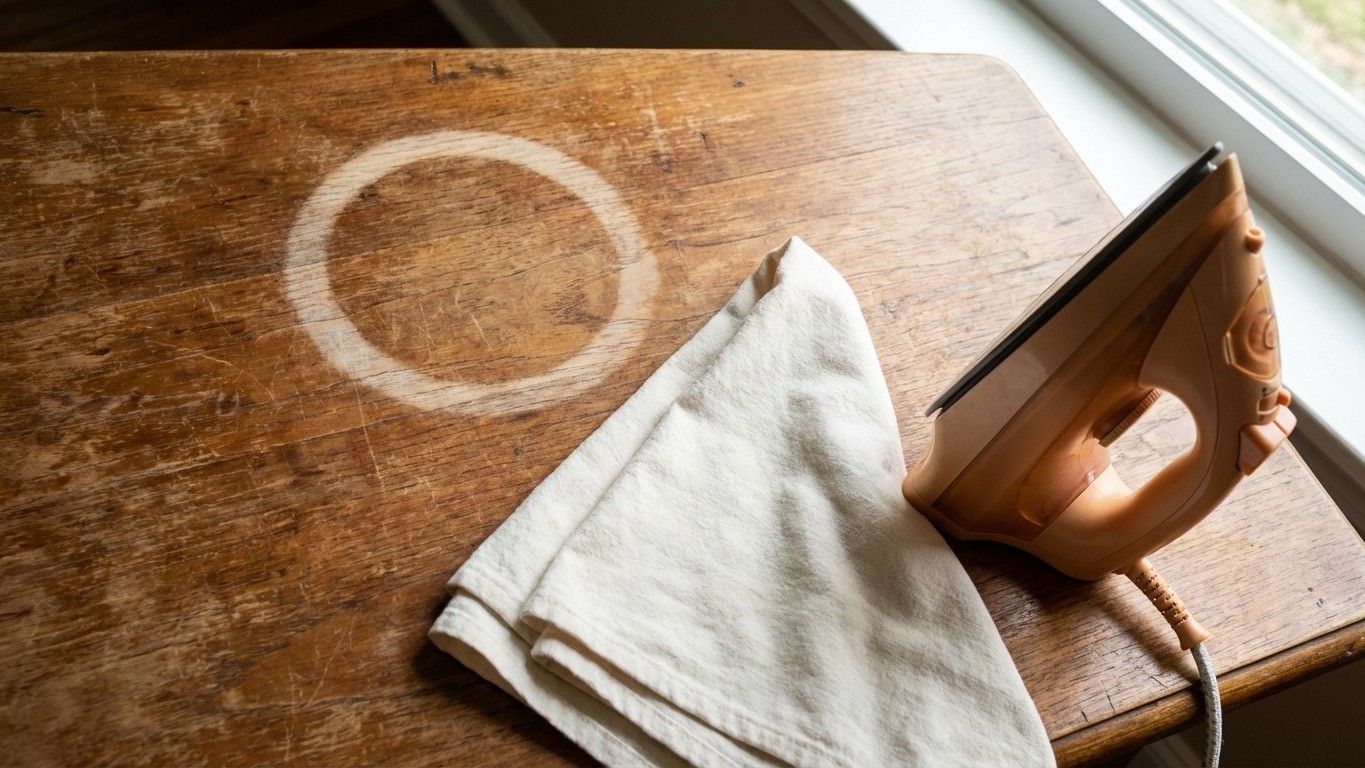
A deep scratch across a beloved sideboard, a white heat ring on your grandmother’s dining table, a chair leg gone dull and lifeless, most of us reach for sandpaper at the first sign of furniture damage. But experienced cabinet makers have long known a quieter secret: sanding is often the last resort, not the first. There are gentler, cleverer ways to bring tired wood back to life, and many of them involve ingredients you already have in your kitchen cupboard.
Key takeaways
- Most furniture damage sits ON TOP of the wood, not within it—meaning sanding is often unnecessary destruction
- A raw walnut, olive oil, and white vinegar can handle scratches that seem to demand aggressive restoration
- Heat rings and white marks vanish with a surprising combination of warmth, moisture, and petroleum jelly
Why Sanding Is Often the Wrong Place to Start
Sandpaper removes material. That sounds obvious, but the implication is worth sitting with for a moment. Every time you sand a piece of furniture, you’re taking away a layer of the original wood, the original finish, and in older pieces, decades of character. On antique or vintage furniture especially, that patina is part of the value. A professional restorer once explained this to me at a country fair years ago, he said that amateur over-sanding destroys more furniture than the original damage ever did. The piece ends up flat, pale, and somehow anonymous.
The good news is that most common furniture damage, surface scratches, small dents, cloudy or crazed lacquer, heat marks — sits on top of the wood or within the finish layer, not in the wood itself. Address the finish, and you address the problem. No sandpaper required.
The Old Tricks That Actually Work
For surface scratches on darker woods, the humble walnut is your first port of call. Shell a raw walnut and rub the exposed nut meat firmly along the scratch, following the grain. The natural oils and tannins in the walnut temporarily darken and fill the scratch, making it almost invisible. Leave it for a few minutes, then buff with a soft cloth. It sounds improbable. It works rather well.
Light scratches on any wood finish respond beautifully to a mixture of equal parts olive oil and white wine vinegar, roughly a tablespoon of each, mixed in a small jar. Apply a little to a soft cloth and work it gently into the scratch with circular motions, then buff dry. The vinegar cleans the surrounding area while the oil nourishes the wood and helps the light refract more evenly, reducing the contrast of the scratch. This is the kind of remedy that gets passed down through families rather than published in books, which is probably why it’s been half-forgotten.
Heat rings and white marks are a different matter, but equally manageable. They’re caused by moisture trapped beneath the lacquer, and the solution is, counterintuitively, more heat and a little fat. Place a clean, dry cotton cloth over the mark and press a warm iron (not hot; the lowest setting) onto it for ten to fifteen seconds. Lift, check, repeat. The gentle warmth draws the trapped moisture out through the finish. Afterwards, rub the area with a tiny amount of petroleum jelly or even a plain white candle, which helps reseal the surface. Many a ring left by a careless mug has vanished entirely with this method.
Reviving a Dull or Crazed Finish
Old furniture sometimes develops a network of fine cracks across the varnish, a condition called crazing. It looks alarming, but it’s usually the finish that’s failing, not the wood underneath. Before you consider stripping and refinishing, try this: mix one part raw linseed oil with one part turpentine (pure turpentine, not white spirit) and work it into the surface with a fine steel wool pad, using the gentlest possible pressure. The mixture softens the old finish slightly, allowing it to settle back into the cracks. Then wipe away any excess and leave the piece somewhere warm and airy for at least 24 hours. It won’t perform miracles on severe crazing, but for mild cases it can genuinely transform the appearance of a piece.
For furniture that’s simply lost its sheen and looks tired rather than damaged, a traditional beeswax polish remains hard to beat. You can buy beeswax furniture polish from most hardware shops, or make your own by melting beeswax pellets (widely available online) into a double boiler with a little turpentine, then letting it cool to a paste. Work it into the wood with a soft cloth, leave for twenty minutes, and buff vigorously. The transformation is quite satisfying, the kind of Saturday afternoon project that repays its effort immediately.
Small Dents and Gouges
Solid wood holds a particular magic trick in reserve: it can swell. A small dent in bare or lightly finished wood (not deep lacquer or paint) can often be raised back to level using nothing more than water and an iron. Place a few drops of water directly onto the dent and let it soak for two or three minutes. Then lay a damp cloth over the spot and apply a warm iron for thirty seconds. The steam causes the compressed wood fibres to expand upward. You may need to repeat this two or three times for deeper dents, but it’s genuinely effective on solid wood, and entirely reversible, which is more than sandpaper can claim.
For gouges too deep for the steam trick, a shellac stick (sometimes sold as a furniture repair stick) can be melted into the void with a palette knife warmed over a candle. Match the colour as closely as you can to the surrounding wood, let it harden completely, then level it with the edge of a credit card rather than abrasive paper. The result blends far better than most people expect.
Perhaps the most useful shift in thinking here is simply this: furniture is more resilient than we give it credit for, and often less broken than it appears. The piece that looks ruined after a scratch or a spill may need only patience, a walnut, and twenty minutes of your afternoon. There’s something rather lovely about that, and something that feels, in the best possible way, like remembering something important we nearly forgot.