
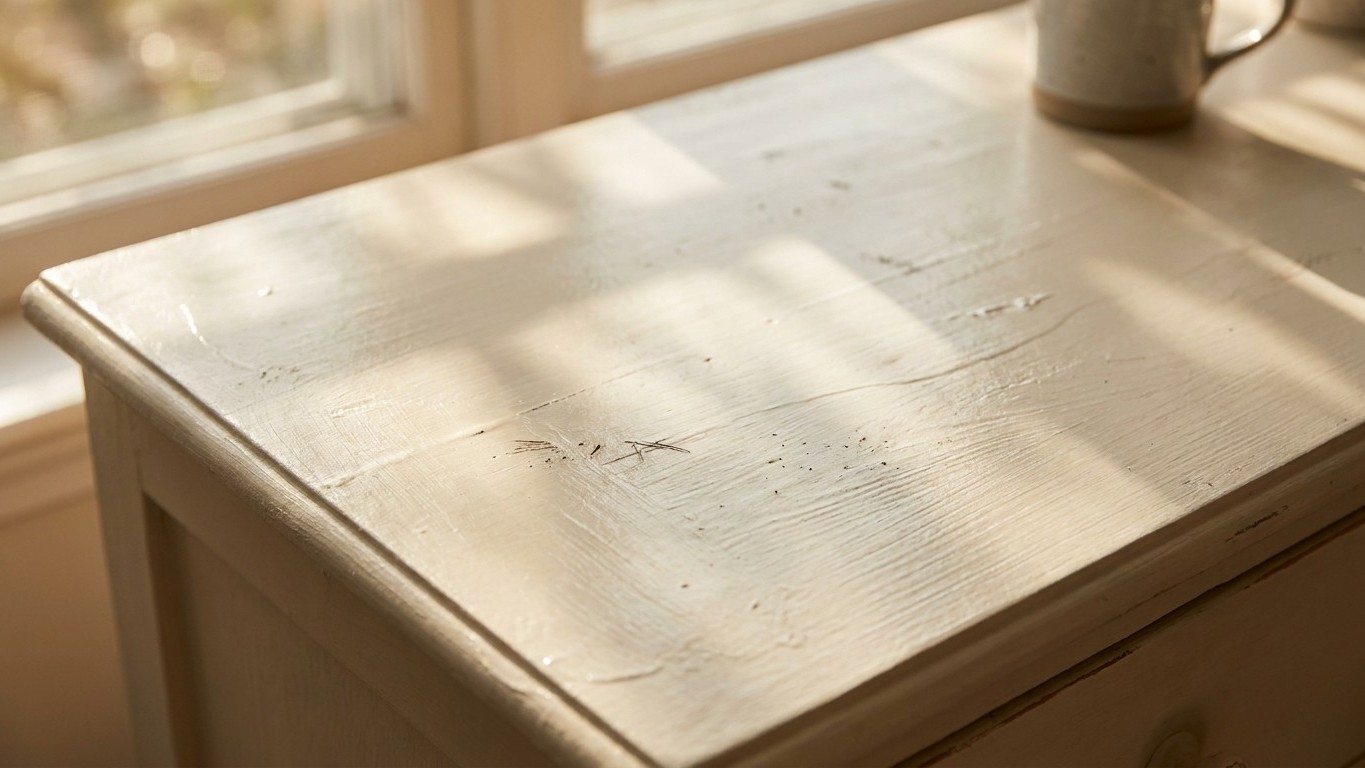
What I dragged across that tabletop wasn’t dust or a stray hair, it was the paint itself, half-skinned and tacky, pulling up into little ridges the moment the roller passed over it. An hour of British sunshine had done what no amount of careful rolling could undo: the surface had begun to set while the paint underneath was still wet, and the roller simply ploughed a furrow straight through it. Lesson learned the hard way, and one I suspect a good many of you have shared without quite understanding why.
Key takeaways
- A painted surface can be dramatically hotter than the air around it, even on a mild day
- When the top dries too fast, it forms a skin that traps wet paint underneath, causing the roller to tear and drag
- Professional painters test surface temperature with their bare hand—not the thermometer
Why sunshine sabotages a paint job
It seems like common sense, doesn’t it? Warm and bright, surely paint dries quicker and better in the sun. The trouble is that above a certain temperature, the solvents or water in the paint evaporate almost instantly, leaving the surface film dry while the layer beneath is still wet, which creates internal stress in the paint film. That’s precisely what had happened to my chest of drawers. The top had caught full sun for the best part of an hour, and while I thought I was being clever speeding things along, I was actually cooking the surface into a skin far faster than the paint beneath could keep pace.
What makes this worse is that surface temperature and air temperature are two very different things. Air temperature and the surface temperature of what you’re actually painting can be dramatically different, and surface temperature is what matters most. A pleasant 20°C afternoon can still leave a painted surface baking well above 30°C once the sun gets on it directly. And once that skin forms, brush and roller marks form because the wet edge dries so fast that overlapping sections can’t level out, leaving visible lap marks. My roller wasn’t dragging debris across the top. It was dragging half-cured paint that had nowhere left to go.
What was really happening under the roller
Here’s the bit that surprised me most when I looked into it properly. It isn’t simply that the paint dries “too fast” in some vague sense, it’s that the chemistry of levelling gets interrupted mid-process. This occurs when the paint fails to dry to a smooth film, resulting in unsightly brush and roller marks after it dries, and it happens from “working” paint too much during application or applying it too rapidly or for too long. On my chest, the roller was effectively reworking paint that had already begun forming a surface film, tearing that fragile skin and leaving raised, textured tracks that no amount of gentle smoothing could erase once they’d set.
There’s a second layer to the problem too, one that’s easy to miss until you’ve lived through it. Trapped solvent has nowhere to escape once the top has sealed over. Paint contains a solvent that evaporates as the paint dries, and if the paint dries too quickly and the solvent doesn’t evaporate, it gets stuck under the paint and causes bubbles. I didn’t get bubbles that afternoon, but I’ve seen it happen on a garden bench years ago, and it’s a far more frustrating repair job than sanding out a few drag marks. Dark colours, incidentally, show all of this far more readily than pale ones, since any unevenness in sheen stands out starkly against a deep tone.
Rescuing the finish and painting smarter next time
The fix, thankfully, isn’t complicated, just patient. Once the ridged paint had hardened fully (resist the urge to touch it up while it’s still soft, you’ll only make more of a mess), a light sand with fine sandpaper, around 220 grit, knocked the raised tracks back level. Wipe away the dust with a barely damp cloth, let the surface dry completely, then apply a proper thin coat with a decent quality roller, working in shade rather than sun. It cost me nothing but an extra half hour and a bit of pride.
For the future, I’ve made myself a small set of rules that any budget-minded furniture painter can follow without buying a single extra product. Move the piece into shade, even dappled shade under a tree does the job, rather than full sun. Paint in the cooler parts of the day, late morning once the dew has gone but before the midday heat builds. And keep coats thin; a thin coat dries evenly right through, while a thick one on a hot surface skins over top and stays gluey underneath, which is exactly the trap I fell into. If you genuinely can’t avoid a warm spell, working in smaller sections keeps a wet edge going so each pass blends into the last rather than dragging over half-set paint, and using a manufacturer-approved paint extender gives you more open time to work with.
One thing I didn’t appreciate until this happened to me: professional decorators actually test surface heat with the back of a hand before they start a coat, not just the weather forecast on their phone. If the wood feels warm to the touch, even on a mild day, that’s your sign to wait or find shade, because by the time you can see the problem in the paint, the damage is already done underneath.
Sources : painterssolutions.com | sohopainters.com