
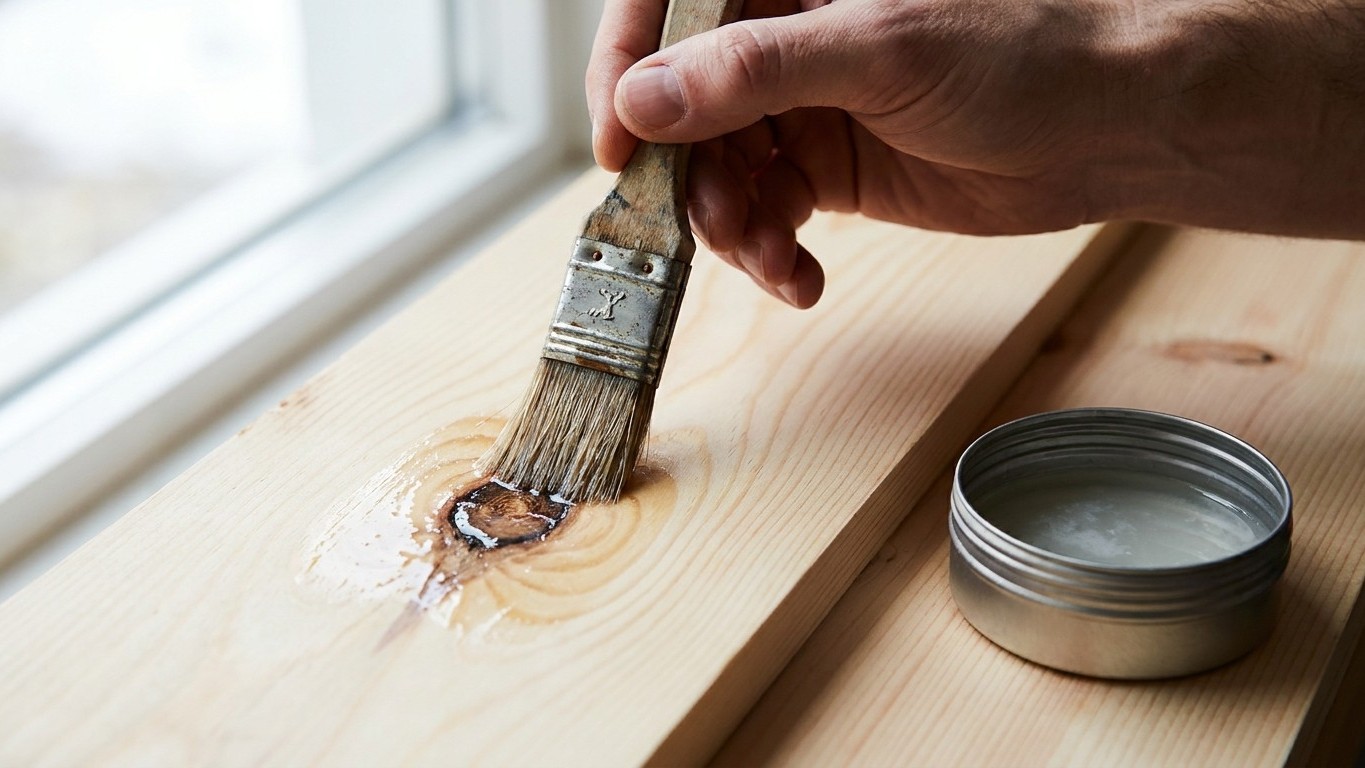
Knots turn traitor on you weeks after the brush goes down, not on decorating day itself. You stand back, admire your lovely fresh coat of white satin over that old pine bookcase or those Victorian skirting boards, and Everything looks perfect. Then a fortnight later, sometimes longer, a ginger-brown ring creeps through the paint exactly where each knot sits. The fix isn’t a thicker coat of paint or a fancier brand. It’s a thin, cheap layer of shellac dabbed onto the knots before anything else touches the wood.
The stuff has a proper name, knotting solution, and it’s been the trade’s quiet secret for generations. Shellac is a natural resin secreted by the lac beetle, refined into flakes, and dissolved in alcohol to make a brushable liquid that dries fast and leaves a hard, glossy, non-porous film. That hard little shield is exactly what stops resin travelling upwards through your paintwork.
Key takeaways
- Pine knots can stay hidden for weeks, then betray you through fresh paint as central heating draws resin to the surface
- A thin layer of shellac costs less than £20 and creates an impenetrable barrier that primer alone cannot match
- Two coats applied 30 minutes apart, extending 15mm beyond the visible knot edge, is the difference between permanent results and expensive re-painting
Why pine knots betray you months later
Here’s the bit that catches people out: the wood can look bone dry and perfectly innocent when you’re painting it. These knots are made up of resin, which acts as a natural adhesive for the branch to the tree, but the resin can seep out from the knot and cause discoloration on the surface of the wood. Central heating speeds the whole business along, drawing that sap towards the surface as the room warms and cools through the seasons. Pine knots can stay invisible on decorating day and then bleed straight back through the paint once heating and time draw the resin to the surface, and by then the only fix is to sand back, seal properly, and repaint work that already looked finished. A right faff, and entirely avoidable.
My own father swore by an old tin of button polish for this job long before anyone sold knotting solution in a proper tin. He wasn’t wrong, either, because that’s essentially what it is. Ordinary primer, however good the brand, simply hasn’t got the chemistry to stop resin in its tracks. Tree knots are full of resin that bleeds through low-budget primers and all paints, because they simply don’t have the solids that block wood resin stains. You need something that forms an actual barrier, not just a coloured film sitting on top.
How to treat the knots properly
Give the wood a light sand first, just enough to knock back any shine or old wax so the shellac has something to grip. Then brush the knotting solution straight onto each knot, working a good 10-15mm beyond the visible knot edge, because resin doesn’t politely stay within the lines you can see. One coat is rarely enough on a stubborn, sappy knot.
Two thin coats, applied about half an hour apart, does the job properly. Two coats, 30 minutes apart, before any primer, because knotting is a barrier, not a primer. That last point matters more than people realise. Knotting solution only deals with the knots themselves; it doesn’t do anything for the surrounding bare timber. It seals knots but does not seal the surrounding bare wood and does not provide the right adhesion surface for topcoats, so you still need a normal primer over the entire piece of timber. Skip that ordinary primer stage and you’ll get patchy, uneven coverage even where the wood behaved itself.
Patience pays here too. Shellac feels dry to the touch almost immediately, but that’s not the same as fully hardened. Shellac is touch-dry in 15 minutes but the film needs time to fully harden, and two hours is better if your schedule allows. Some brands ask for longer still. Coo-Var’s datasheet specifies overnight curing before topcoats, while most other brands are happy with 30-60 minutes before primer. When in doubt, leave it overnight and get on with something else.
What it costs, and where people go wrong
This is genuinely one of the cheapest insurance policies going in the whole business of home decorating. A small tin sees you through an entire room’s worth of skirting and architrave, with tins running from £7 to £16, and pigmented shellac products like BIN from around £23 to £25. Compare that against the cost, in time and paint, of redoing a whole piece of furniture because the knots came through, and it’s not really a decision at all.
If you fancy going properly old-fashioned and stretching your pennies further still, shellac flakes dissolved in methylated spirits will do exactly the same job as a shop-bought tin, and cost a fraction of the price if you’re treating several projects over the years. One experienced hand on a DIY forum described dissolving solid shellac in meths himself decades ago, applying it to the knots, and reported that Shellac was the accepted method in the old days, and having applied a thick solution to the knots and painted over it once dry, over 30 years later no signs of the knots have shown through. If you go the flake route, ask for de-waxed flakes rather than the standard sort, as they behave better under modern paints.
Where people usually come unstuck is skipping the second coat, or being stingy with how far the shellac spreads beyond the knot’s edge. Softwoods such as pine, spruce and fir are the worst culprits for this. Pine, cedar, fir, and other softwoods are especially prone to knot bleed, so if you’re working with reclaimed pine floorboards, an old farmhouse dresser, or genuinely any softwood piece with visible knots, treat every single one, however small, before you even open the primer tin. There’s no such thing as a knot too tiny to bother with.
One last thing worth knowing: white knotting solution, tinted rather than clear, gives you a visual guide as you work, so you can see at a glance exactly where you’ve been and where the resin might still be lurking untreated beneath a coat of gloss white paint.
Sources : forum.canadianwoodworking.com | buildwiz.uk