
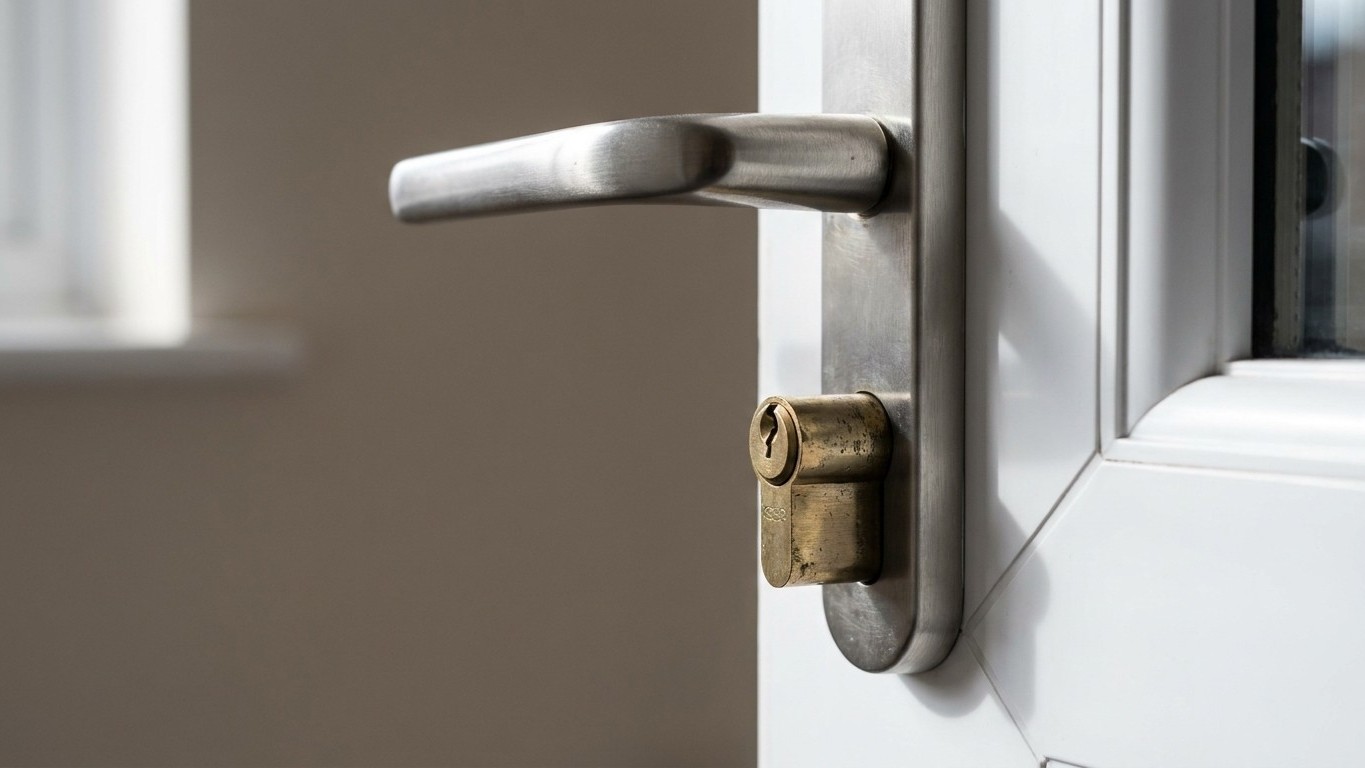
That tiny nub of metal poking past your door handle, no more than a few millimetres in most cases, is exactly what a burglar goes for first. It’s not the multipoint locking system, not the hinges, not even the letterbox. If the cylinder protrudes even just 2mm past the handle, the risk multiplies. Grip it with a pair of ordinary pliers, apply some leverage, and that sliver snaps clean off in seconds, taking your entire door security with it.
The technique has a name locksmiths use constantly: lock snapping. The handles and any plastic covering are generally removed in order to expose the locking mechanism, which is then gripped with pliers and snapped in two, and this can also be done using a professional locksmith tool. Once that happens, the cam inside falls free and the whole multipoint mechanism gives up. Once the outer section breaks away the attacker can access the locking mechanism and open the door. I’ve spoken with enough tradespeople over the years to know this isn’t scaremongering. It genuinely is that quick, and that quiet, which is precisely why it’s become such a favourite among opportunist thieves rather than the smash-and-grab approach that wakes the whole street.
Key takeaways
- The tiny metal piece protruding from your door handle isn’t a design quirk—it’s a security disaster waiting to happen
- One quick grip with pliers and leverage can snap your lock cylinder clean off, bypassing your entire multipoint system in seconds
- A simple, affordable upgrade to an anti-snap cylinder could be the cheapest peace of mind you’ll ever buy for your home
Why that little overhang is such an open invitation
Euro cylinder locks are everywhere in Britain. You’ll find euro cylinder locks on the majority of uPVC doors in the UK, as well as many composite, wooden and aluminium doors. They’re a sensible, affordable design in principle, but they share one Structural flaw that manufacturers only really addressed properly in the last decade or so. The common euro cylinder lock on most homes has a major weakness located around the screw fixing position, which means when pressure is applied the lock simply snaps, and once this happens the cam that operates the door bolt falls away, allowing access within seconds.
The figures on how often this method gets used vary a fair bit depending on which study you read, but they all point the same direction. Euro cylinder lock snapping accounts for approximately 27% of all burglaries, nearly 1 in 3 forced entries. Police in West Yorkshire, where the technique first became widely reported, found it was even more concentrated locally: West Yorkshire Police has revealed that this type of burglary accounts for around 20-25% of all burglaries in West Yorkshire. Older data from the Master Locksmiths Association put the national figure lower, around 8%, so take the headline percentages with a pinch of salt. Whatever the true number, the door itself is almost never the weak point. Doors are only as strong as their weakest point, and multipoint systems make uPVC doors strong, but the exposed euro cylinder often remains the weakest link.
How to check your own door in thirty seconds
Go outside, stand side-on to your front door, and look along the length of the handle. Does the round end of the cylinder sit flush, or does a little collar of metal poke out beyond the handle plate? Ensure that the lock protrudes no more than 3mm from the handle and is flush with the door surface. Anything more than that and you’ve essentially left a handle for burglars to grip. It sounds like a fussy amount to worry about, but the whole crime relies on there being enough exposed cylinder to clamp onto.
A few other things worth glancing at while you’re out there:
- Scratch marks, scoring, or shiny patches around the keyway that weren’t there before
- A key that’s suddenly stiffer or catches halfway when turning
- A handle that feels loose, wobbly, or sits unevenly against the door
- No visible kitemark or security marking stamped on the cylinder face
You may see the lock barrel looking shorter than normal, slightly twisted, or sitting unevenly in the handle, and on other doors the damage shows up as scratch marks, pressure marks, or fresh metal scoring around the keyway and handle plate. None of these signs are proof of an attempted break-in, but they’re worth a second look, especially if your door was fitted more than ten or fifteen years ago, well before anti-snap cylinders became standard practice.
Sorting it out without replacing the whole door
The reassuring part of all this is that fixing it doesn’t mean a new door, new frame, or a joiner spending a day on your porch. It’s one small component. Look for cylinders certified to either of the two recognised British standards: SS312 Diamond is the highest level of approval for a euro cylinder lock. The other widely used mark is TS007, rated on a star system, and it meets the TS007 3-Star standard and carries the British Kitemark, confirming it has passed rigorous tests for snapping, drilling, and picking resistance. Anti-snap cylinders work by building in a deliberate weak point of their own, a sacrificial section that shears off harmlessly while leaving the actual mechanism protected. Anti-snap locks flip the odds, using a “sacrificial” front section that breaks away under attack, blocking access to the actual cam and mechanism.
On price, expect something modest rather than eye-watering. A TS007 3-star rated anti-snap cylinder typically costs £60-120 fitted by a professional locksmith. Fitting itself is quick work for someone who knows what they’re doing, typically professional fitting typically takes 15-30 minutes per door, which makes it one of the better value security jobs going. Compare that against the cost, upset, and insurance headache of an actual break-in, and it starts to look like one of the cheapest bits of peace of mind you can buy for your home. My own view, having read through more locksmith advice sheets than I can count, is that if your door was fitted before 2013 and nobody’s ever mentioned anti-snap cylinders to you, it’s worth the phone call.
One thing that surprised me while looking into this: fitting the cylinder correctly matters just as much as buying the right one. The best way to prevent snapping is by buying anti-snap locks or by having the cylinder flush against the door, because if it is at all protruding the lock can be snapped. Even a top-rated diamond-standard cylinder does you little good if it’s been measured wrong and left sticking out past the handle by a few extra millimetres, so it’s always worth asking whoever fits it to measure the door properly, from the central fixing screw to each end, rather than simply matching the length of your old one.
Sources : upgrademylock.com | jflocksmithsbirmingham.com