
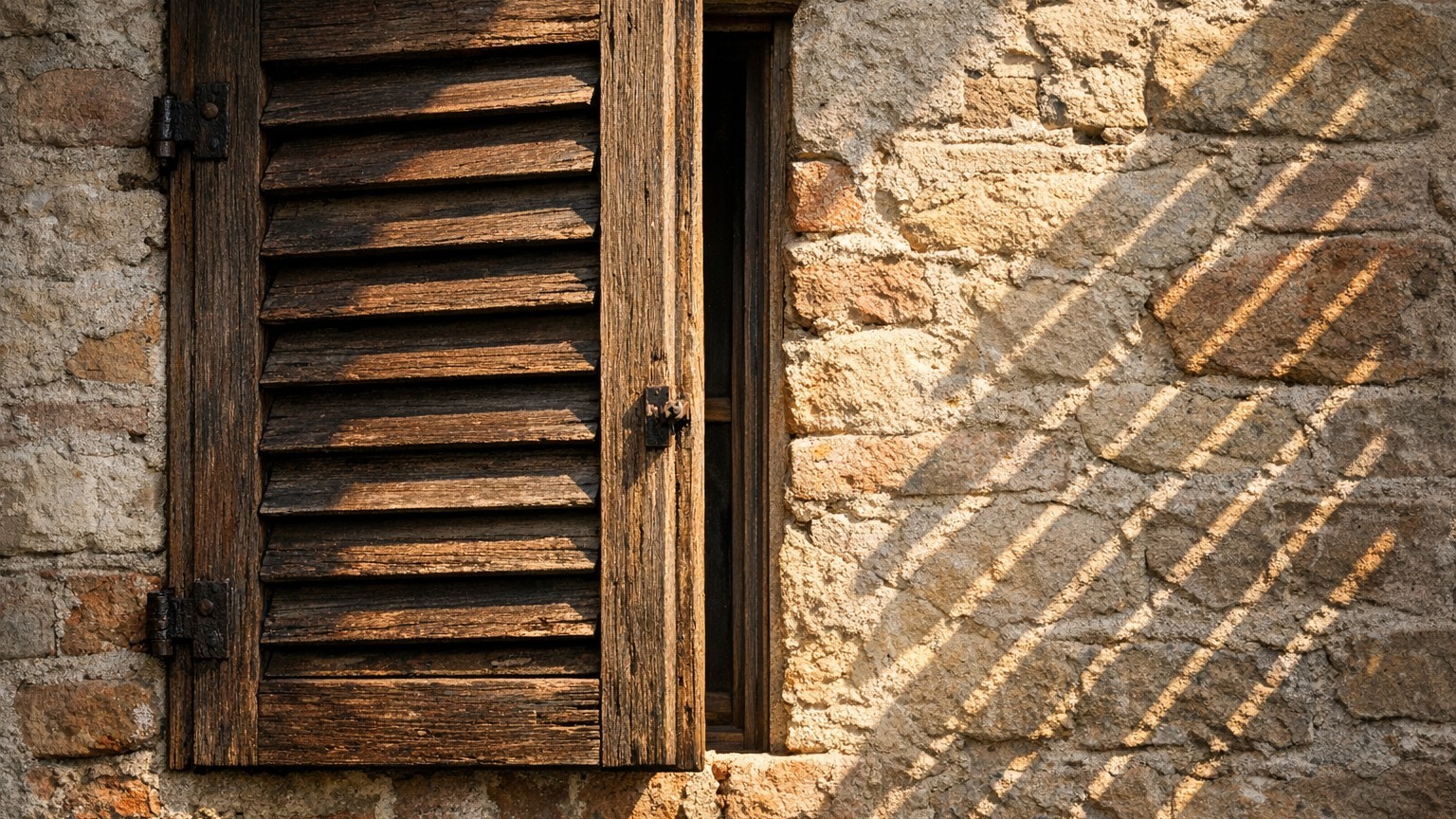
Grandmothers across Europe have been doing it for generations: the moment summer mornings turn warm and bright, they close the shutters and draw the house into a cool, dimly lit calm. It looks counterintuitive. Shutting out the light and air on a glorious sunny day feels almost wrong, a little gloomy. But during the last proper heatwave, when the thermometer crept above 30°C and the neighbours were opening every window and door in desperation, I followed her method to the letter. By early afternoon, my sitting room was several degrees cooler than the street outside. She was right. She had always been right.
Key takeaways
- Windows account for up to 50% of solar heat gain in homes—they’re radiators, not vents
- Closing shutters before 10am traps cool morning air and blocks peak afternoon sun damage
- Opening windows after dark for ‘night-flush ventilation’ completes the strategy your grandmother mastered
Your Windows Are the Problem (Even the Good Ones)
Most of us think of windows as neutral objects, they let in light and, when open, a breeze. But on a hot, sunny day, a window is closer to a radiator than a vent. Windows can account for up to 50% of solar heat gain in a domestic property. That figure is worth sitting with for a moment. Half of the heat building up inside your home on a July afternoon is pouring in through the glass.
The physics is straightforward, if a little humbling. Though glass allows visible light to pass through almost unimpeded, once that light is converted to long-wave infrared radiation by materials indoors, it is unable to escape back through the window, glass is opaque to those longer wavelengths. The trapped heat causes solar gain via the greenhouse effect. Your floors, your sofa, your kitchen worktop — all absorbing warmth and re-radiating it back into the room. Within minutes of exposure to the sun, the temperature inside a room can jump dramatically. This jump isn’t because the temperature outside went up, but because direct solar radiation is flooding through the window glass.
Here is the part that catches people out: double glazing does not solve this. Double-glazed windows are far better at insulating a property, but they cannot stop solar radiation from getting inside, so some heat transfer can still be expected. All those expensive window upgrades are brilliant for keeping warmth in during winter. Come August, they are doing the same job in reverse.
And British homes are not typically built with extreme heat in mind. Many lack air conditioning, insulation is often designed for cold winters, and large windows can easily turn a room into a greenhouse during the hottest months. This is not a design flaw so much as a historical one, our climate simply didn’t demand it. Until now.
The Shutter Trick: What Actually Happens When You Close Them
Shutters work by intercepting solar energy before it reaches the glass, or by creating an insulating buffer between the glass and the room. Shutters and louvres intercept solar gain before it hits the glass. External shading is up to four times more effective than internal blinds. The reason is simple: once sunlight has already passed through the glazing, the heat is already inside the thermal envelope of the house. A curtain at that point is merely rearranging the problem.
Wood is a natural insulator, which means it can keep your home warm during the winter. At the same time, it can reduce the amount of heat in the house when it is scorching hot outside. Heat from the outside becomes trapped in the wood, being released very slowly to the room. The heat therefore remains between the window and the shutter, instead of seeping out to the rest of the space. It is, in effect, a thermal buffer zone, and it costs nothing to operate.
The timing matters enormously. Although it is tempting to open all the windows and shutters when the sun is at its hottest, the opposite is in fact true. You should keep them closed between 10am and 4pm to avoid sunlight and heat transferring to the house, and instead open them early in the morning and in the evening when the temperature is much lower. My grandmother closed hers before noon, which meant she was capturing the cool of the morning and sealing it in before the sun climbed high enough to do real damage. Pure instinct, backed entirely by building science.
If you have shutters with adjustable louvres, there is a subtler trick available. Shutters provide control over the airflow and ventilation entering the home. By adjusting the angle of the slats or opening the shutters partially, they allow for the passage of air while still blocking direct sunlight. This helps in natural cooling by promoting the flow of cool breezes into the space and facilitating the escape of warm air. A very slight tilt on the louvres can give you gentle air movement without undoing the thermal shielding.
The Other Half of the Method: What Happens After Dark
Closing the shutters by day is only half the strategy. The other half happens once the sun goes down, and this is where many people give up too soon, assuming there is nothing left to do until the next morning.
Opening your windows early in the morning and in the evening and night, when the temperature has dropped, is one of the most effective ways to cool your home naturally. When you do this, you let cooler, fresher air in and push hot air out. Building scientists have a formal name for this: night-flush ventilation. It is not new. A medical journal from 1856 described precisely the same technique, noting that when windows and shutters were opened at dawn and then closed before the heat of the day took hold, a room could remain cool until nearly nightfall.
Cross-ventilation is particularly effective here. Opening windows on opposite sides of your home, such as in the bedrooms and bathroom, creates a continuous flow of air that cools down your entire space. Even 20 minutes of a proper through-draught on a cooler evening can flush out several hours of accumulated warmth. Then shut everything up again before the morning sun gains any real strength.
West-facing rooms deserve a special mention. West-facing glazing gets hit with direct sun during the hottest part of the day, mid to late afternoon, which means they can still be gaining heat at 5 or 6 o’clock, long after south-facing rooms have begun to cool. Keep those shutters or blinds firmly closed until the sun has moved off them entirely.
When There Are No Shutters: What Actually Works Instead
Traditional external shutters are common across France, Spain and Italy, but remain rare on British homes. Most European homes in warmer countries have some form of external window shutters, ranging from decorative hinged timber arrangements fitted to older properties to modern metal roller shutters. In the UK, external shutters will not be practical in most applications. There may be planning restrictions and, from an aesthetic point of view, they are unlikely to be in keeping with the neighbours.
Internal shutters are a reasonable second choice. They will not intercept the solar gain before the glass, but they do create that insulating layer and significantly reduce how quickly heat builds up inside the room. During a heatwave, experts recommend keeping both shutters and windows closed during the heat of the day and only opening them up in the early mornings and evenings when the air is cooler. Heavy lined curtains, kept closed, offer some benefit too, though they are unlike wood, which provides a genuine barrier to the high temperature outside.
Window awnings can reduce solar heat gain in the summer by up to 65% on south-facing windows and 77% on west-facing windows, a remarkable figure for something as simple as a canvas shade. If your windows face south or west and you have no shutters, an awning is one of the most cost-effective investments you can make for summer comfort.
One final thing worth knowing: the thermal mass of your home plays quietly into all of this. Concrete, brick, and stone absorb heat during the day and release it slowly at night, helping to maintain a stable indoor temperature. Older stone or solid-brick British homes often stay remarkably cool precisely because of this, provided the solar gain through windows is managed. The building itself wants to stay cool. Your grandmother simply knew how to let it.
Sources : justshutters.co.uk | fenbro.com