
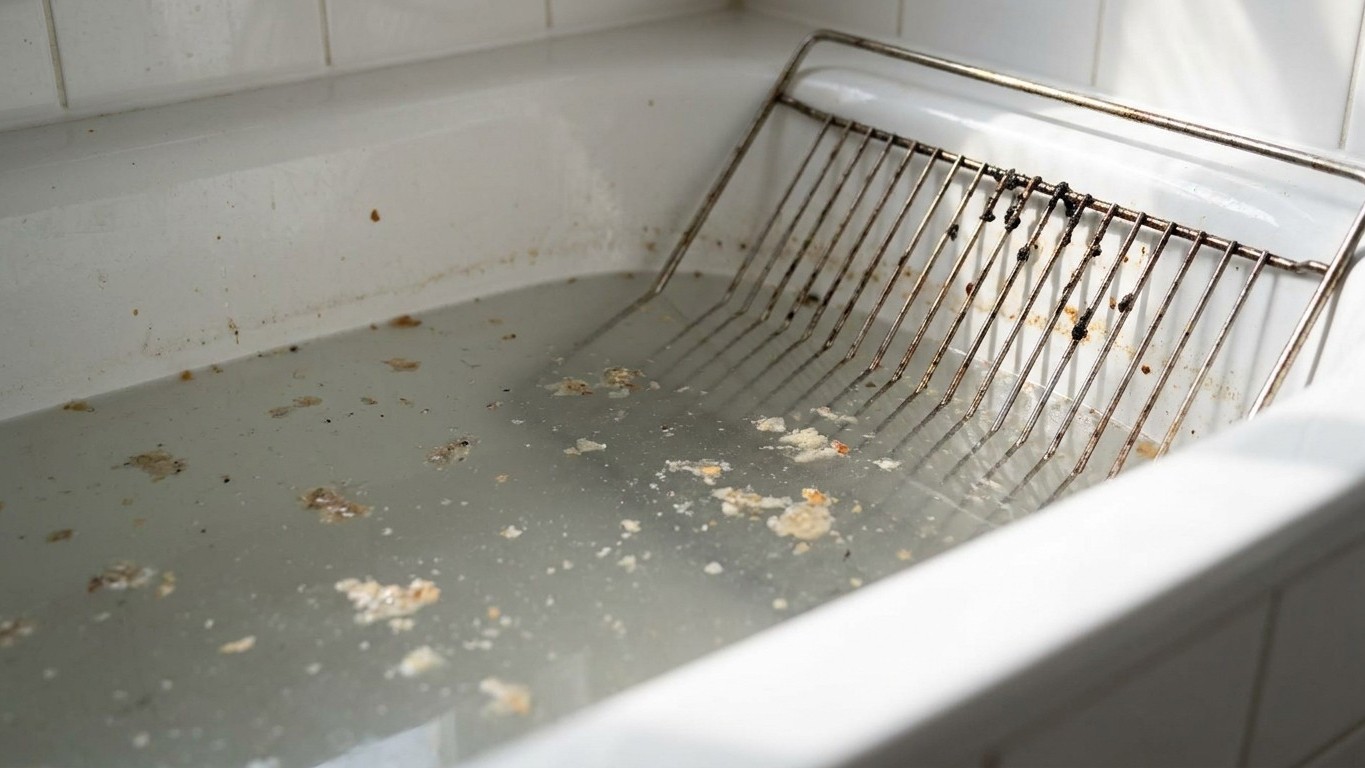
That grey, greasy sludge floating on top of the bathwater is carbonised fat, built-up food residue and months (sometimes years) of cooking splatter that finally let go of the metal once the heat and chemistry did their work. It’s not pretty, but it’s exactly what you want to see, because it means all that muck is now in the water rather than baked onto your oven shelves.
Dishwasher tablets have become one of those cleaning shortcuts that sound almost too simple to work, yet the science behind them stacks up rather nicely. Dishwasher tablets are engineered for high-efficiency dishwashers that use heat and water pressure to dissolve food, grease, and starch, with key ingredients including sodium carbonate, non-ionic surfactants, and enzymatic compounds. Soak your racks overnight and you’re essentially running a very slow, very gentle dishwasher cycle in your bathtub.
Key takeaways
- What exactly is that grey sludge floating in your bathwater after soaking oven shelves overnight?
- Why enzymes and surfactants work where elbow grease fails—the hidden science of dishwasher tablets
- The one critical mistake people make that can damage their racks and plumbing forever
What was actually stuck to those shelves
Every roast dinner, every cheese-topped bake, every splash of oil leaves behind a residue that hardens with each subsequent use of the oven. Fat polymerises under repeated heating, turning from a sticky film into something closer to varnish. Add in scorched sugars from spilled sauces and the odd bit of carbonised crumb, and you’ve got a layered crust that no amount of elbow grease seems to touch when you’re scrubbing dry.
The reason the tablet method feels almost magical is that it tackles the problem chemically rather than physically. Enzymes are essential for achieving sparkling clean results, acting as biological catalysts that break down specific types of food stains, such as starches, proteins, and fats, and are particularly effective at removing stubborn food residues that surfactants and builders alone might struggle with. Three separate enzyme types are usually doing the heavy lifting: proteases break down protein-based stains from egg, meat, and dairy, amylases tackle starch from pasta, rice, and potatoes, while lipases go after fat-based stains from oil and grease. That’s your Sunday roast, your pasta bake and your chip pan splatters all being dismantled at once, while you sleep.
Meanwhile the surfactants are doing their own quiet work. They reduce the surface tension of water, allowing it to spread more easily and penetrate the greasy residue, since surfactants have two parts: one that attracts water and one that attracts grease. That dual nature is what lets them surround grease and lift it away from the surface, suspending it in the water so it can be rinsed away, which explains exactly why you’re staring at that murky bathwater the next morning. Every fleck floating in it used to be firmly attached to your shelves.
Why hot water makes such a difference
Temperature isn’t incidental to this trick, it’s the whole engine behind it. Really hot water is key when cleaning oven racks with dishwasher tablets, because the heat helps the enzymes break down the grease and grime more effectively. Enzymes are proteins, and like most proteins they work best within a fairly narrow temperature window, warm enough to speed up the reaction but not so scalding that they denature and stop working altogether. A good, steaming bath of tap-hot water strikes that balance nicely.
Some households take this further by wrapping the shelves in foil before submerging them, which does two useful things. The foil traps heat around the racks, helping loosen up stubborn grease and baked-on grime, and it also helps contain any gunk or residue that comes off during the soak so you’re not left scraping a bathtub afterwards. It’s a fiddly extra step, admittedly, but if you’d rather not be picking bits of scorched crumble out of your bath enamel, it’s worth the ten minutes of wrapping.
Doing it properly, without regrets
A few practical notes before you rush off to fill the tub. Two dishwasher tablets in a bath’s worth of hot water is plenty for most shelves, and letting them soak for at least a few hours, or ideally overnight, is what does the real work, since the longer they soak, the easier the cleaning becomes. Resist the urge to scrub hard once you drain the water. Aggressive scrubbing can scratch the racks, so it’s better to let the soaking do the work and use gentle scrubbing only when necessary. A soft sponge or an old flannel is usually enough to wipe away what’s left.
Rinsing matters more than people realise. Thorough rinsing is crucial to remove any cleaning solution residue, because nobody wants the faint tang of detergent lingering over their next tray of roast potatoes. One more thing worth flagging: this hack isn’t meant for the enamel inside a self-cleaning oven itself. Never use the dishwasher tablet hack on a self-cleaning oven unless you don’t plan to use the self-cleaning feature, since the tablet’s ingredients might interfere with the internal mechanisms. Shelves and racks are fair game regardless, since they come out anyway.
If your drain is on the narrow side, or you share a house with a temperamental plughole, put an old sieve or a bit of muslin over the plug before you let the water out. That grey sludge looks harmless once it’s diluted, but it’s essentially cooled fat, and cooled fat has an unfortunate habit of solidifying again the moment it hits cooler pipework further down the line. A five-second precaution saves you a call to the plumber, and frankly, after a whole night of your oven shelves doing the soaking instead of your knuckles doing the scrubbing, you’ve earned the easy finish.
Sources : indiandefencereview.com | hometalk.com