
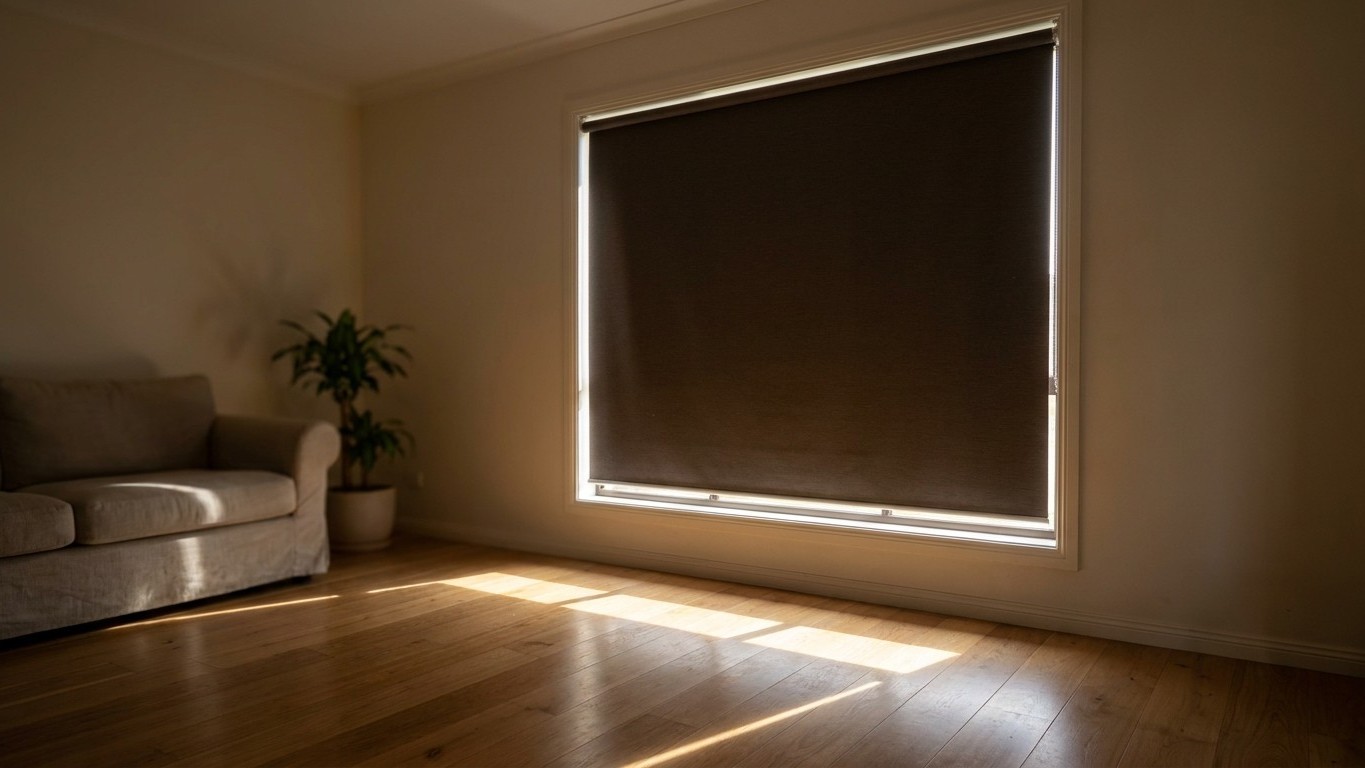
My neighbour walked past one July afternoon and paused at my south-facing sitting room window. “Your blinds are dark brown on the outside,” she said, with that look that friends give when they know something you don’t. She was right. I had spent the whole summer keeping those blinds firmly shut, convinced I was doing the sensible thing, while completely missing the one detail that was quietly turning my home into a slow cooker.
The core of the problem is this: in the summer, about one third of the heat that enters a house comes from the sun shining through the windows. That is a remarkable proportion when you think about it. Walls, loft insulation, draughts, we fuss over all of them, yet a simple pane of glass is letting in a third of the seasonal heat that makes life indoors uncomfortable. Closing the blinds is absolutely the right instinct. Closed blinds serve to deflect the sun, and so the heat, before it gets into the room, reducing unwanted solar gain and helping to keep your home cooler. The mistake, as I discovered, is assuming that any closed blind does this equally well.
Key takeaways
- Dark blinds absorb up to 90% of solar radiation and radiate it back into your room like miniature heaters
- A neighbor’s observation exposed the one detail that transforms a cooling strategy into the opposite problem
- Light-colored blinds reflect up to 80% of heat, but most people don’t know what really matters about blind color
The hidden radiator hanging at your window
Here is the thing nobody tells you when you pick out a set of blinds to match your curtains: the colour facing the glass matters enormously. Dark blinds do not “attract” heat, but they absorb it very effectively, the dark surface converts sunlight into thermal energy, which then radiates into the room, raising the temperature. My warm-toned brown blinds were, in effect, a small radiant heater positioned right at the window. Closed, yes. Helpful, no.
Dark blinds absorb 60–90% of solar radiation, converting it to heat that radiates into the room. This heat absorption can raise room temperatures measurably compared to light-coloured alternatives, making them problematic for spaces trying to maintain cool temperatures during hot weather. Think of the difference between wearing a dark navy linen shirt and a pale cream one on a sunny afternoon at a fête, that contrast in comfort is exactly what plays out daily behind your windows.
Opaque curtains or blinds that block light will stop the radiation heating of objects in the room that would normally be receiving direct sunlight. But if the sunlight is coming through the window and heat is being absorbed by the back side of the dark covering, the heat is still getting into the room. The hot fabric causes convection heating to take place as cool air is drawn up from the bottom, rises as it is heated, and comes out the top as hot air. That convection cycle is invisible, relentless, and working against you all day long.
Colour and lining: the two things that actually make a difference
White and light-coloured blinds reflect up to 80% of solar heat, making them the most effective choice for reducing heat gain. These colours work by bouncing sunlight away from the window surface rather than absorbing it. The physics are disarmingly simple. Light colours have high albedo ratings, meaning they reflect most incident solar radiation back toward its source. White surfaces can reflect 70–90% of solar energy, while dark surfaces may absorb 80–90% of the same energy.
The most important surface is the one facing the window, which is why most high-quality thermal and blackout blinds have a white or light-coloured backing, regardless of the colour facing into the room. This is a detail worth repeating. You can have a rich teal or deep charcoal blind on the room-facing side, the side guests see, provided the fabric has a pale or reflective backing facing outward toward the glass. Many manufacturers do this as standard on better-quality ranges. When choosing blinds, ask specifically about the reverse.
When completely closed, highly reflective blinds can reduce heat gain by around 45%, according to the Department of Energy. For a room that has been baking since mid-morning, that is a very meaningful reduction, achieved with no electricity, no fan, and no expense beyond the initial purchase. Studies also demonstrate that medium-coloured draperies with white-plastic backings can reduce heat gains by 33%. Even a modest improvement in backing colour, then, translates into real comfort.
If you want to go further, cellular or honeycomb shades are worth knowing about. Cellular shades rely on a unique hexagonal honeycomb structure to trap air, forming a permanent thermal barrier that reduces heat conduction. In winter, this prevents indoor heat from escaping toward the cold window glass; in summer, it effectively blocks outdoor heat from conducting through the glass into the room. In cooling seasons, cellular shades can reduce unwanted solar heat through windows by up to 60%, reducing the total solar gain to 20% when installed with a tight fit. They cost more than a basic roller blind, but for a room that faces south or west, they earn their price fairly quickly.
Which windows deserve the most attention?
Window orientation significantly impacts the effectiveness of light-coloured blinds for heat control. South- and west-facing windows receive the most intense solar radiation and benefit most from reflective light-coloured treatments. In a typical British home, the south-facing rooms are the ones that build heat through the day, while the west-facing rooms, often kitchens and dining rooms, become stuffy in the late afternoon just when you want to sit down to supper. These are the windows where your blind choice genuinely earns its keep.
Slat-style Venetian blinds offer something roller blinds and fabric shades cannot: adjustability. Because of the numerous openings between the slats, it is difficult to control heat loss through interior blinds, but the slats offer flexibility in the summer. Unlike shades, you can adjust them to control glare, light, and solar heat gain. Adjusting your blinds by tilting them to reflect the hot rays outward, and maximising your effort by tilting slats upward, allows less light and minimises heat transfer into the room. It is an approach that costs nothing and takes about ten seconds, and it means you are not plunged into darkness while still keeping the worst of the heat at bay.
Gaps are another silent saboteur. A common failure in DIY heat management is leaving gaps at the sides of the window. Heat is fluid; it flows through the path of least resistance. Even with the best reflective fabric, if there is a small gap at the side, hot air will circulate behind the blind and enter the room. A blind that fits the recess well and sits close to the glass will outperform a fancier blind hanging loosely in front of the frame.
One more thing worth remembering as the evenings cool down: once the sun is down and the outside air temperature has dropped, open the windows and blinds to let the cooler air circulate and flush out any heat that has built up during the day. British summer nights are usually kind in that regard. The strategy, in short, is to keep everything shut tight during the sunny hours and open everything up once the temperature outside drops below what it feels like indoors, typically after 9 or 10 pm in a warm spell.
According to a study by the US Department of Energy, 75% of residential window coverings remain in the same position every day. Don’t fall into this habit, be strategic about which coverings you open and close throughout the day. The colour of your blind and the habit of adjusting it are, between them, the two changes most likely to make a genuine difference this summer. My neighbour’s offhand comment saved me more discomfort than any fan I could have bought.
Sources : englishblinds.co.uk | hub.associaonline.com