
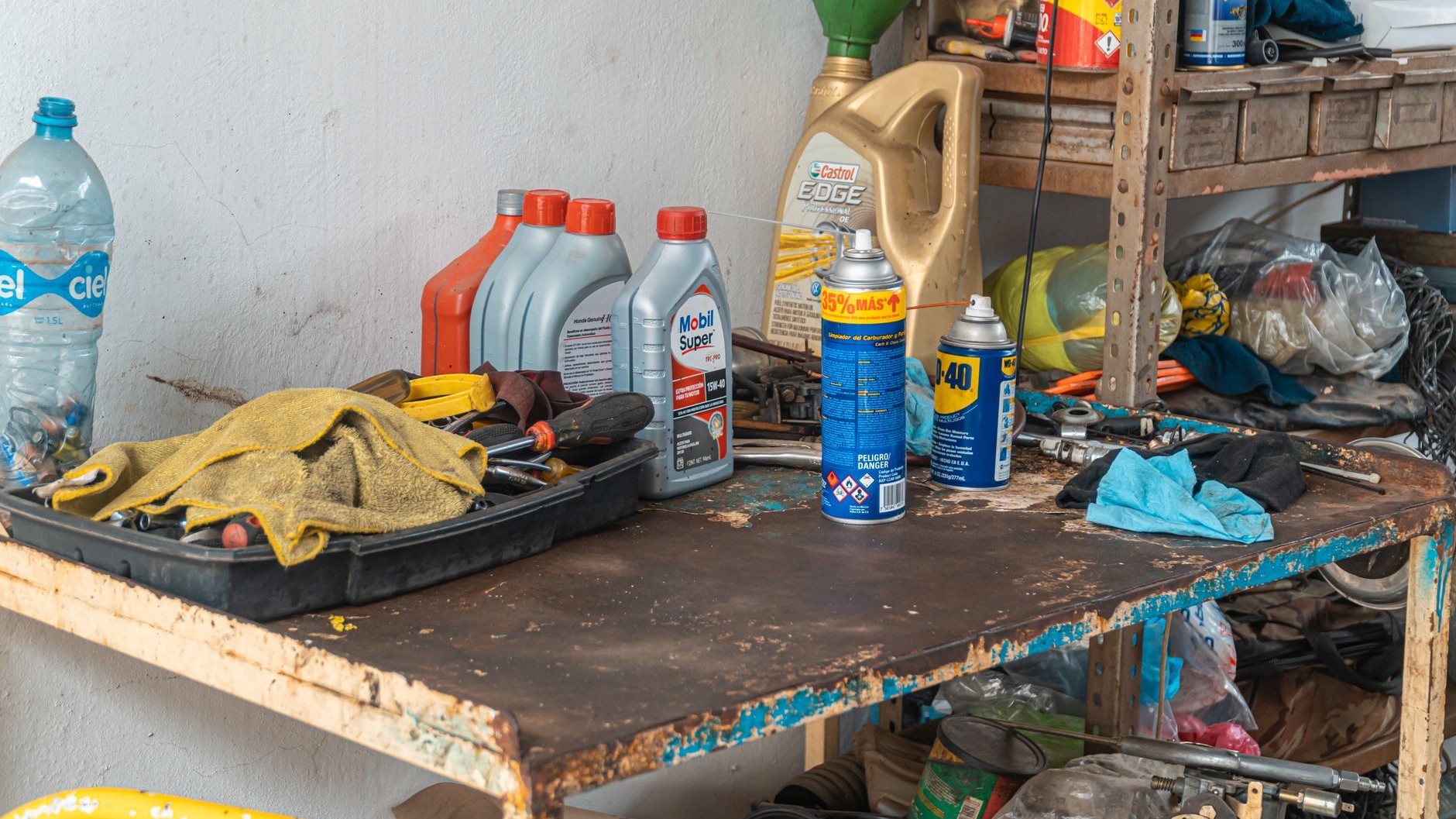
WD-40 is the great British go-to for squeaky hinges. Most of us keep a can under the kitchen sink, and the moment a door starts complaining, out it comes. The squeak disappears within seconds, which feels like a satisfying job done. The problem is, it comes back, sometimes within a few days, and after enough cycles of spray-and-repeat, the hinge can actually end up in worse condition than when you started.
A locksmith friend of mine put it bluntly: “WD-40 on a hinge is like using a wet cloth to put out a chip pan fire. It looks like it’s working right up until it isn’t.” Harsh, but fair. The product isn’t bad, it’s just being used for the wrong job entirely, and understanding why makes all the difference.
Key takeaways
- WD-40 is a solvent, not a lubricant—it evaporates in days and leaves hinges drier than before
- The real culprit behind returning squeaks is the product you’ve been using all along
- What professionals use instead costs barely more and fixes the problem for 6-12 months
What WD-40 actually does (and doesn’t do)
The name WD-40 stands for “Water Displacement, 40th formula”, the chemists at the American company reportedly went through thirty-nine attempts before landing on the right mixture in 1953. That name tells you Everything about its original purpose: displacing moisture, not lubricating moving parts. It’s a solvent-based product, brilliant at loosening rust, penetrating seized bolts, and chasing out water from electrical contacts. As a lubricant, though, it evaporates relatively quickly and leaves almost no lasting protective film on metal.
When you spray it on a squeaky hinge, you’re temporarily washing away the friction and dry grime causing the noise. But the solvent base also strips away any residual grease that was still clinging on. So once the WD-40 evaporates, which can take as little as two or three days in a draughty hallway — the hinge is drier than before you started. The squeak returns faster, you spray again, and the cycle continues while the metal gradually wears against itself with less and less protection.
What your hinge actually needs
A door hinge is a bearing surface under constant load. Every time the door swings, the pin rotates inside the knuckle, and those two pieces of metal need a viscous, clinging lubricant between them, something that won’t simply evaporate or fling off. The product you want is a white lithium grease or, for older cast-iron hinges, a proper petroleum-based grease. Both are widely available in hardware shops and supermarkets, usually costing just a pound or two more than a can of WD-40.
The method matters as much as the product. First, remove the hinge pin if it’s the removable type, most standard domestic door hinges are. Slide a flathead screwdriver under the bottom of the pin and tap it upward with a mallet. Clean the pin and the inside of the knuckle with a dry cloth to remove any old grime, then apply your grease directly to the pin before reinserting it. Work the door back and forth a few times to distribute the lubricant evenly. Done properly, this should stay quiet for six months to a year, sometimes longer.
If the pin isn’t removable (some welded or security hinges are fixed), a grease-based spray applied directly into the hinge gap works well enough, just use a nozzle straw to get it as deep into the barrel as possible, then wipe away the excess from the painted surfaces before it stains.
When the squeak isn’t a lubrication problem at all
Here’s where many people, and I include my past self, waste months of effort on the wrong solution entirely. A hinge that continues squeaking even after proper greasing is often telling you something structural. The door may have dropped slightly, causing the hinge plates to bind against each other rather than the pin creating the noise. You’d hear a grinding or creaking more than a classic squeak, and no amount of lubricant will fix plate-on-plate friction.
The fix in that case is to check whether the screws in the hinge plate have worked loose. Over years of use, the screw holes in timber door frames can become slightly enlarged, and the hinge plate starts to shift under the door’s weight. Replacing the short original screws with longer ones (75mm rather than the typical 25mm) that reach into the solid timber behind the frame often resolves persistent hinge problems that have defeated every lubricant tried. A single longer screw in the middle hole of the frame-side plate can stop years of trouble.
Interestingly, about 40% of door squeaks in older British homes (pre-1970s construction) are attributed not to dry pins but to painted-over hinges, layers of gloss paint gradually sealing the knuckle and creating the friction. In those cases, scoring around the hinge with a craft knife and repainting carefully around rather than over it makes a lasting difference that no spray ever could.
Rescuing a hinge that’s had too much WD-40
If you’ve been in the spray-and-repeat cycle for a while, the hinge is salvageable. Remove the pin, clean it thoroughly with a little fine wire wool to remove any surface rust that the repeated dry cycles may have encouraged, then apply grease as described above. The pin itself is the sacrificial part in a hinge, it’s designed to wear rather than the more expensive knuckle, so if it’s visibly grooved or pitted, replacement pins can be bought individually or as part of a hinge set for very little money.
One last thing worth knowing: three-in-one oil, which many households have alongside their WD-40, is a genuine lubricant and will outlast WD-40 on a hinge considerably. It’s not as long-lasting as lithium grease, but in a pinch it does the right job. The can even says “lubricates” on the label, a useful distinction to bear in mind the next time you’re rummaging under the sink.