
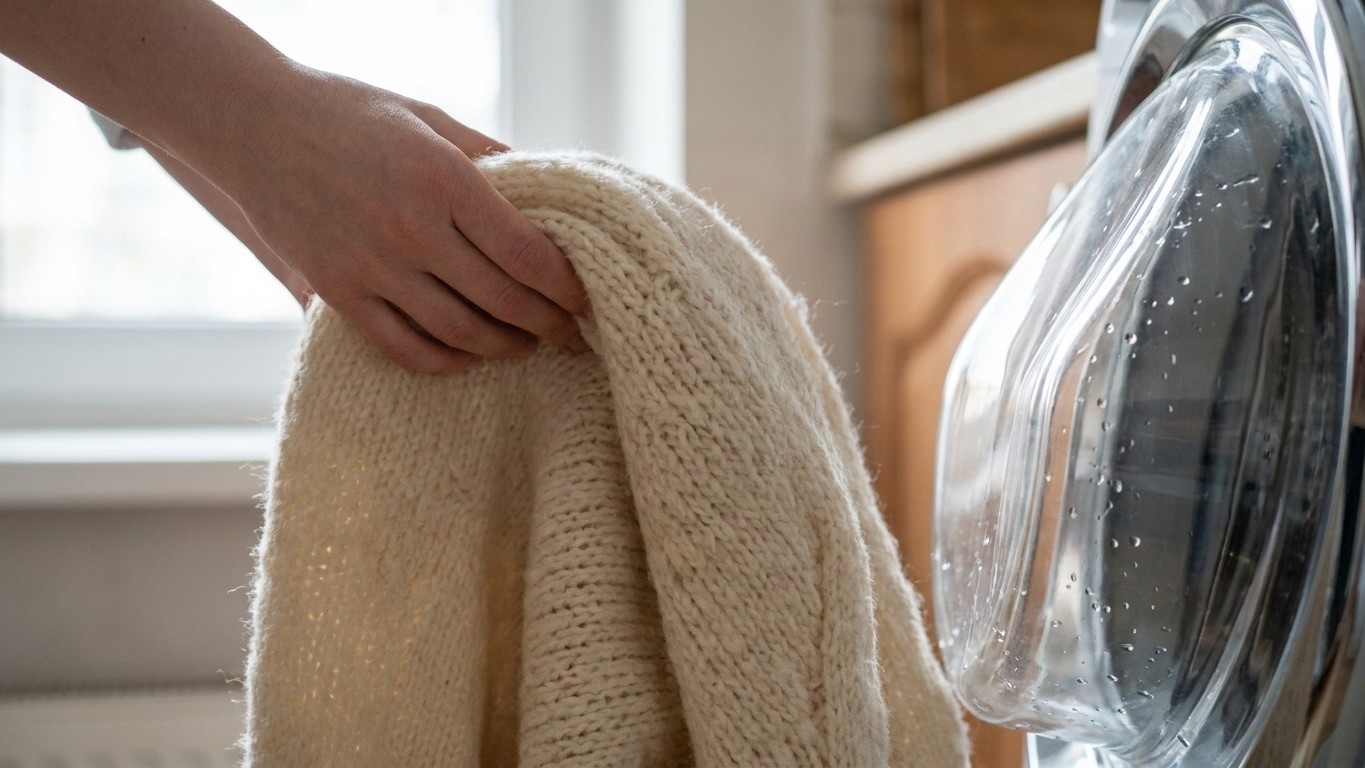
Moths don’t care about your lavender sachets nearly as much as you’d like to think. What actually determines whether your favourite jumper survives the summer in one piece happens weeks before it ever gets folded into the wardrobe: the wash. One of the most crucial steps in preventing moth damage is ensuring your clothes are clean before storing them, because moths are particularly attracted to garments that contain sweat, food particles, and body oils. Skip that step, and no amount of dried flowers tucked between your knits will save them.
It sounds almost too simple to be true, but the science backs it up. Clothing moths lay eggs on animal-based fabrics like wool and silk, and it’s the larvae (not the adult moths) that chew holes in your garments. Those larvae aren’t actually after the wool fibres themselves in the way you’d imagine, they’re after what’s clinging to them. Pests, particularly clothes moths, are attracted not merely to the wool itself, but to microscopic food particles, skin cells, sweat, or dirt present on the fabric, and clean wool is significantly less appealing to them. Even a jumper that looks perfectly presentable can be harbouring an invisible feast. Moths are attracted to body oils, sweat, and food stains, and even “clean-looking” clothes can be a feast for larvae if they haven’t been washed or dry cleaned before storage.
Key takeaways
- Moth larvae aren’t attracted to wool itself—they’re hunting for invisible traces of sweat, skin cells, and body oils clinging to ‘clean-looking’ garments
- Even a cardigan worn once for an hour counts as dirty enough to warrant a wash before storage, according to pest management experts
- Lavender sachets have genuine science behind them, but only work as prevention—and only if you squeeze them regularly to release fresh oils
The wash you can’t skip, whatever the care label says
My own grandmother swore that a jumper worn “just the once, for an hour, over a blouse” still counted as dirty enough to attract trouble, and honestly, she had a point long before anyone put it in writing. One well-known American testing publication makes exactly the same case: even if you wore a cardigan once for an hour or two, over another top, it counts as dirty, so before packing up your clothes at the end of the season, wash or dry clean items that have been worn at all to remove dirt and oil, both things bugs are drawn to. The temperature matters too. Guidance from a university pest management programme recommends laundering clothes for 20-30 minutes in water that is at least 120°F (roughly 49°C), which is warm enough to see off eggs and larvae without necessarily wrecking delicate fibres, though always check the care label first since proper wool needs cooler, gentler handling to avoid felting.
For anything that says “dry clean only”, don’t cut corners. Before storing your wool garments, you need to be sure that they are completely clean, because bacteria, dead skin, sweat and food debris are likely to attract moths, and since wool is prone to shrinking, it often will require dry-cleaning. And do check for stains before you pack anything away, because stains act as an additional attractant for moths, so be sure to treat and remove all visible stains before packing your clothes for storage. Make sure Everything is bone dry, too. Moisture can encourage mould or mildew, which further attracts moths.
So where does the lavender actually fit in?
Here’s the bit that might disappoint the sachet enthusiasts among us: lavender was never designed to fix a dirty jumper problem. Its job is prevention, not cure. Lavender does not function as a moth-killer and has virtually no effect on the larvae, which are responsible for eating clothing fibres; the primary goal is prevention, creating an environment unattractive to the adult moth searching for a place to nest. The chemistry is genuinely interesting. Lavender contains two compounds, 1,8-cineole and camphor, that appear to be key contributors to the plant’s ability to keep moths at bay, and while similar terpenes are found in rosemary, its repellent effect was found to be lower than that of lavender. there’s real science behind Nan’s habit, it’s just not the whole story.
To get any benefit at all, freshness and placement matter more than quantity. Dried lavender sachets must be placed directly among stored items, such as tucked inside drawers or hanging among clothes, and regularly squeezing or crushing these sachets helps release fresh oils and reactivate the scent, which loses potency over time. A sachet that’s been sitting untouched since last winter, its scent long faded, is doing precisely nothing. Give it a squeeze every time you’re rummaging through a drawer, and it’ll keep pulling its weight for longer.
The habits that finish the job
Once your jumpers are clean, dry and tucked in with a decent sachet, a handful of other habits keep the odds firmly in your favour. Sunlight is an underrated weapon, since moth larvae hate it, so an occasional airing on a bright day does more good than you’d think. Airtight storage helps too: once garments are clean and pest-free, place them in airtight plastic containers with tight-fitting lids, as opposed to dressers and trunks with small openings bugs can get through. If you’re the suspicious sort (fair enough, moths are sneaky little things), freezing works as a belt-and-braces check. Sealing a garment in a bag and popping it in the freezer for a few days will kill off any eggs or larvae that survived the wash, and it costs nothing but a bit of freezer space.
None of this means throw the lavender away, mind. It’s a pleasant, gentle, low-cost habit passed down through generations for good reason, and paired with proper hygiene it genuinely earns its place in the drawer. But treat it as the finishing touch, not the fix. The real gatekeeper against next season’s holes is the washing machine, or the dry cleaner’s counter, standing between your jumper and the wardrobe door.
Sources : aol.com | arhfoundation.org