
That sharp, sulphurous whiff greeting you at the bathroom door after a fortnight away isn’t dirt, mould, or anything scrubbing will shift. It’s simply a case of your shower drain running dry, and the fix takes about sixty seconds with nothing more than a jug of water. No bleach, no drain unblocker, no scrubbing brush required.
Every plumbed fixture in your house, be it the shower, the bath, or the bathroom sink, sits above a curved section of pipe called a P-trap. A P-trap is the curved section of pipe located directly beneath a sink, shower, or floor drain, and its primary job is to hold a small amount of water at all times, which creates a water seal that blocks sewer gases from coming up the drain and into your home. It’s a wonderfully simple bit of Victorian engineering, really, a little pocket of standing water acting as an airtight cork between your bathroom and the sewer network below.
Key takeaways
- Why does your bathroom suddenly reek of sulphur the moment you walk in from holiday?
- A tiny curved pipe under your drain holds a secret that keeps sewer gases at bay—until it runs dry
- One household item (that costs nothing extra) can prevent this smell from ever returning
Why the Smell Turns Up Right After You’ve Been Away
Leave a shower unused while you’re off sunning yourself for a week or two and that water seal starts to disappear through simple evaporation. If a fixture isn’t used for an extended period, the water in the trap evaporates, breaking the water seal and allowing sewer gas to flow directly into the room. Warm weather speeds this along considerably, which is exactly why the problem seems to announce itself the moment you walk back through the door from your summer break. Homeowners are often surprised when an unpleasant sewer smell suddenly appears in a bathroom that is rarely used, and it can be especially noticeable during the drier winter months or right before the holidays, when guest bathrooms sit idle and the house is closed up more than usual. Swap winter for summer heat in a British context and the principle holds just as firmly, an empty house means an empty trap.
The gases escaping aren’t imaginary, either. Its essential function is to hold a small amount of water, which creates a water seal that prevents sewer gases, which can contain harmful gases like hydrogen sulphide and methane, from backing up through the drain and into your home. Hydrogen sulphide is the culprit behind that unmistakable rotten egg character, and it’s detectable by the human nose at extraordinarily low concentrations, which is why even a small breach in the seal makes itself known within minutes of you opening the bathroom door.
The One-Minute Gesture That Actually Works
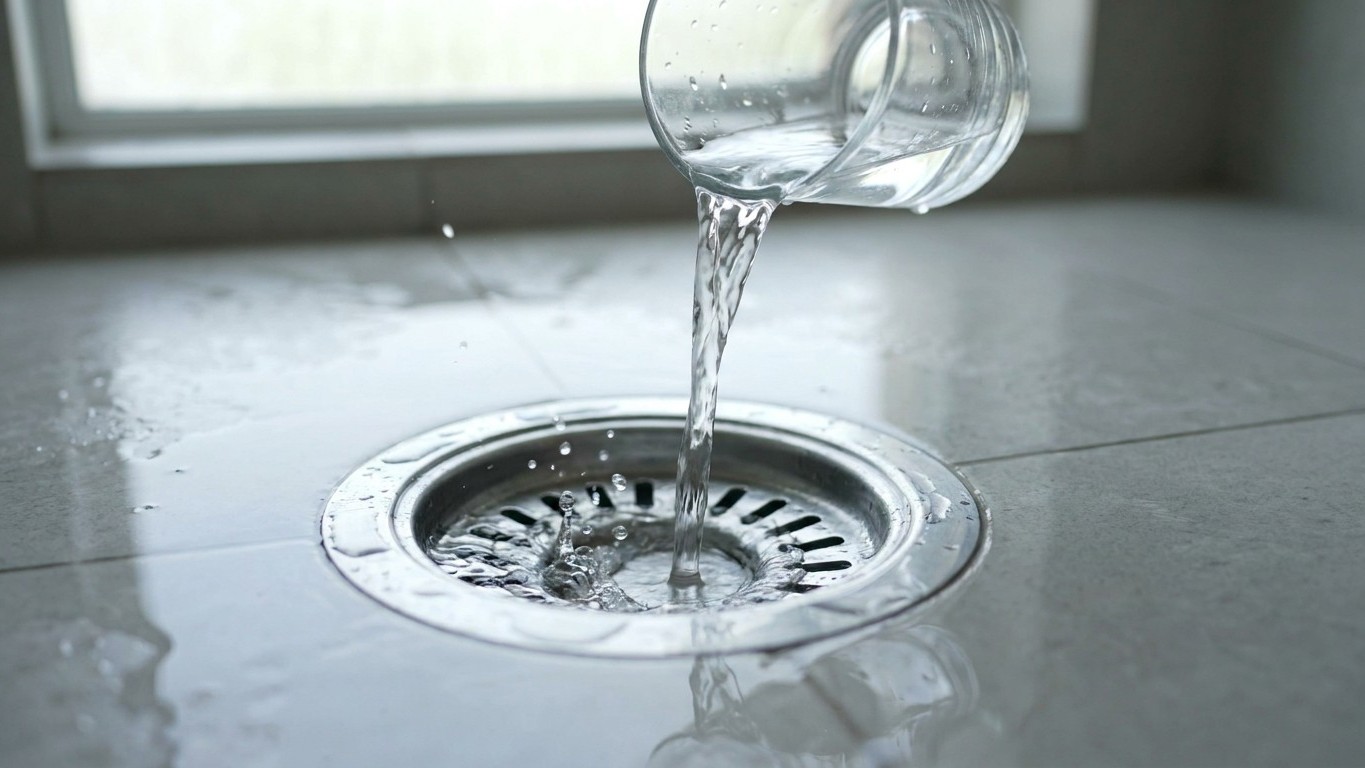
Here’s the bit that surprises people most: you don’t need a single product from under the sink. Turn on the shower and let it run for a minute or two, or simply tip a jug of water straight down the drain hole. The fix is usually simple, pour water down the drain; for a sink or shower, run the water for 1 to 2 minutes, or pour about a half-gallon down the drain to restore the water seal. That’s roughly two litres, give or take, enough to top the curved pipe back up to the brim.
Give it half an hour and pop back to check. Wait 30 minutes, then return to the bathroom; if the odour is gone, the problem was a dry trap. In my experience it’s almost always gone within minutes rather than the full half hour, but patience never hurt anyone. One small caution worth mentioning: don’t reach for the kettle out of enthusiasm. Pouring boiling water down drains to repair a dry p-trap is safe if pipes are made of metal, but water with a temperature above 175 degrees Fahrenheit can melt the joints of PVC pipes, so stick to cold water or water slightly below this temperature. A warm tap running for a minute does the job perfectly well without any risk to plastic fittings.
Stopping It Happening Every Time You Go Away
If you’ve a guest bathroom or a shower you barely use between family visits, there’s a neat trick borrowed from plumbers who deal with holiday lets and empty properties all the time. For drains you don’t use often, pour 1 tablespoon of mineral oil (or unscented baby oil) down the drain. The oil floats on top of the water in the trap and slows evaporation considerably, so the seal survives a fortnight’s absence far better than water alone ever could. Worth doing the moment you get back from topping up the trap, ready for the next time the house sits empty.
It’s also worth knowing when the one-minute trick won’t cut it, because not every bathroom pong comes from a dry trap. Biofilm, the result of bacteria and bacterial waste that arrive to break down organic waste like hair in your drains, is pink or orange in colour, and many people mistake it for mould. If topping up the water doesn’t shift the smell, or if it’s more of a musty, swampy note than a sharp sulphur one, you’re likely dealing with buildup along the pipe walls rather than an empty trap, and that’s when a proper clean with baking soda and vinegar earns its keep, rather than the quick water trick.
Should the water genuinely disappear from the trap again within a day or two of refilling it, don’t keep topping it up indefinitely. If not, you may have a cracked or broken P-trap which requires the attention of a plumber. A trap that won’t hold water at all is a job for a professional, not a jug. But for the ordinary post-holiday whiff that greets nine out of ten of us walking back into an empty house, that little curve of pipe under your shower just needs its water back, and your kettle, your bleach, and your scrubbing brush can all stay exactly where they are.
Sources : yourbellplumbing.com | speedyrooter.com