
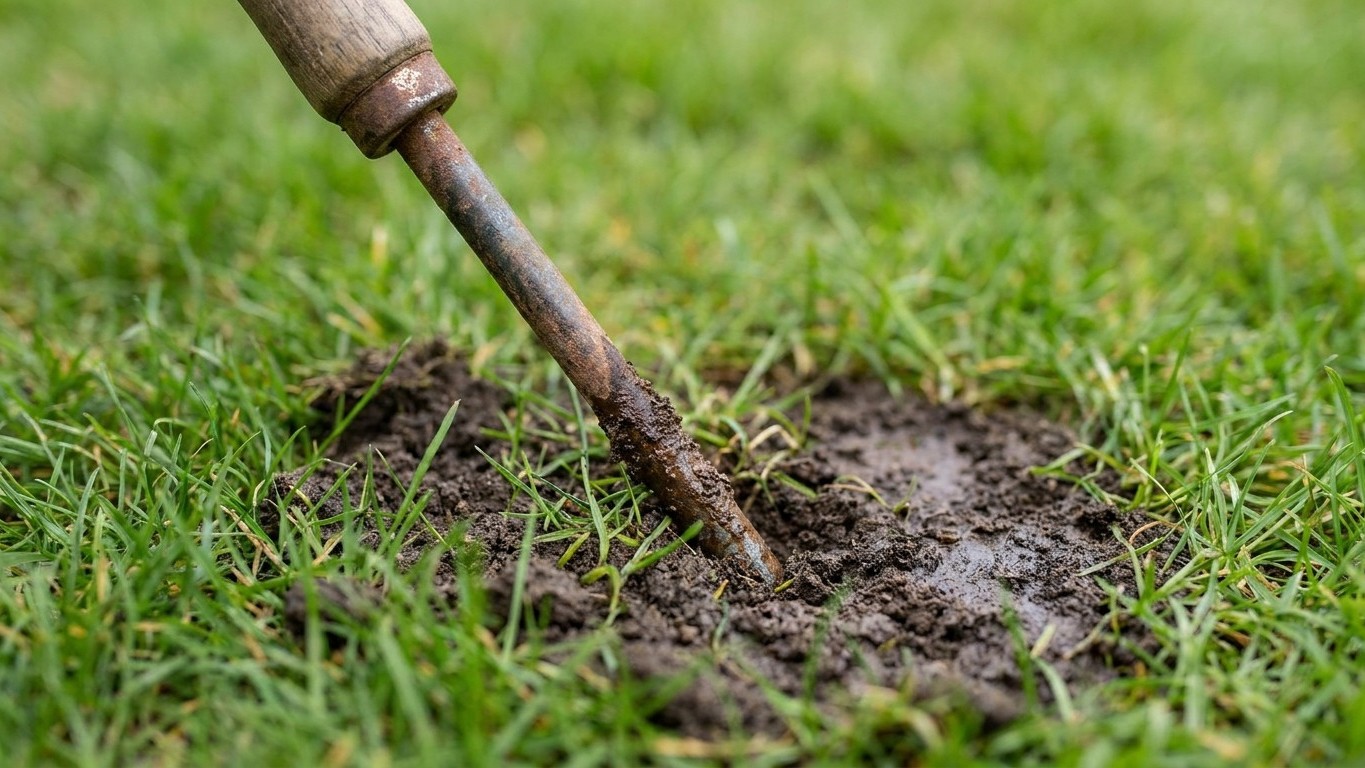
Push a bamboo cane about half a metre into damp lawn and you’ll feel it: firm resistance, then suddenly nothing, as if the ground has swallowed the last few inches. That’s exactly the sensation plumbers are hunting for when they’re trying to work out where a buried water pipe has split. Before any acoustic gadget or tracer gas comes out of the van, most fitters will walk the suspected pipe route with a simple metal rod or probe, feeling for soft, saturated soil that shouldn’t be there.
The theory behind it is refreshingly unglamorous. Water escaping under mains pressure doesn’t just sit politely under the pipe, it forces its way upward and outward through whatever gaps exist in the soil structure, turning firm ground into something closer to wet sponge. Using simple tools like a metal rod or screwdriver to probe the ground for saturated soil helps dig carefully in the suspected area to locate the damaged pipe. A garden cane does much the same job as a proper soil probe for a fraction of the cost, which is why so many households already own the only tool they need for a first check.
Key takeaways
- Plumbers start with a low-tech tool that costs almost nothing—but reveals what sophisticated equipment will confirm
- Water escaping under pressure transforms firm soil into wet sponge, creating a detectable ‘soft spot’ that a simple probe can find
- Even engineers with acoustic rigs and tracer gas in their vans rarely skip this first step before breaking out the expensive gear
What the resistance actually tells you
Push the cane in at intervals of a foot or two along the line where you believe the pipe runs, rather than in one spot. Pushing probes or rods into the earth beneath the pipeline path detects wet, softened soil, and flagging high-moisture areas for follow-up tends to correspond with thermal or tracer gas hits later on. this cheap DIY step often points professionals to the very same spot their expensive kit would eventually confirm.
It isn’t foolproof on its own, mind you. Soil probing is low tech, but in conjunction with other detection methods, it can be very effective, which is really the honest verdict here. Clay soil holds moisture differently to sandy loam, and a spell of heavy rain will muddy your results in the most literal sense. That’s why the professionals treat the probe as step one, not the final word.
How fitters build the full picture
Once a soft patch is found, a good plumber won’t reach straight for the spade. The plumber uses acoustic listening equipment to detect vibration patterns created by pressurised water escaping the pipe, with readings that help pinpoint the leak location on concrete, soil, or asphalt. Fascinating really, how a sound too faint for a human ear becomes obvious once it’s amplified through a decent ground microphone. On some jobs, particularly where the route is unclear or the surface is hard standing rather than lawn, engineers go a step further still. They pump a harmless tracer gas, nitrogen containing a bit of hydrogen, into the pipe and detect where it seeps out through soil or pavement using surface sensors, a noninvasive method that can find leaks under roads or slabs without digging.
What’s telling is that even with all that clever equipment sitting in the van, the humble probe rarely gets skipped. Plumbers use probes to pinpoint leaks by feeling for saturated soil or hearing water flow, and this method is especially useful in soft soils or grassy areas. One trade forum post I came across described an engineer with a full acoustic rig still walking a pipeline in twenty foot stretches, putting the probe in the ground and listening, then walking about 20 more, before narrowing things down to a single blown gasket. The cane, or its steel cousin, never really goes out of fashion.
Other clues worth checking alongside the cane test
A soft spot underfoot rarely travels alone. Before you start prodding the lawn, have a look at what’s growing on it. Unusual greenery or soggy soil during dry weather, or patches of moss, soft soil, or wet grass, can all indicate water is leaking below ground. Grass fed by a hidden leak often looks almost suspiciously lush compared with the rest of the lawn, greener than a summer that’s had barely any rain would justify. It’s one of those quiet giveaways that’s easy to walk past for weeks before it clicks.
Your water meter tells its own story too, and it costs nothing to check. Turn off all faucets and appliances, then read the primary meter. A moving dial or digital meter that never stops registering flow indicates hidden loss, so capture the start reading, wait for an interval, capture the next reading, and repeat to verify persistence. Run that test alongside your cane probing and you’ve got two independent bits of evidence pointing the same way, which is far more convincing than either on its own. A sudden jump on your water bill without any obvious change in habits is the third piece of the puzzle, and it’s worth keeping old bills specifically so you’ve something to compare against.
None of this is about turning yourself into an amateur leak detective for the fun of it. It’s about narrowing down where to dig, or where to call a professional to focus their attention, rather than tearing up an entire border on a hunch. Traditional excavation-based approaches are inefficient, disruptive, and often inaccurate, with digging without precise location data frequently resulting in large areas being opened unnecessarily, higher repair costs, longer downtime, and unresolved leaks when the wrong section is exposed. A blunt cane, ten minutes, and a bit of patience can save you from exactly that kind of costly guesswork.
One last thing worth knowing: use a rounded or blunt-tipped probe rather than anything sharpened, and go carefully once you’re within a foot or so of where you think the pipe actually sits. The whole point of this test is finding the leak without adding to it, and a cane pushed straight through a shallow-laid pipe rather defeats the purpose.
Sources : leaktronics.com | practicalmachinist.com