
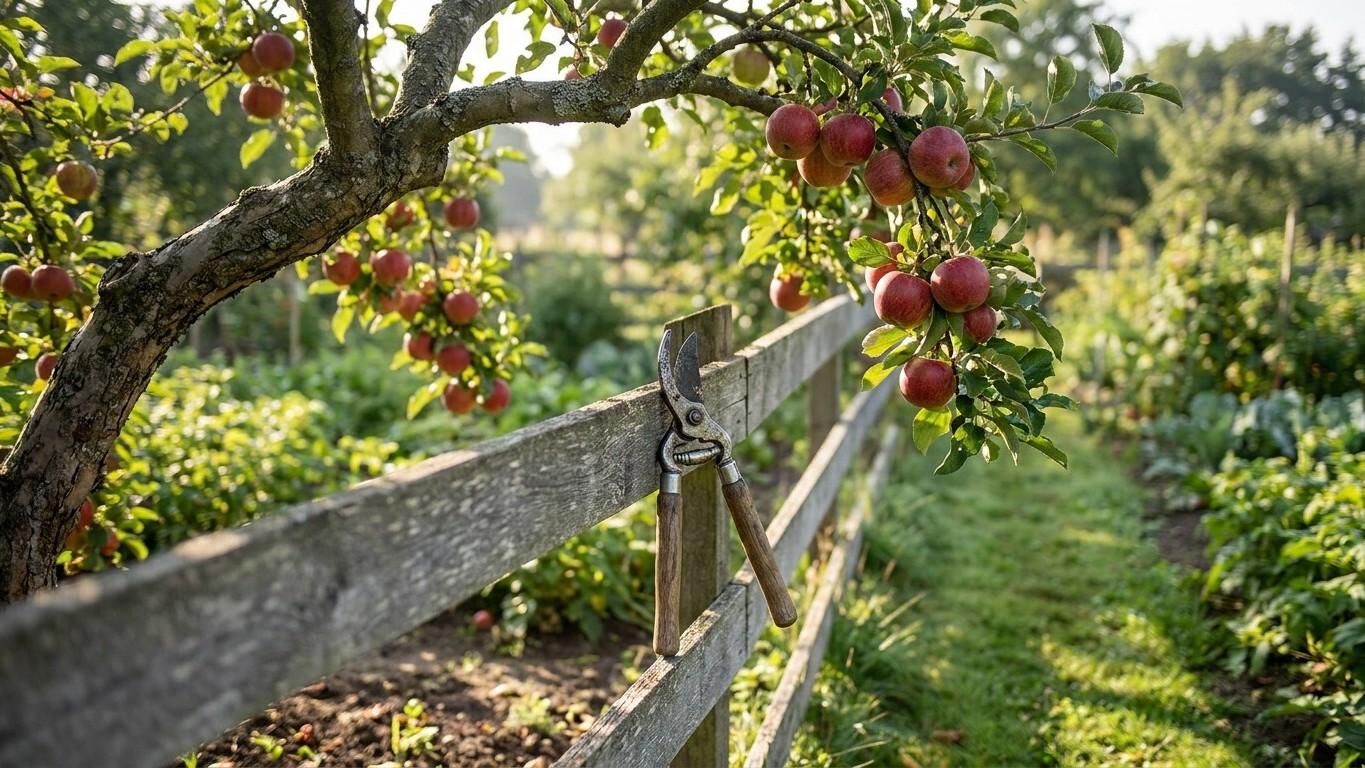
Cut a single leaf off next door’s overhanging branch and, legally speaking, that leaf still belongs to your neighbour. It sounds barmy, but under English common law you must offer back every twig, leaf and apple you snip from a tree whose trunk sits on someone else’s land. Once branches are cut off they should be offered back to the tree owner. If the owner doesn’t want them then you will be responsible for disposing of the prunings; you can’t simply throw them over the boundary into your neighbour’s garden! Most disputes over garden boundaries don’t actually hinge on whether you were allowed to reach for the loppers. They hinge on what you did with the pile of cuttings afterwards.
I’ve heard from readers over the years convinced that once a branch crosses onto their patio, it’s fair game. Snip it, shred it, bin it, done. That’s where the trouble starts. The right to trim is real and well established, but it comes with a quieter obligation that catches almost everyone out.
Key takeaways
- You can trim overhanging branches up to the boundary line—but only from your side of the fence
- The cuttings (including fruit) still belong to your neighbour and must be offered back before disposal
- Stealing fruit from overhanging branches without permission counts as theft under the Theft Act 1968
You can cut to the line, not an inch beyond
The starting point is straightforward enough. You can cut or trim any overhanging branches that encroach from a neighbour’s tree over your garden or house, but only up to the boundary of your property and no further. It’s called ‘the right to abate nuisance’ and is considered a form of self-help. No solicitor’s letter needed, no permission slip from next door. Do you have to get permission from your neighbour or give them notice to cut off the overhanging branches? No. Your actions are classed as ‘abating a nuisance’ which does not require permission. Only in situations where you need access to their land to undertake the work would permission be required.
But the boundary is a hard stop, not a starting point for negotiation. You cannot cross the line: You can only cut up to the boundary line and no further. You cannot trespass: You cannot lean over the fence or enter your neighbour’s garden to make the cut easier. You must do all the work from your side. You cannot alter the height: You cannot chop the top off their tree just to get more sunlight. Fancy a slightly better view over the fence? Tough. The law only lets you deal with what’s actually hanging over your side, nothing more, however tempting that extra foot of height might be.
Whose tree it even is depends on where the trunk grows. Whoever owns the land where a tree originally grew owns the entire tree. This stays true even when branches spread beyond the property boundary or roots extend into neighbouring gardens. If the trunk straddles the actual boundary line, things get murkier still, and it’s worth checking your title deeds through the Land Registry rather than guessing.
The bit almost nobody does: offering the cuttings back
Here’s where I raise an eyebrow every time I explain it to a friend. Chop off next door’s overhanging plum branch, and that branch, plums included, is still legally theirs. You can cut back branches that overhang your property, but only up to the exact boundary line. This right is called “abatement” under common law: you can remove the nuisance without needing permission from the tree owner. You cannot simply dispose of what you cut. The branches, leaves, flowers and any fruit still belong to your neighbour. Chuck them straight into your green bin without a word, and you’re technically in breach of that duty, even if in practice, as one source puts it, many people skip this formality for small amounts of garden waste.
Fruit is where this gets genuinely sharp-toothed. Fancy helping yourself to a few of next door’s overhanging apples before you cut the branch away? Don’t. Taking fruit or flowers from overhanging branches without permission counts as theft under the Theft Act 1968. I always tell people: knock on the door, mention you’re trimming back the branch that’s shading your veg patch, and ask whether they’d like the fruit or cuttings returned. Nine times out of ten they’ll say no thanks, keep them, but you’ve done your bit and kept the peace.
If they genuinely don’t want the debris, the responsibility for getting rid of it properly then falls to you. What do I do with the prunings? Once branches are cut off they should be offered back to the tree owner. If the owner doesn’t want them then you will be responsible for disposing of the prunings; you can’t simply throw them over the boundary into your neighbour’s garden! A trip to the local recycling centre or your council’s garden waste collection sorts that out easily enough, and it costs nothing beyond the petrol.
Protected trees and other traps worth knowing about
Before you reach for the saw at all, it pays to check whether the tree is protected. Some are covered by a Tree Preservation Order, or sit within a conservation area, and in those cases even routine pruning needs the council’s blessing first. Only in situations where you need access to their land to undertake the work would permission be required. Similarly prior consent from the local authority is required for trees with a TPO or in a Conservation Area. Skip that step and you could be looking at a fine that makes a Professional tree surgeon’s bill look like pocket money.
Overzealous pruning is another quiet hazard. Hack away too much and you risk destabilising the tree or killing it outright, and that opens the door to a claim for damages against you. Anything beyond light trimming, especially work at height or near power lines, is best left to a qualified tree surgeon rather than a Saturday morning with a borrowed pole saw. It costs more upfront, certainly, but far less than a compensation claim or an emergency call-out after a badly cut limb comes down in the next storm.
One last nuance worth tucking away: falling leaves and windfall fruit landing naturally in your garden are yours to sweep up and compost as you please, no offering back required, because nobody deliberately severed them from the tree. It’s only the cuttings you actively remove that carry that odd little obligation. Keep that distinction straight, have the courteous word over the fence before you start, and you’ll find most neighbours are far more reasonable about a stray branch than the law itself sometimes seems.
Sources : problemneighbours.co.uk | everydayrights.co.uk