
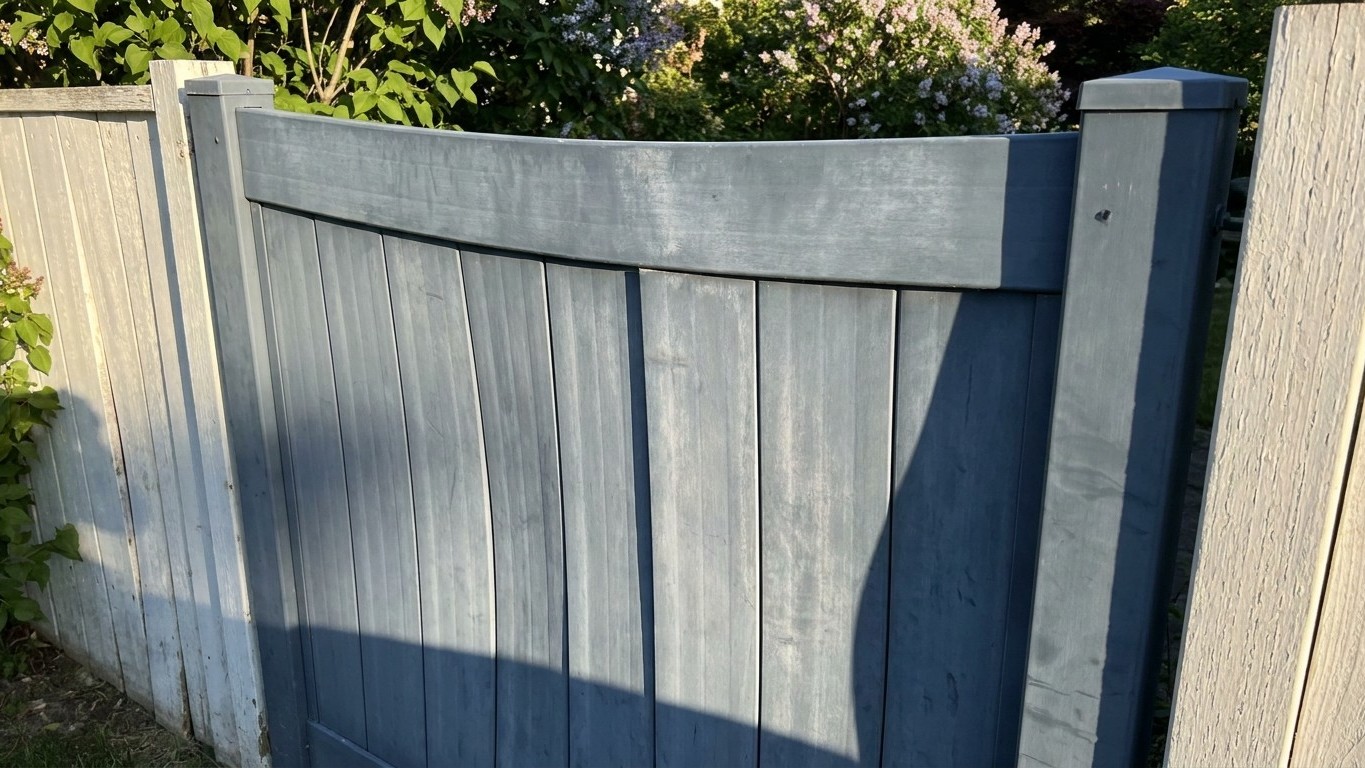
That gorgeous slate-grey gate you painted over a bank holiday weekend might already be curling at the edges, and the timing couldn’t be crueller: anthracite grey (that’s RAL 7016 to the trade) is notorious for turning into a solar panel the moment the sun gets serious. In full southern exposure, RAL 7016 can climb past 70°C on the surface in summer. White PVC barely gets warm to the touch. Paint it dark and you’ve turned an ordinary gate into something closer to a radiator, and PVC was never built to shrug that off gracefully.
Here’s the bit nobody mentions in the paint shop: plenty of standard-grade PVC simply deforms under that kind of heat load. The plastic softens just enough to sag between fixings, bow along its length, or develop that faintly wavy look that makes a once-crisp gate look like it’s melting in slow motion. You didn’t do anything wrong with your brushwork. You picked a colour that fights against the very physics of the material underneath it.
Key takeaways
- Dark paint on PVC isn’t cosmetic—it turns your gate into a heat-absorbing radiator that softens and warps the plastic underneath
- Window manufacturers charge thousands extra for dark-coloured PVC precisely because they use special heat-reflective technology standard paint doesn’t have
- Today’s record-breaking UK heatwaves are brutal enough that even high-quality dark gates can deform within weeks of a fresh coat
Why dark colours and PVC were never meant to be friends
Vinyl and PVC fencing experts on the other side of the Channel and the Atlantic have documented this for years, and the mechanism is always the same one. Dark vinyl warps because the colour absorbs more heat from the sun; when it gets hot the material expands, and when it cools it contracts, and that constant change can cause it to bend, sag or even crack over time. Give it enough consecutive scorching afternoons, as we’ve had rather too many of lately, and the heat makes the material soft, which leads to it losing its shape.
It isn’t just warping, either. Dark colours, especially black, absorb more UV radiation than lighter shades, and over time exposure to the sun causes these colours to fade, leading to an uneven, washed-out appearance. So even if your gate survives the shape department, you might find the rich anthracite you chose slowly turning patchy and chalky within a couple of summers. Paint manufacturers know this full well, which is precisely why the good PVC-specific paints promise crack and blister resistance rather than heat resistance as such, a subtle but telling distinction.
This year gave PVC gates and fences an especially brutal test. The first heatwave started on 22 May, and on 25 May a temperature of 34.8°C was recorded at Kew Gardens, surpassing the previous record of 32.8°C set in 1922, before being broken again the following day when 35.1°C was recorded at the same location. By midsummer things hadn’t calmed down: June 2026 saw notable heat across parts of the UK, with prolonged hot conditions and high humidity leading to both exceptionally high daytime temperatures and unusually warm nights. Genuinely, 2026 is already the first year on record with UK temperatures of 35°C or higher recorded in three separate months. A freshly painted dark gate had no gentle introduction to summer this year. It went straight from spring showers to a proper roasting.
Why the window and door trade doesn’t just slap on dark paint
If you’ve ever priced up anthracite-finish PVC windows or doors, you’ll have noticed they cost more than white ones, and it isn’t just fashion tax. Reputable manufacturers use dedicated technology to stop dark profiles cooking themselves, things like infrared-reflective pigments, foils with cooling layers, or aluminium cladding bonded over the PVC. One well-known coating process uses thermally reflective pigments that give heat buildup almost equal to the colour white, which allows dark colours to be used safely. Others rely on pigments in the laminate and print formulation that reflect up to 80 percent of the near-infrared radiation.
Some window firms take it further still. If you paint PVC windows a colour with a light reflective value below 55, the warranty is often voided outright, because dark colours with low LRV absorb heat much more than lighter colours with a higher LRV. That’s an industry standard built around decades of failed dark-coloured plastic, and it’s worth remembering before you reach for a tin of anthracite exterior paint marketed at “PVC, wood and metal” with no mention of thermal performance whatsoever. A general-purpose satin finish simply doesn’t carry the reflective pigment technology that a factory-foiled dark window profile does.
What to actually do about your gate now
First, don’t panic and don’t repaint over the warping hoping it’ll settle. If the gate has genuinely bowed rather than just softened cosmetically, leave it to cool fully overnight before assessing, because PVC often looks worse mid-afternoon than it does at 7am when the temperature has dropped right back. Loosen the hinges slightly if the frame is straining against them; a gate under tension in the heat is far more likely to set into a permanent curve.
If it’s mostly surface texture rather than structural bowing, a light sand and a proper PVC-specific paint, applied in cooler autumn weather rather than during another heatwave, will get you further than most people expect. For a genuinely warped panel, though, the honest answer is that paint won’t pull the plastic back into shape. Some gates recover a fair bit once temperatures drop for good in October and the material relaxes, so it’s worth waiting before you condemn it entirely.
Going forward, if you love that anthracite look against your shutters, consider a mid-tone grey rather than the darkest anthracite, or ask whether a factory-foiled replacement gate is realistic for the size you need, since that gets you the heat-reflective technology built in rather than bolted on afterwards. And if you do repaint, do it in September or October, when the PVC is at its most stable and least likely to bake, blister or bow before the paint’s even cured properly.
Sources : quora.com | thedecorologist.com