
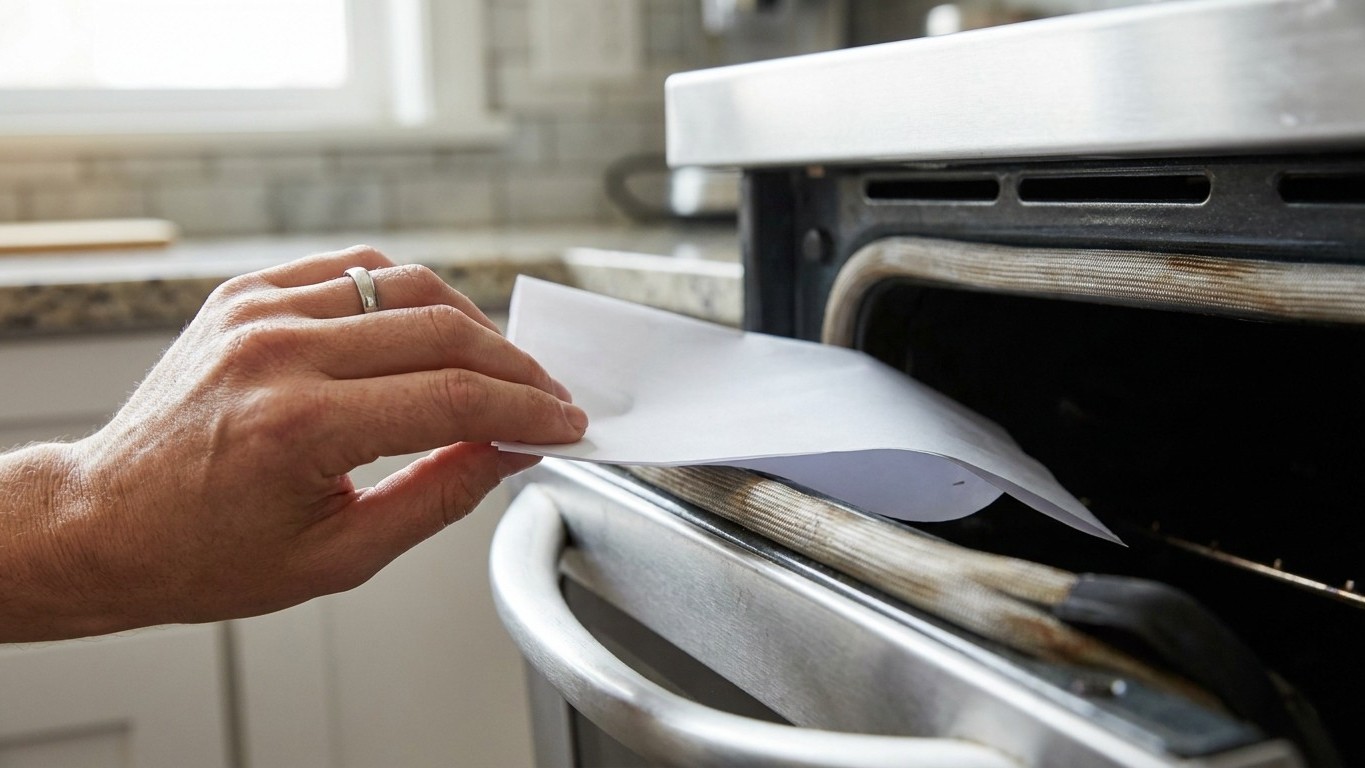
For months I was convinced my oven was simply a duffer, one of those appliances that never quite lived up to the number on its dial. Every Victoria sponge, every batch of flapjacks, came out with one side deeply golden and the other stubbornly pale, as if the cake couldn’t decide which way to face the sun. I fiddled with rack heights, I rotated tins halfway through baking, I even blamed my own arm for not whisking evenly. Then, on a whim, I closed the oven door on a sheet of ordinary printer paper and gave it a tug. At one corner, it slid straight out, no resistance whatsoever. That was the moment I understood: it wasn’t my baking, and it wasn’t really the oven’s fault either. It was the seal around the door, quietly letting heat pour out of one side for who knows how long.
Key takeaways
- A simple paper test can reveal whether your oven door seal is failing without spending a penny
- Uneven browning isn’t always the oven’s fault—a worn seal can cause heat to escape from one spot while the rest of the bake suffers
- Replacing a faulty gasket is one of the cheapest kitchen repairs and could transform your baking results
What that scrap of paper actually tells you
The test itself couldn’t be simpler, and you likely have everything you need already sitting in a drawer. Close the door on a sheet of paper, then try to pull it free, repeating the process at several points around the whole perimeter rather than just the middle. This simple test helps identify leaks: place a sheet of paper between the door and the oven frame, partially closing the door to trap the paper, try to pull the paper out, and repeat this process at various points around the door’s perimeter. If it slides free easily in one spot but grips firmly everywhere else, you’ve found your culprit without spending a penny. Close the oven door on a sheet of paper, and if it slides out easily without resistance, the seal may have lost its grip. I did the test on all four sides of my own door and found the top left corner offered almost no resistance at all, while the rest held the paper fast. That single weak patch was enough to throw the whole bake off balance.
What surprised me was how long a seal can be quietly failing before it becomes obvious. A worn oven seal can affect cooking performance long before it becomes visibly torn, and this often leads to food cooking unevenly. Mine didn’t look torn or cracked from the outside. It had simply gone slightly flat and lost its spring, the sort of gradual wear you’d never notice unless you went looking for it.
Why a leaky door bakes your cake lopsided
Browning isn’t magic, it’s chemistry, and it needs consistency to do its job properly. Browning happens because of two main reactions: the Maillard reaction, which occurs when heat brings sugars and proteins together to create golden colour and toasty flavour, and caramelisation, when sugar melts and darkens, adding a sweet, rich taste. Both reactions need steady, even heat. Where my seal had failed, heat was escaping right past that corner of the cake tin, so the batter there never experienced the same steady warmth as the rest of the sponge. If your oven has hot or cool spots, the browning will show it right away.
It’s not just about appearance either. A faulty seal is more than a minor maintenance issue, because when hot air escapes, your oven may need more time and energy to reach and maintain the temperature you have selected. Mine was working overtime trying to compensate for the leak, which explains why my bakes were also taking a good five or ten minutes longer than the recipe promised, on top of browning strangely. One appliance repair specialist described a near-identical case to a journalist, recalling a customer whose cake was consistently darker on one side, and after troubleshooting, it turned out the oven’s heating element had worn out in one section, causing an imbalance in temperature. A tired seal and a tired element can produce almost identical symptoms, which is exactly why the paper test matters, it narrows things down before you start guessing.
Other suspects worth ruling out first
A leaky seal is common, but it isn’t the only reason cakes bake unevenly, so it pays to check a few other things before you order a replacement gasket. Worth checking:
- Whether the oven itself sits level, since if your appliance is not standing level, it can cause food to be unevenly baked, easily checked with a spirit level front to back and side to side
- Your tin, because a warped pan won’t sit flat in the oven, causing the batter to bake unevenly, with one side getting more direct heat, leading to a burnt edge while the other side stays undercooked
- Whether you’re rotating the tin, since rotating a pan halfway through makes sure the heat isn’t hitting one particular area harder than another, because ovens can have hot spots
- Your rack position, given that placing a cake too high can brown or burn the top before the inside is done, while placing it too low may overbake or burn while the centre stays raw
Fixing the seal without fuss or expense
The good news is that a worn gasket is one of the cheaper kitchen repairs going, and there’s no shame in doing it yourself with a Sunday afternoon and a bit of patience. Order a replacement seal matched to your oven’s exact make and model, since you’ll generally need a new oven door seal compatible with your oven, checking the manual or contacting the manufacturer for the correct part number. Most gaskets simply unclip or unhook rather than needing screws removed, and most door seals are attached with clips, hooks, or adhesives, so you gently pull the old seal away from the door. Fit the new one, run your paper test again around the whole perimeter to check it grips everywhere, and you’ll likely notice your next bake behaves itself properly.
There’s a reassuring reason to bother with this beyond prettier cakes, too. A working seal helps keep heat inside the cavity, supports even cooking, and stops your oven wasting energy, though over time constant exposure to high temperatures can cause the seal to harden, split, or lose its shape. That hardening is simply age catching up with the rubber, nothing you did wrong, and nothing a new gasket won’t sort out for the price of a decent cake tin.
Sources : voltagehomeservice.com | glendalerepairappliances.com