
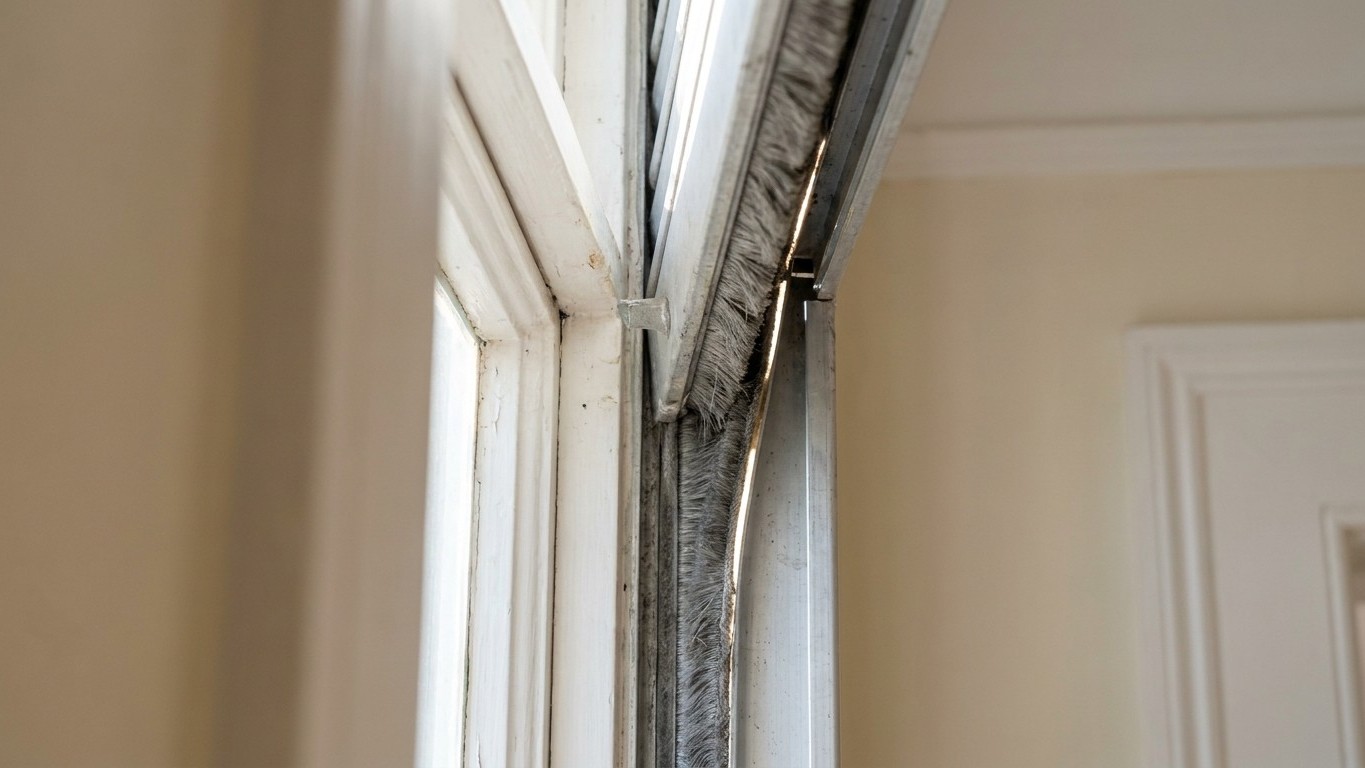
The shutters were down. The sun was blazing outside. The thermometer still read 30°C indoors. For a whole summer I followed the same routine, closing every roller shutter before the heat of the day, yet my sitting room felt like a very slow oven. Then a fitter came to service the mechanism, peered along the guide tracks on either side of the window, and said matter-of-factly: “There’s your problem.” It turned out the shutters themselves were doing exactly what they were supposed to do. The tracks were not.
Key takeaways
- 4.6 million UK bedrooms suffer from summer overheating—but most people don’t realize their shutters might be part of the problem, not the solution
- A fitter discovered the real culprit: flattened brush seals and a completely open belt slot in the shutter box, creating direct channels for 30°C air to flow inside
- Most thermal failures in roller shutters cost pennies to fix with DIY brush seal replacements and foam insulation panels—if you know what to look for
A nation quietly cooking indoors
Britain was not built for heat. Our homes were designed around the assumption that the problem would always be cold, damp and draughty winters. The UK is facing a growing problem, homes that are becoming dangerously hot. Built for cold winters rather than scorching summers, much of the nation’s housing stock is poorly equipped to deal with prolonged high temperatures. The numbers bear this out rather uncomfortably. In a study led by Loughborough University, in partnership with BRE, summertime overheating in 750 English homes was assessed through both monitoring and questionnaires. When the results were weighted to the national housing stock, the study revealed that 4.6 million English bedrooms (19%) and 3.6 million living rooms (15%) were overheated.
Those of us with roller shutters might feel smugly protected from all of this. We are, after all, doing the right thing. A common misconception is that insulation is only important during the colder months. However, in the UK, summer heatwaves are becoming more frequent and intense. Homes with large windows can quickly overheat, making indoor living uncomfortable without the use of fans or air conditioning, which in turn increases energy use. Shutters do genuinely help, closed during the hottest hours, roller shutters offer a valuable solution by preventing the sun’s rays from heating up your interiors. By keeping the shutters closed during the hottest parts of the day, you can dramatically reduce solar heat gain, keeping your rooms cooler naturally. And yet my sitting room was still roasting. The shutter slats were fine. The problem lived in the structure holding them.
What the fitter actually found in the tracks
Here is the thing that no one mentions when roller shutters are installed: the slats are only part of the system. Rolling shutters feature horizontal slats that roll up and down within guide tracks mounted on either side of windows or doors. The tight seal created when shutters close eliminates air gaps that would otherwise allow heat transfer. The critical word there is “tight.” When the seals inside those side guides wear down, crack, or were never particularly generous to begin with, the gap that opens up is a direct channel between the scorching air outside and the room air you are desperately trying to keep cool. Tight side guides, brush seals, and a solid bottom bar keep that air pocket sealed. Gaps mean air movement, and air movement means heat transfer.
The fitter showed me that the brush seals, the small fibrous strips lining the inside of each guide channel — had flattened with age, leaving a visible gap on both sides of the shutter curtain. Hot air was flowing in freely along the entire height of the window, completely bypassing the insulating air gap that the shutter was supposed to create. The air gap that forms between the lowered shutter and the frame becomes an additional insulating layer, reducing winter heat loss and limiting summer overheating. But that only works if the sides are actually sealed. Mine were not, and the beautiful layer of still air between the shutter and the glass, the feature that does most of the thermal work, was being flushed away by constant warm convection currents.
The shutter box above the window was making things worse still. In the context of the energy redevelopment of a building, the compartment of the box that houses the roller blind represents one of the most critical points of all. The air at the outside temperature enters the roller shutter box through the sliding slot of the fabric. The situation of the roller shutter box is then aggravated by the slot where the belt runs, a real through hole that connects inside and outside. The belt slot in my box was entirely open. Thirty-degree air was pouring straight through it. Roller shutter boxes very often waste more energy than the windows themselves. I found that rather startling when the fitter told me, and the science entirely backs it up.
How to put things right without spending a fortune
The good news is that most of these problems are inexpensive to fix, and some can be tackled on a Sunday afternoon with very little skill required. Brush seals for guide tracks are widely available as a DIY replacement strip, you simply slide the old, flattened seal out of its channel, cut the new one to length, and press it in. The difference in draught exclusion is immediate and can be felt with a hand placed along the edge of a closed shutter. If you have a roller shutter that isn’t insulated, you can improve it by adding brush strips along the sides and rubber seals at the bottom.
The shutter box itself deserves equal attention. To address heat loss problems with a small investment, you could insulate the roller shutter by installing inside it materials capable of wrapping themselves around the shutter box. Being very flexible materials, they adapt themselves very well to the shape of the box without interfering with the shutter. Self-adhesive insulation panels are sold specifically for this purpose; insulation panel thicknesses usually vary between 13 and 25 millimetres, check that there is at least one centimetre of space between the panel and the closed shutter. The belt slot or cord aperture should be plugged with a small piece of draught-excluding foam, trimmed neatly so the mechanism can still operate freely. None of this requires a professional visit.
For those whose shutters are more elderly, to get the best insulating performance from your roller shutters, regular maintenance is important. Simply cleaning the shutters periodically to remove dust, debris, and build-up will ensure they continue to perform effectively. Check the seals and tracks occasionally to make sure they are still tight and free from damage. A gentle wipe-down of the guide channels with a damp cloth before applying a silicone-based lubricant keeps the brush seals pliable and the slats running smoothly, stiff tracks force the slats to sit slightly proud of the guides, opening small but persistent gaps.
What to look for if you are choosing new shutters
If the time has come to replace an ageing set, the slat construction matters enormously. These shutters are designed with insulating properties that help to keep the home warm during the winter and cool during the summer. They are typically made from two layers of aluminium with a layer of insulating material sandwiched in between. Go for shutters with high-density foam cores for maximum thermal and acoustic insulation. Colours and finishes can also impact thermal performance slightly, with lighter colours reflecting more sunlight and heat, which can be an added bonus during the summer.
Well-fitted external shutters do work to a striking degree when Everything is properly sealed. Studies and lab tests show well-fitted external shading can reduce solar heat gain by roughly 50–75%, depending on glazing type, shutter material, colour, orientation, and installation quality. That is not a trivial difference on a 30°C July afternoon. The one detail that my summer of frustration taught me is that this performance figure belongs in the word “well-fitted.” A shutter with worn track seals and a leaky box delivers a fraction of that benefit, a standard, single-skin roller shutter, while providing security, offers minimal thermal resistance and quickly becomes a massive thermal bridge, allowing cool, conditioned air to escape in the summer months.
One detail worth knowing before you buy: side guides, a foam-lined bottom bar and rubber end inserts lock the curtain into place, preventing hot outdoor air from slipping around the edges. Good installers also seal the headbox to avoid thermal bridging into the wall. Ask any fitter about this specifically, it is not always done as standard, and it is precisely the omission that cost me an entire summer of comfort. The shutters were never the villain. The tracks, the box, and a few centimetres of missing seal were doing all the damage.
Sources : adesivisicurezza.it | ngfindustrialdoors.co.uk