
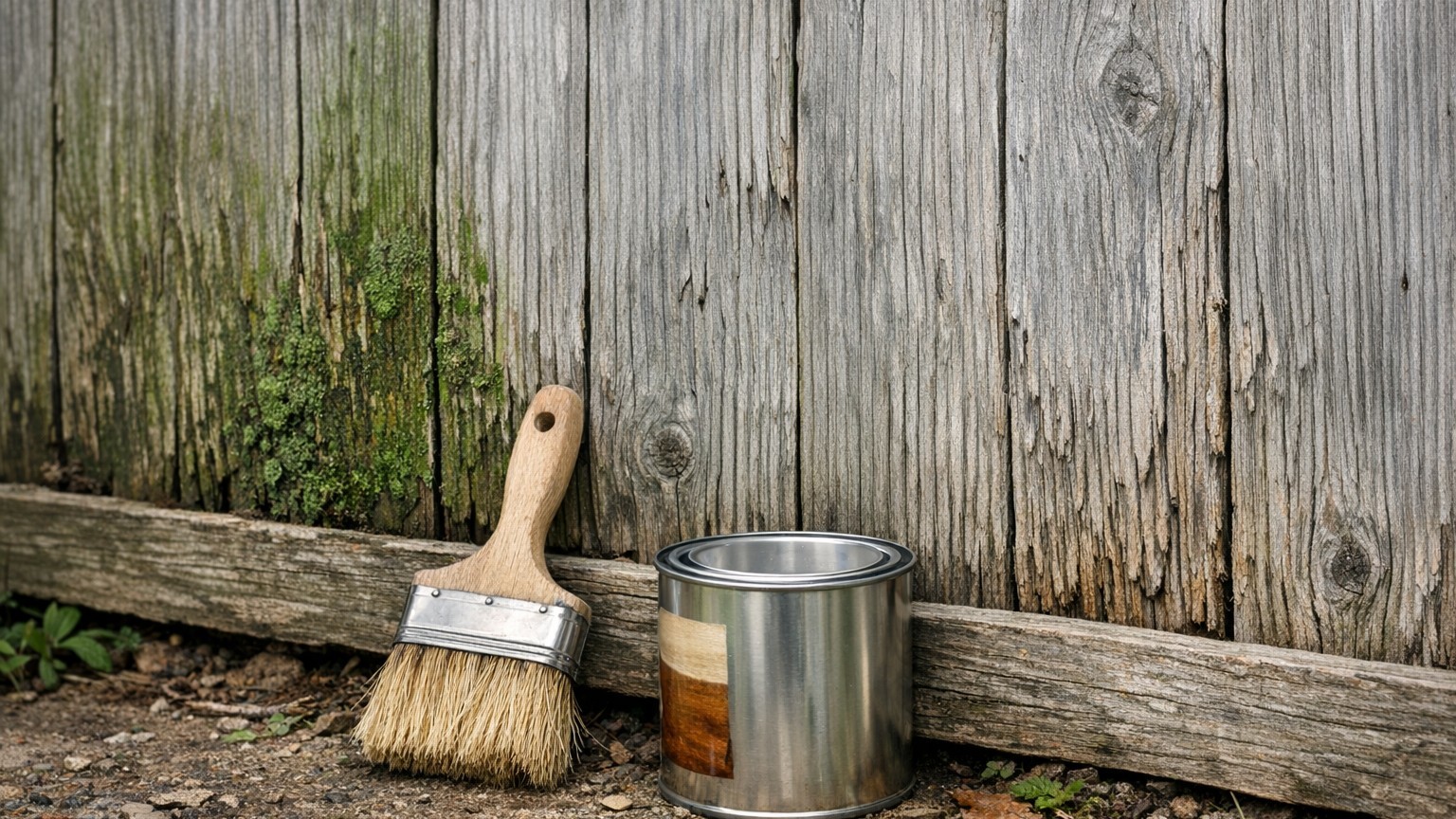
Every spring, like clockwork, I’d crack open a tin of fence oil, grab my old block brush, and work my way along every panel in the garden. It felt thorough, responsible, the sort of satisfying maintenance job that earns you a cup of tea and a sit-down. The fence always looked lovely for a week or two. Then the grey crept back, the oil seemed to vanish without trace, and the panels on the shadier side began to show a distinctly green tinge. It took a carpenter friend pointing at my fence and gently shaking his head for me to discover what I’d been getting wrong for years: I was oiling on top of problems the oil simply cannot fix on its own.
Key takeaways
- Most people apply oil directly to weathered, dirty wood—but there’s a hidden reason it never penetrates properly
- A carpenter friend discovered the one thing you’re skipping that lets mold and algae hide beneath your fresh coat
- There are actually two essential steps before you open that tin of oil, and skipping them wastes time and money
The step most of us skip entirely
The missing link, it turns out, is a wood preservative, applied before the oil, not instead of it. When treating a fence that hasn’t been properly treated for a number of years, the panels should first receive two coats of an exterior wood preservative prior to oiling, because this protects the timber from biological threats such as mould, algae, and wood-boring insects. Oil alone, no matter how good the tin, does not kill spores or repel insects. It nourishes and waterproofs the wood’s surface, but it cannot reach the biological damage already lurking inside the grain.
A good-quality wood preservative will protect the fence from a range of biological threats including mould, algae, dry rot, and insect attack. Think of it this way: oiling without preserving is a bit like polishing your shoes before removing the mud. The shine goes on, but the mud is still underneath, quietly doing its damage. If mould, algae, or fungi is already present on fence panels, it must first be treated with a suitable mould and algae cleaner or fungicidal wash before applying the wood preservative. So there are actually two preparatory stages before a drop of oil should touch the wood.
The benefit of using a wood preservative and wood oil combination over fence paint alone is that the finish will not crack, peel, or flake, as some types of wood paint tend to do over time. That’s a genuinely compelling reason to do the job properly rather than reach for a tin of paint as a shortcut.
Why the oil wasn’t penetrating in the first place
Here’s something most fence-care guides quietly gloss over. Before applying any treatment to a wood fence, the surface must be clean and smooth, because dirt, dust, grease, and old paint or stains can interfere with the adhesion and performance of the new treatment. If you’ve been oiling your fence every spring for several years, there’s a reasonable chance you’ve been adding fresh oil on top of old, partially degraded oil, and the new coat simply cannot sink in properly.
Before re-coating, washing the fence with a garden hose and using a tough bristle brush to remove stubborn dirt is essential, and any traces of green or black should be treated with a mould and mildew cleaner to remove the biological matter and kill off the cause so it doesn’t come back after just a couple of months. That green you’re scrubbing off isn’t just cosmetic. It’s living algae, and if you seal over it with oil, you’re essentially giving it a warm, damp home for the winter.
Outdoor fences face constant exposure to the elements, which can raise the grain, cause splintering, and leave weathered surfaces. Sanding smooths rough fibres, removes dirt and old finishes, and opens the pores of the wood for better stain absorption. This is the part most people genuinely balk at, sanding a whole fence sounds like an afternoon of misery, but a light once-over with an 80-grit sandpaper on rough or weathered areas, followed by a finer grit, makes an enormous difference to how deeply the oil penetrates. Without sanding, stain won’t absorb evenly, leading to blotches and premature peeling. The same principle applies to oil.
Doing it properly, from the beginning
The correct sequence is less complicated than it sounds once you see it laid out. Start with a stiff brush to remove loose debris, cobwebs, and surface dirt. Then wash the fence down, a garden hose works perfectly well; a pressure washer at low-to-medium pressure is faster and exposes a cleaner layer of wood beneath the weathered surface. To remove the surface layer of old, grey wood cells and expose a fresh layer of wood, use a power washer — and you can easily hire one if you don’t own one. Once that’s done, tackle any green or black patches with a dedicated fungicidal cleaner and let Everything dry fully. In Britain, that can mean waiting a few dry days, which is, admittedly, not always straightforward to arrange.
Next comes the preservative. To get the best level of protection, it is recommended to use both a wood preservative (usually two coats) followed by two coats of decking oil or other exterior wood oil. Apply the preservative with a block brush, working it into the end grain especially carefully, as that’s where moisture most readily enters the wood. Then wait. When using solvent-based wood preservatives, it’s important to follow the manufacturer’s drying times. Although solvent-based wood preservers usually feel dry in around four to six hours, the recommended drying times are usually around 48 hours. Rushing this stage undermines Everything that follows.
Only then does the oil go on. Apply new coats every 15 to 30 minutes until no more can be absorbed, then brush out or wipe off any excess oil sitting on the wood’s surface using a brush or cloth to avoid shiny spots. Work panel by panel, always completing a whole section before moving on, so you don’t end up with tide marks where you stopped for lunch. Fence oils nourish and feed the wood to keep it supple and water resistant, helping to prevent fence panels from drying out and in turn preventing shrinkage, cracking, splitting, and warping.
How long should this actually last?
Done properly, the preservative-then-oil approach gives you meaningful protection for several seasons. Most semi-transparent oil stains last two to five years, though it’s wise to be cautious and expect to redo the job after two or three, since fences tend to take quite a battering from the elements. The length of time sealing products last also depends on the weather conditions in your area, if it’s particularly wet, windy, and sunny where you live, you may need to reseal more frequently than average. In Scotland or the wetter parts of Wales, that’s a very real consideration.
One small detail worth knowing: make sure the exterior wood oil or stain you use includes ultraviolet inhibitors, which slow down the bleaching triggered by sunlight. The greying that creeps over untreated or poorly treated fences is partly UV damage to the surface wood cells, and a product without UV filters won’t address that, no matter how many coats you apply. My carpenter friend’s parting advice was blunt and practical: the tin of oil is the last thing you open, not the first. After several years of doing it backwards, I’m inclined to agree.
Sources : home-gardener.co.uk | osmouk.com