
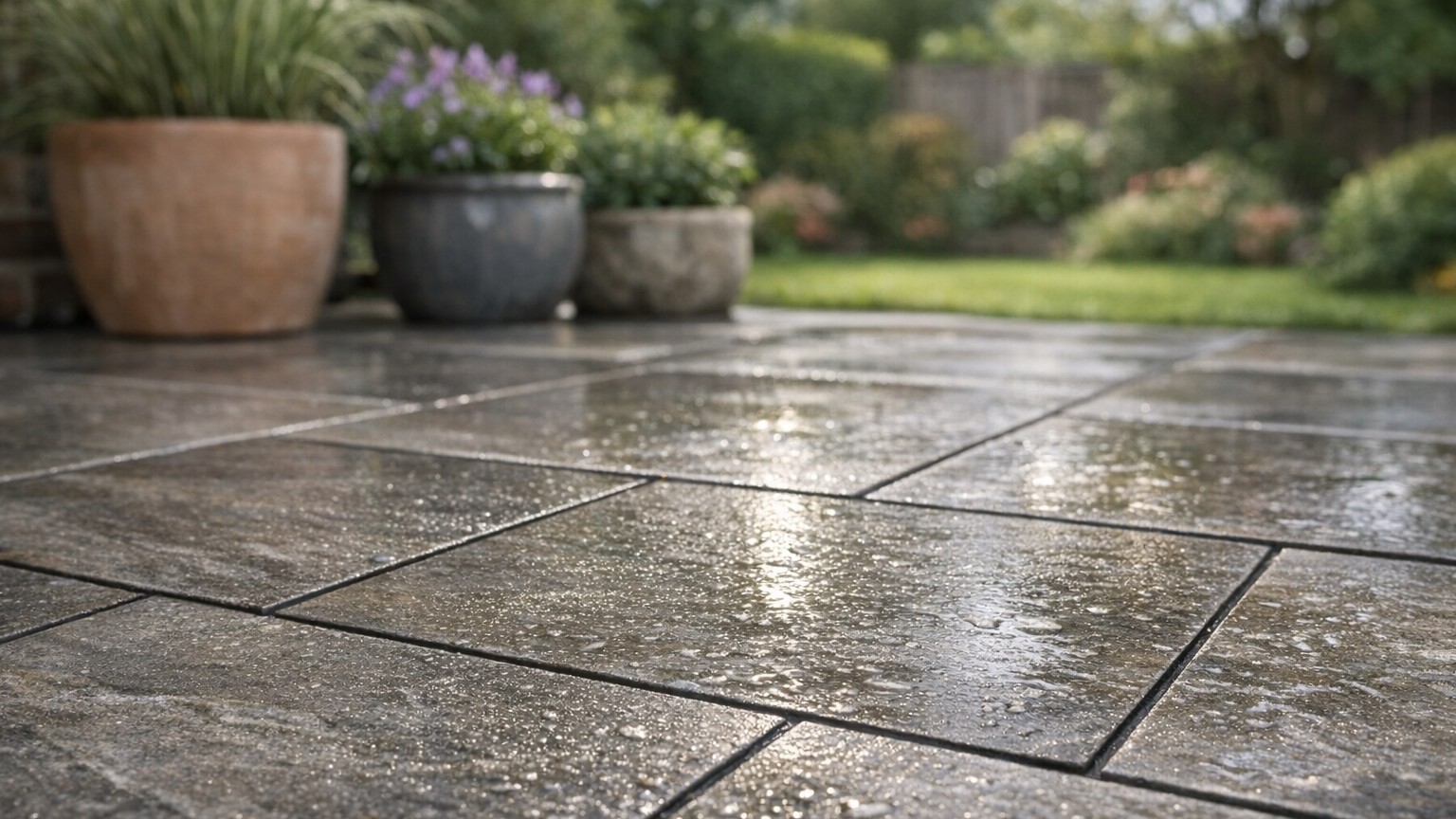
Concrete slabs have been a fixture of British gardens for decades. Dependable, cheap, and utterly, relentlessly grey, they were simply what you did if you wanted a patio. But something has shifted quite decisively, and in 2026, more and more UK homeowners are ripping them up and replacing them with outdoor porcelain paving. While concrete has been a go-to choice for many years, its limitations are becoming more apparent, and many gardeners are choosing porcelain’s superior qualities for their outdoor spaces. The result is a garden transformation that looks, frankly, like something from a design magazine.
Key takeaways
- Concrete’s freeze-thaw weakness is devastating British patios — but there’s a material that thrives in our climate
- Weekend installation is possible, but the secret lies in a technique most DIYers don’t know about
- The long-game economics are stunning: one material lasts 40 years with zero maintenance costs
Why concrete is losing ground
The old concrete slab patio had one real virtue: it was easy to justify on price. Concrete has its strengths, including affordability and ease of installation, providing a solid and stable surface for various garden activities. The trouble is, that is roughly where the good news ends. One of the primary drawbacks of concrete in the garden is its tendency to crack over time, especially in regions with fluctuating temperatures and heavy rainfall. These cracks not only mar the appearance but can also lead to tripping hazards and costly repairs.
This is not a trivial problem in Britain. Our freeze-thaw winters are brutal on porous materials. One of the biggest challenges for any garden material in the UK is the “freeze-thaw” cycle, natural stone and concrete absorb water, and when that water freezes, it expands and can cause the slabs to crack or flake over time. Add the mossy green tinge that arrives reliably after the second wet autumn, and you have a patio that looks tired before its time. Concrete’s porous nature can result in unsightly stains from spills or fallen leaves, requiring regular cleaning and maintenance. The garden you worked so hard to plant around it suddenly finds itself upstaged by a crumbling grey slab.
Over time, large concrete slabs began to make outdoor spaces feel flat and disconnected from the surrounding landscape. Designers are moving toward materials that add texture, variation, and a closer connection to the garden instead of relying on plain concrete patios. That shift, once confined to Chelsea Flower Show gardens and glossy interiors magazines, has now reached everyday British back gardens, and porcelain paving is leading the charge.
Porcelain paving: why it suits British gardens so well
Porcelain paving is produced using refined natural clays, pressed under extreme pressure and fired at temperatures exceeding 1,200°C. This advanced manufacturing process creates a vitrified surface that is incredibly dense and uniform, with minimal porosity, ensuring consistent colour, strength, and finish across every slab. The practical upshot of all that science? A surface that handles our weather beautifully.
Because porcelain is vitrified (fired at extremely high temperatures), it is almost entirely non-porous, it does not absorb water, meaning it will not crack in freezing temperatures. Unlike some concrete-based slabs that lose their colour after a few years of UV exposure, porcelain is colour-fast. The design is baked into the surface, so your patio will look the same in ten years as it does today. That alone makes it a different proposition entirely.
Safety is another area where porcelain pulls ahead. High-quality outdoor porcelain slabs come with an R11 slip rating, meaning the surface has a fine, grit-like texture that provides excellent grip even when soaking wet. It is often safer than timber decking or weathered natural stone, which can become slippery in winter. Anyone who has gone sprawling on a mossy old flag on a November morning will appreciate that detail.
Then there is the look. Porcelain garden tiles are available in a wide range of finishes, including stone and concrete effects, allowing homeowners to create bespoke layouts that complement both traditional and contemporary properties. Many homeowners choose porcelain because they can match their indoor floor tiles with 20mm outdoor slabs, creating a seamless transition through bi-fold doors. That indoor-outdoor flow, once the preserve of architects’ drawings, is now entirely achievable on a fairly ordinary suburban budget.
The weekend installation question: realistic expectations
The promise of a patio installed in a single weekend is genuinely achievable, but it does come with an honest caveat. Porcelain is not concrete and cannot be treated like it. Porcelain paving is a durable and low-maintenance solution widely used for modern patios across the UK, but due to its low porosity, porcelain does not naturally bond with mortar, making correct installation essential. A properly constructed sub-base, a full mortar bed, and the use of slurry primer are all critical to achieving a long-lasting result.
The key difference from traditional slabs is the priming step. Porcelain is a non-porous material, which means it won’t bond to mortar in the same way as other paving slabs. Using a slurry primer helps create a strong bond between the slab and the mortar bed, supporting a durable, long-lasting finish. Skip this and you will be redoing the whole job within a year. For a garden patio, a compacted 100–150mm sub-base is adequate, for example, if installing a 20mm thick paver on a domestic patio with a 100mm sub-base and 30mm mortar bed, you will need to dig down approximately 150mm.
A genuinely quicker alternative exists for those who already have a sound base: the pedestal support system. A pedestal support system enables the laying of large-format outdoor tiles and paving slabs without any need for grout or adhesive. This method has gained significant popularity in the UK for paving and decking gardens and terraces, and can be carried out by DIY enthusiasts with the right tools. Both pedestal and rail-raised support systems need minimal preparation and can be installed in most weather conditions, including rain, unlike the mortar laying method. For a confident DIYer tackling a small-to-medium space, this really can be a weekend job.
Installation time depends on the size of the area and the complexity of the design, a small patio may be completed in one to two days by experienced installers, but larger or more intricate projects can take longer. Leave the area to dry for at least 24 hours with no one walking on the newly-laid slabs. Plan your installation for a dry spell — covering freshly laid work with a tarpaulin if rain rolls in is simply good British practice.
What it will cost, and what you will save
Porcelain was once considered strictly premium territory. That has changed. If you are planning a garden renovation, you might be surprised to learn that porcelain paving is now more affordable than ever. While it was once considered a luxury material, modern manufacturing and increased supply have brought the cost of porcelain paving slabs down to levels that directly compete with natural stone like Indian Sandstone. Porcelain slabs now range from around £25 to £70 per m², depending on quality. For professional installation including groundwork and labour, you should budget between £100 and £150 per square metre for the entire project.
The longer view is where porcelain becomes a genuinely budget-conscious choice. Unlike sandstone or limestone, which require specialist sealants every two to three years (costing £100 or more per application), porcelain is vitrified and naturally non-porous, so no sealing is required. Porcelain pavers are incredibly hard-wearing and, with the proper care, can last upwards of 40 years with ease. Compare that with the concrete slab that needs replacing in fifteen, and the maths shifts considerably.
The wider picture confirms just how much attitudes to garden surfaces have changed. A well-designed garden can increase a UK property’s value by up to 20%, while properties with well-maintained gardens sell 15% faster than those without. 87% of UK households have access to a garden, and 22% of gardeners are now actively reducing lawn sizes in favour of paved areas, decking, or additional planting beds. Porcelain paving, it turns out, is not just a garden trend, it is quietly becoming one of the smarter home investments around.
One thing worth bearing in mind: the only real downside is that porcelain tiles are modern in aesthetic, with a printed finish, so investing in good quality tiles is important to get a realistic-looking patio, making them a larger upfront investment even if they work out cheaper in the long term. Buy the cheapest option and you may end up with a surface that looks exactly as cheap as it cost. Spend a little more on mid-range slabs, however, and you have something that genuinely flatters a garden, whether it is a town courtyard or a sprawling country plot.
Sources : pavingsuperstore.co.uk | homedit.com