
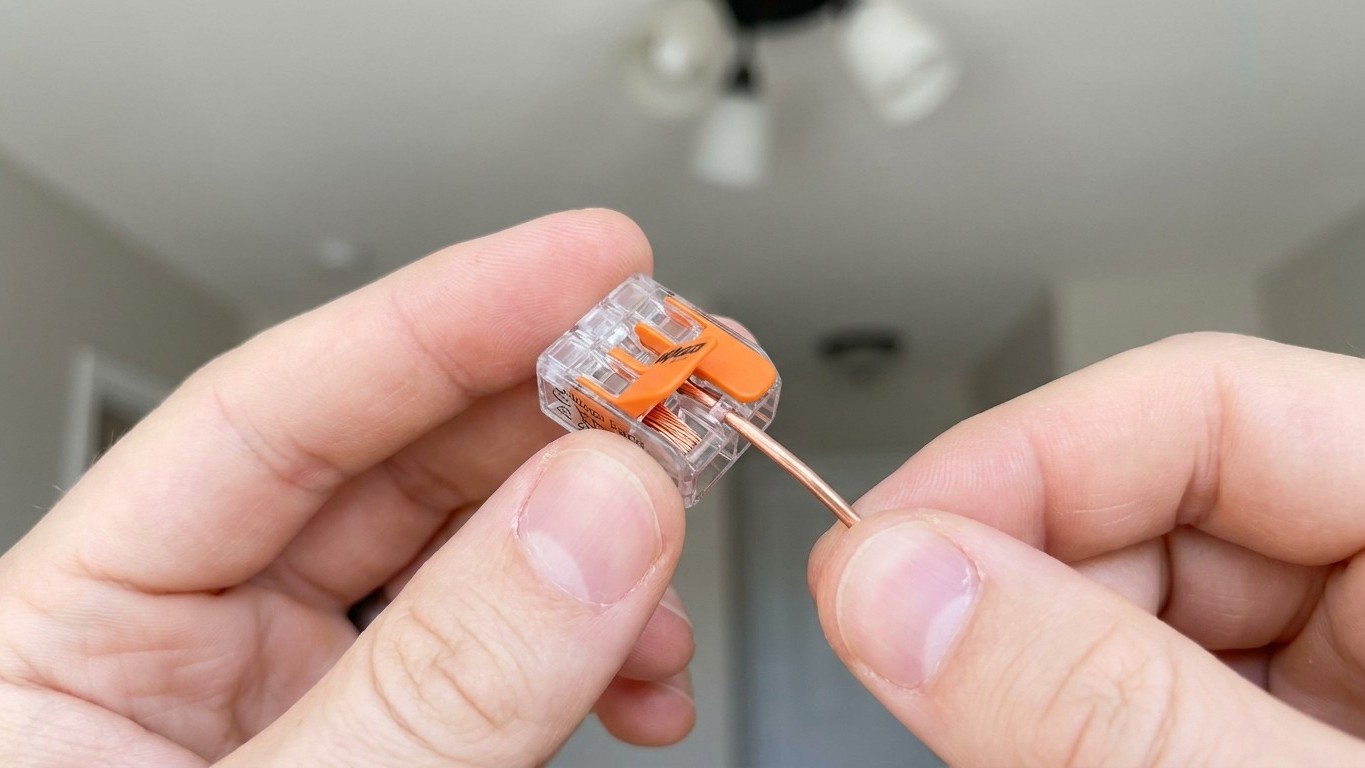
The one step I was skipping, using a proper connector inside an enclosed junction box, seems trivially small. A few seconds of effort, a component that costs next to nothing. And yet, without it, twisted bare wires left under a ceiling rose can quietly overheat, arc, and set light to the timber joists above your head while you sleep. My neighbour spotted it immediately. I had absolutely no idea.
Key takeaways
- A single skipped step with ceiling wiring can silently ignite timber joists while you sleep—discover what it is
- Why electrical tape and twisted wires fail spectacularly, and how heat builds secretly in hidden spaces
- The exact tool and enclosure British electricians use instead, and the regulation that makes it mandatory
The real problem with “just twisting and taping”
The appeal of simply twisting two wires together and wrapping them in electrical tape is understandable. It feels neat, it looks secure, and for five minutes after you’ve done it, everything works perfectly. The light comes on. Job done. Except it isn’t.
Simply twisting wires together would hardly ever be a good idea for a mains connection, and where wires carry mains voltage, the join must be properly insulated and the wires clamped to prevent the join being strained. Electrical tape alone provides neither of those things reliably. Over time, the tape dries out, the adhesive fails, and the twist loosens. This matters enormously because loose connections increase resistance, generating excessive heat that can melt insulation, cause sparks, or start smouldering fires without tripping breakers. That last part is the dangerous bit: a smouldering connection inside a ceiling void can burn for a long time before anyone notices anything at all.
A poor electrical connection in the back of a light fixture can set fire to the ceiling joists, and the results can always become catastrophic. The ceiling void is essentially a ready-made chimney, dry wood, insulation, dust, and the leading cause of electrical fires is poor maintenance associated with faulty wiring; heat builds up within the exposed or frayed wiring and eventually causes sparks. The numbers behind this are sobering. Faulty electrical equipment and sockets cause around 70 deaths and 350,000 injuries annually in UK homes, and electrical faults are now behind more than half of all accidental home fires in England.
What you should be using instead: proper connectors in a proper enclosure
In the UK, we don’t do things the American way. Rather than wire nuts, UK electricians use terminal blocks (also called “chocolate blocks”) or modern Wago connectors. If you’ve ever had a sparks come round and noticed those little orange or grey lever-operated connectors, those are Wagos, and they’ve rather Transformed domestic lighting work over the past decade or so. Wago lever connectors use cage clamp technology to secure wires without twisting. You simply insert the wire and flip the lever, and the mechanism is transparent, allowing visual inspection of proper wire seating. No guesswork, no relying on the tightness of a hand twist.
But, and this is the step I was skipping, the connector alone is not enough. Wago connectors, along with other compliant brands, in a suitable maintenance-free junction box would meet the requirements of BS 7671 and thus building regulations. The connector must sit inside an enclosed box. Terminals, whether Wagos or conventional choc blocks, should be enclosed, with building materials forming part of that enclosure provided they have the necessary fireproof qualities, plaster or masonry are acceptable, but timber definitely is not. A bare connection dangling in a ceiling void, touching a joist, is not compliant. Full stop.
The UK wiring regulations are specific here. Under BS7671, the UK wiring regulations, Regulation 513.1 requires that all electrical connections are accessible except where it meets one of the six criteria specified by Regulation 526.3. For most domestic ceiling lighting situations, this means connections need to sit within an accessible junction box, or a maintenance-free box that meets BS 5733, which is designed to be sealed away in a void. Do not attempt to repair exposed wires yourself unless you are trained to do so, and temporary fixes like using duct tape are not safe and can lead to more significant problems.
How to do the job safely, step by step
Before touching a single wire, turn off the circuit at the consumer unit and use a voltage tester to confirm there is no live current present. This is non-negotiable. Before touching any exposed wires, switch off the power at the circuit breaker, as this eliminates the immediate risk of electric shock.
Strip the cable ends back to expose approximately 8–10mm of conductor, enough to seat properly inside the connector, but no more bare copper than necessary. In modern UK wiring you’ll be working with brown (live), blue (neutral), and green-and-yellow (earth). Feed each wire into the appropriate port on your lever connector and push the lever down to lock. Give each wire a gentle tug to confirm it’s seated. This small tug test takes about two seconds and could save your home.
Place the completed connectors inside a junction box. If the box will be hidden above a plasterboard ceiling, use one rated as maintenance-free. Junction box covers must remain accessible; they cannot be covered with drywall or other surface material unless specifically rated for that purpose. Screw the box to a joist or batten so it cannot shift, clip the cables entering it, and close it properly.
Ensure all wire connections are tight and insulated to prevent faults or short circuits. That sentence ought to be printed on every bag of connector blocks sold in every DIY shed in the country.
When the warning signs are already there
Some of us have been living with badly made connections for years without knowing it. The clues are easy to miss or explain away. Signs that wires may be exposed inside a wall include flickering lights, buzzing sounds, or the smell of burning. A light that flickers intermittently is often dismissed as a duff bulb, which it sometimes is, but when it’s not, it can be a dangerous sign of voltage fluctuation or loose connections in your main wiring.
A burning smell near a ceiling fitting, however faint, should never be ignored. One real-life case involved poor wiring of ceiling downlights where the wiring was hidden in the ceiling cavity, with many of the light fittings touching wooden joists; the GU10 lamps generate significant heat, which combined with loose wiring had overheated, burning the ceiling joist. The persistent tripping of the lighting circuit was the only outward sign.
If you have any doubt about existing connections in your home, particularly above older light fittings, ask a registered electrician to inspect them. Never attempt electrical repairs yourself, and always use a registered, qualified electrician : NICEIC or NAPIT approved. An Electrical Installation Condition Report (EICR) will give you a complete picture of the state of your wiring. Approximately 19,300 domestic fires of electrical origin occur each year in the UK — and a great many of them start in exactly the kind of overlooked ceiling junction that seemed perfectly fine until it wasn’t.
One final thing worth knowing: using wires that are too small for the intended load can cause them to overheat, leading to insulation melting and increased risk of fire. So even when your connectors are correct and your enclosure is compliant, always check that the cable rating matches the circuit it’s on. Lighting circuits in UK homes are typically rated at 6 amps, on 1mm² twin-and-earth cable, and mixing up lighting cable with anything heavier going to a socket circuit is a mistake that qualified electricians still find tucked away in the ceilings of older properties.
Sources : hexoelectricaltesting.co.uk | metro-pat.co.uk