
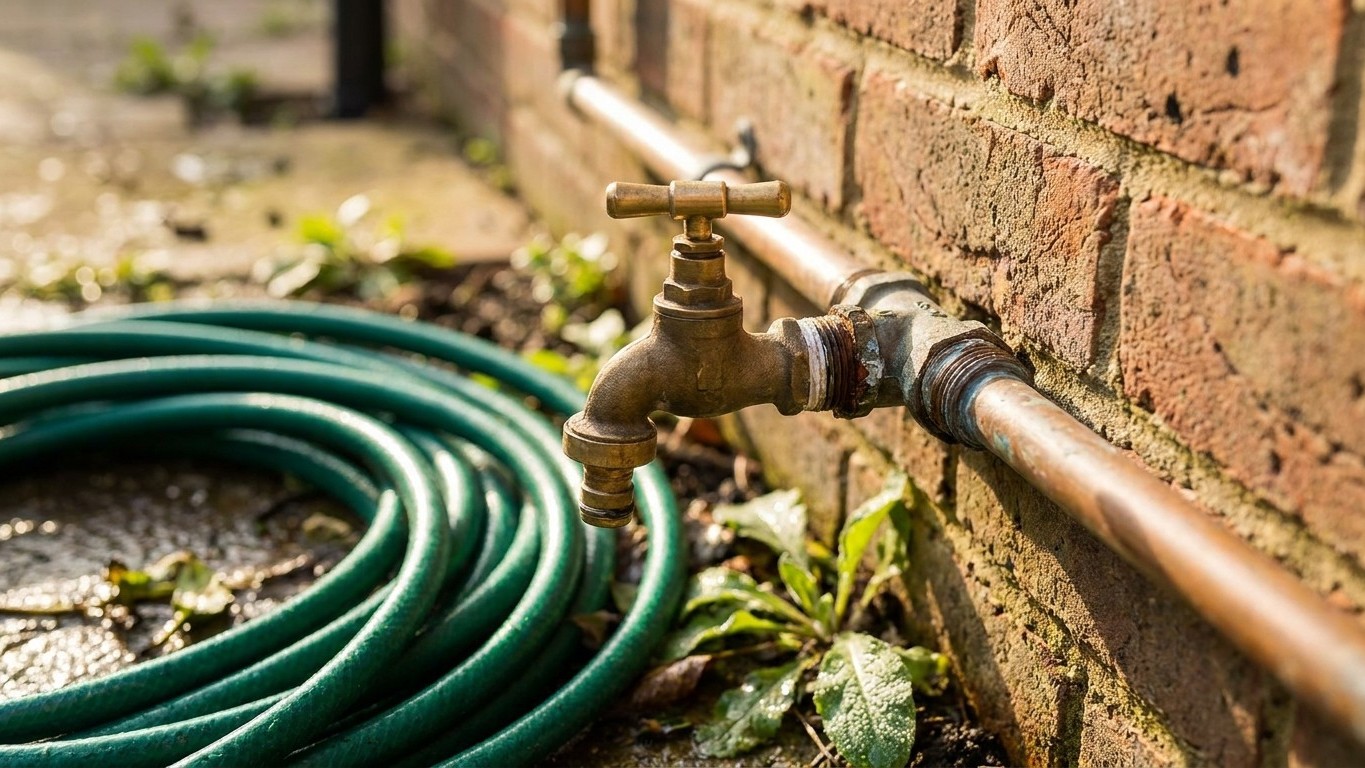
A slow drip from an outdoor tap into a flower bed sounds harmless enough, practically virtuous in a dry spell. But there is a plumbing fault so common that water companies estimate it affects a significant proportion of British homes, and most people have never heard of it: back-siphonage. When my neighbour crouched down beside my outside tap last summer and pointed a torch at the pipe connection, what he showed me made me call a plumber the same afternoon.
Key takeaways
- A hidden plumbing fault allows garden water to travel backwards into your drinking supply during pressure drops
- Thousands of homes have unprotected outdoor taps that violate water safety regulations from 1999
- A simple £5 device and 20 minutes of work could eliminate this contamination risk entirely
What is actually happening under your outside tap
Most outdoor garden taps in older British properties are connected directly to the rising main with no protection between the garden and the household drinking water supply. The device that should sit between them is called a double-check valve, and its job is brutally simple: it allows water to flow one way only. Without it, a drop in mains pressure, which happens regularly during burst pipe repairs, firefighting operations, or even heavy simultaneous demand from neighbouring properties, can create a partial vacuum in the supply pipe. That vacuum pulls water backwards. Whatever is sitting in, or touching, the end of your hose gets drawn toward your kitchen tap.
A dripping tap left resting in a flower bed is about the worst scenario possible. The water pooling around the end of the hose contains fertiliser residues, soil bacteria, pesticide traces, and anything else that has been applied to or has washed into that bed. During a back-siphonage event, all of that travels upstream. The Drinking Water Inspectorate lists garden hoses and outside taps as one of the most frequently reported sources of household drinking water contamination in England and Wales. This is not a theoretical risk dreamed up by cautious regulators. It has caused real illness in real households.
The regulations that most people have quietly ignored
The Water Supply (Water Fittings) Regulations 1999 require that any outside tap connected to the mains must be fitted with a double-check valve on the supply pipe inside the house, before it reaches the outside wall. This is not optional guidance. Fitting an unprotected garden tap is a breach of those regulations, and the responsibility lies with the householder. Water companies have the power to inspect and require remedial work if contamination is suspected.
The frustrating reality is that thousands of outside taps were fitted by plumbers who either did not know this rule or cut corners. If your tap was installed before you bought the house, you may have no idea whether a check valve is present. My own tap had been there for at least fifteen years. The plumber who eventually inspected it looked at the pipework and simply shook his head.
Checking is straightforward. Turn off the water supply to the outside tap (there is usually an isolating valve on the indoor section of the pipe, often in a cupboard near where it exits the wall). Then unscrew the small section of pipe between that valve and the wall fitting. A double-check valve looks like a short brass barrel with two internal spring-loaded mechanisms. If there is nothing there, or if there is only a single non-return valve, the installation does not meet current standards.
Fixing it properly, without spending a fortune
A double-check valve suitable for a garden tap costs very little from any plumbers’ merchant or large DIY retailer, typically a few pounds for a standard 15mm fitting. The installation itself, if you are comfortable with basic plumbing, takes about twenty minutes. You isolate the supply, cut out a short section of pipe on the indoor side, and fit the valve with push-fit or compression fittings depending on your pipework. The valve must be installed with the flow arrow pointing toward the tap, not toward the house. That arrow matters. Fitted the wrong way round, it simply stops your tap working at all.
If you would rather have a plumber do it, this is not a lengthy job. Any competent plumber should complete it in under an hour. Given that it is a regulatory requirement, some water companies will offer guidance through their leakage or customer service lines on approved local contractors, though they do not typically fund the work themselves.
While the pipework is exposed, it is worth inspecting the tap itself for drips at the handle or the gland nut (the nut just behind the handle). A worn washer is a ten-minute fix and will save a surprising amount of water over a season. A garden tap left dripping at even a modest rate can waste several litres a day, which accumulates quickly across a long dry summer.
Habits that make a real difference in the meantime
Until any remedial work is done, the single most effective precaution is never to leave a hose end submerged in water, sitting in a bucket, or resting in a flower bed. Hanging the hose end above ground level eliminates the most direct contamination risk, since back-siphonage can only pull in what the hose end is actually touching or submerged in. A hose dangling freely in open air draws in air rather than soil water, which is a much less alarming prospect.
Trigger-grip hose attachments and spray heads that seal shut when released also reduce the risk, since they prevent standing water from collecting at the nozzle end. They save water too, which is reason enough to use them regardless.
One detail that surprises most people: the contamination risk is highest not during normal use but in the hours after you have finished watering, when the tap is off but the hose is still connected and lying on the ground. That is exactly when a pressure drop elsewhere in the street mains is most likely to pull water backwards through an unprotected fitting. Disconnecting the hose from the tap when you have finished is therefore one of those small habits with a disproportionate payoff.