
Ceramic tile is considerably harder than it looks, and considerably more fragile than it feels. That combination is precisely why a single, confident drill press into an unprepped tile surface can send a hairline crack racing from your drill point to the grout line in under a second. I learned this the expensive way on a newly tiled bathroom wall, a wall I’d waited three weeks for a plasterer to finish. One overconfident afternoon with a masonry bit, and I was left staring at a crack that no amount of grout pen was going to disguise.
Key takeaways
- A spinning drill bit skates across ceramic glaze, creating concentrated stress that cracks the tile in seconds
- Tape gives the drill bit immediate grip, eliminating the dangerous skating phase that generates heat and vibration
- Professionals treat tape as non-negotiable—not fussiness, but hard-earned knowledge from years of broken tiles
Why tile cracks under the drill, and it’s not what most people think
The culprit isn’t force. Most people assume they pressed too hard, went too fast, or used the wrong bit. Sometimes those things contribute. But the real trigger is heat and vibration acting on a surface that has nowhere to flex. Ceramic glaze is essentially a thin layer of glass fused onto clay. When a spinning drill bit makes initial contact, it skates across that glassy surface rather than biting in, generating friction heat and vibration simultaneously. The tile can’t absorb either. It concentrates the stress at a single point until something gives, and that something is always the tile, never the drill.
Tape works by giving the drill bit something to grip from the very first rotation. A strip of masking tape, or better still low-tack painter’s tape, creates just enough texture and resistance that the bit engages immediately rather than skating. The bit stops wandering across the glazed surface looking for purchase. Vibration drops. Heat drops. The tile stays whole. This is why professional tilers treat tape as non-negotiable, not because they are being fussy, but because they have cracked enough tiles without it to know the maths simply doesn’t work in your favour otherwise.
The right way to drill a ceramic tile, from marking to finishing
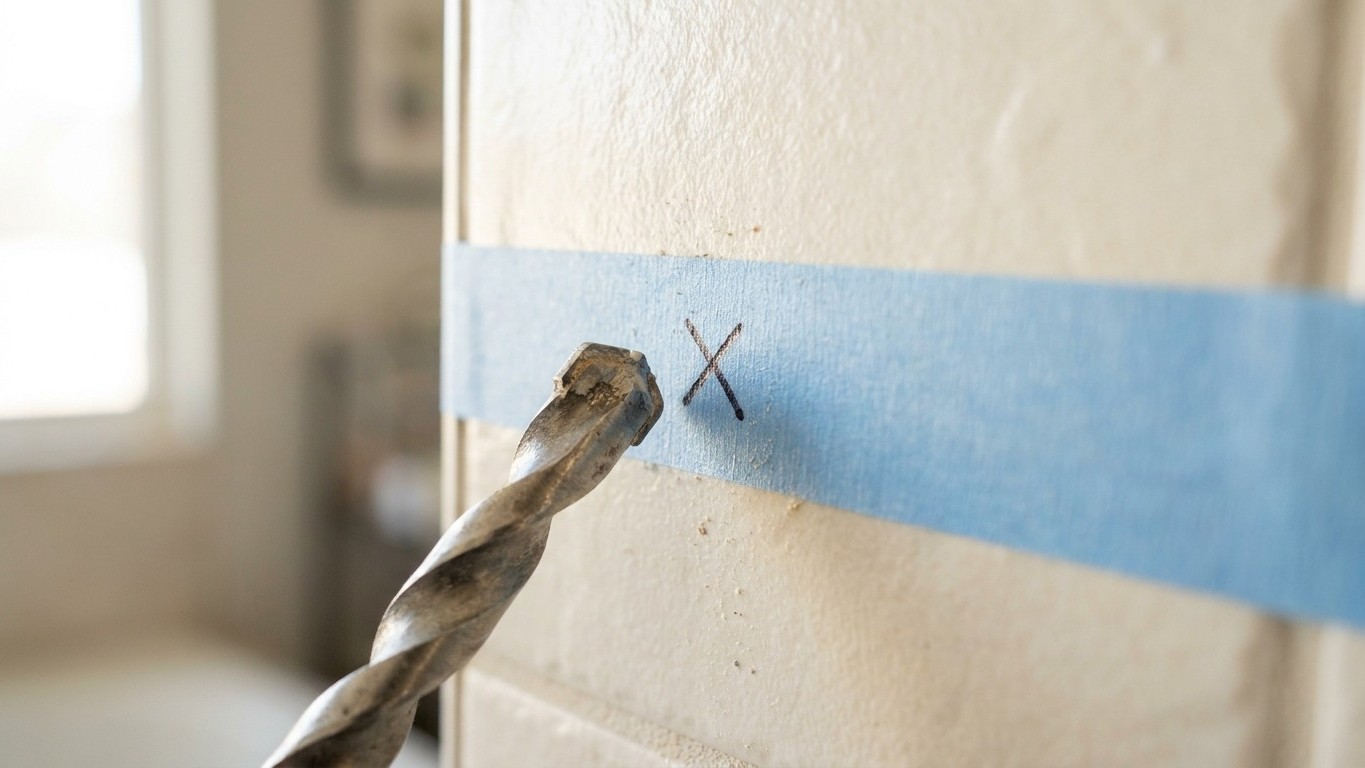
Start by marking your position with a felt-tip pen directly on the tape, not on the bare tile. Apply a single layer of low-tack masking tape over your intended drill point, nothing fancy, a roll from any DIY shop will do. The tape doesn’t need to cover a large area; a piece roughly five centimetres square is ample. Draw your cross or dot on the tape surface, which gives you a precise visual target and stops the bit drifting the moment it touches the wall.
Bit choice matters more than most guides admit. A standard masonry bit will get through ceramic in a pinch, but it generates considerably more heat than a dedicated tile bit (sometimes called a spear-point bit or arrow-head bit). These have a carbide tip ground to a specific geometry that scores and chips the glaze rather than grinding through it. For porcelain, which is denser and harder than standard ceramic, a diamond-tipped core bit is the sensible option, porcelain has a reputation for destroying standard tile bits entirely, particularly on anything above 12mm in diameter.
Set your drill to its lowest speed setting and, critically, switch off the hammer action completely. This is the step that catches out even experienced DIYers. Hammer action, so useful for masonry and brick, delivers rapid percussive blows that will shatter ceramic instantly. You want rotation only. Begin drilling at a slight angle, just a degree or two, to help the bit bite the tape surface before you straighten up and drill perpendicular to the wall. Keep steady, moderate pressure throughout, not tentative, not aggressive. If the bit starts to feel warm or the drill slows, ease off and let things cool for thirty seconds.
For holes larger than about ten millimetres, some tilers recommend building a small dam of plumber’s putty around the drill point and filling it with water to act as a coolant. It sounds theatrical, but it genuinely extends bit life and reduces cracking risk on larger holes. A simpler approach for the occasional home job is to keep a damp cloth nearby and briefly cool the bit every thirty seconds or so.
What to do when you’re drilling near grout lines or tile edges
The edge of a tile is its weakest point. Stress travels along the path of least resistance, and a tile’s edge offers very little resistance at all. As a general rule, stay at least fifteen millimetres from any grout line or tile edge. Where fittings genuinely need to sit closer to an edge, a towel ring bracket near the corner of a tile, for instance, use the smallest diameter bit that will accommodate your fixing, and consider a diamond bit regardless of whether the tile is porcelain or ceramic.
Existing grout lines present a different problem. Drilling directly into grout is actually easier than drilling into tile, since grout is softer, but it provides weaker fixing. If your intended position falls on a grout line, shifting the bracket even a centimetre can make the difference between a solid fixing in tile and a loose one in grout that gradually works free.
There’s one more thing worth knowing: the adhesive bed behind the tile affects how it behaves under the drill. A tile with a solid, void-free adhesive bed behind it is far more resistant to cracking than one with hollow spots. Tap the surface gently with a knuckle before you start, a dull, solid sound means good adhesion; a hollow tap means the tile has less support and deserves extra caution. This is a standard check that tilers use when assessing old or existing work, and it takes all of three seconds.