
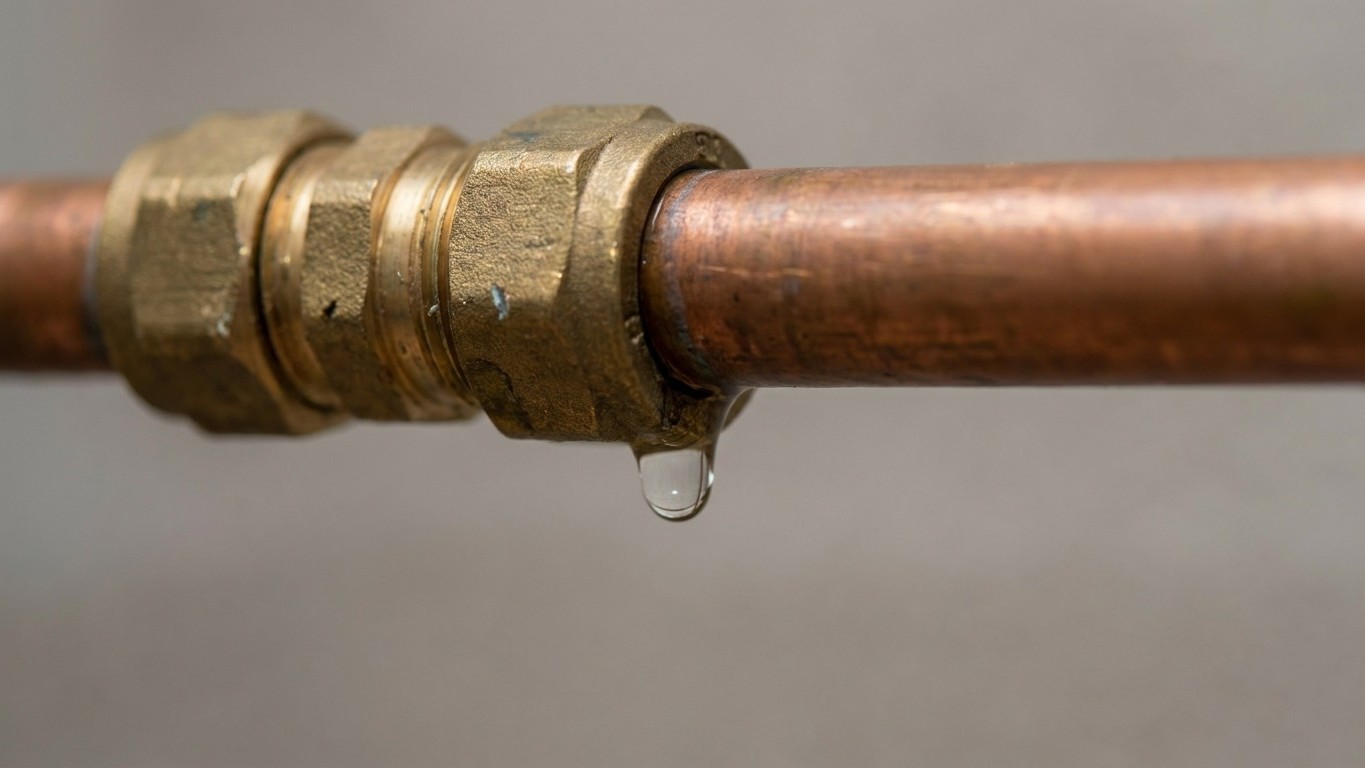
A dripping compression fitting is one of those household irritants that tempts you into a very logical, very damaging response: grab the spanner and give it another turn. Half a turn, just to be safe. Then another. The leak slows, or perhaps it doesn’t, so you try once more. What you’re actually doing, each time, is destroying the one small component that was ever going to fix the problem, the olive.
The olive is a tiny brass or copper ring, roughly the shape of its namesake, that sits between the fitting body and the compression nut. When you tighten the nut, it squeezes the olive onto the pipe, creating a watertight seal through deformation. That deformation is permanent, by design. The olive is meant to be compressed once, to exactly the right degree, and then left alone. Every subsequent turn digs it deeper into the pipe and distorts its shape further, eventually splitting it, cracking it, or flattening it so badly that no amount of tightening will ever stop the water again.
Key takeaways
- There’s a tiny component called an olive doing all the work—but most people destroy it without realizing
- The standard tightening rule exists for a reason: go beyond it and you enter the point of no return
- That temporary fix that seemed to work? It’s actually a ticking time bomb waiting for thermal expansion to trigger a worse leak
Why over-tightening makes things worse, not better
Plumbers generally work to a reliable rule of thumb: finger-tight, then one and a quarter turns with a spanner. That’s it. The measurement isn’t fussy craftsmanship for its own sake, it reflects the physical limit of what brass or copper can do under compression. Go beyond that, and you’re no longer sealing; you’re deforming. The nut begins to cross-thread, the olive loses its symmetrical grip on the pipe, and micro-gaps open up that no amount of force can close.
There’s a particular cruelty to the way a fitting behaves when it’s been over-tightened. It often stops dripping temporarily. The freshly distorted metal finds a new position and holds, sometimes for days or weeks. So the tightening appears to have worked. Then the pipe shifts slightly with thermal expansion, or water pressure does what water pressure does, and the drip returns, but now the olive is so far gone that the fitting is beyond salvage without being cut out and replaced entirely.
Copper pipe is softer than most people expect. A badly over-tightened olive can actually score a groove into the pipe itself, which creates a leak path that persists even after you’ve fitted a brand new olive. If you’ve been round this cycle a few times on the same fitting, it’s worth cutting back the pipe by a centimetre or two to get to undamaged copper before fitting a replacement.
What a genuine olive failure looks like
Most dripping compression fittings that get presented to a plumber have been over-tightened rather than under-tightened. The leak at the nut is the obvious sign, but there are subtler clues. If you undo the nut and slide it back, an olive that’s been worked too hard will look visibly asymmetric, squashed on one side, with bright scoring marks where it’s been grinding into the pipe. A correctly compressed olive looks neat and even, sitting flush against the pipe like a collar.
An olive that was never tightened enough is a different problem. It will look almost untouched, round and smooth, barely marked. In that case, yes, a little more tension might solve things. But this is the less common situation, and before you reach for the spanner, it’s worth knowing which scenario you’re actually dealing with.
Brass olives are the standard, but some older fittings used lead olives, which are even softer and more susceptible to damage from repeated tightening. If your pipework dates from before the 1980s, treat any compression fitting with extra caution before assuming it just needs another go with the spanner.
The right way to fix it properly
Replacing a compression fitting is less daunting than it sounds. You need to isolate the water supply, drain the pipe, and undo the compression nut. The olive will usually be stuck to the pipe and will need to be slid off, sometimes a gentle rocking motion does it, but if it’s really stubborn, an olive splitter tool (widely available from plumbers’ merchants for a few pounds) cuts it away cleanly without damaging the pipe underneath.
A new olive, a new nut if the old one is in any doubt, and a small smear of jointing compound or PTFE tape on the olive before assembly is the reliable approach. Some plumbers prefer to fit the new olive dry, arguing that compound is a crutch for poor technique; others consider a little paste insurance against the unexpected. For a domestic DIY repair, the paste does no harm. Tighten to finger-tight, then add precisely one and a quarter turns, use a permanent marker on the nut if you want to count accurately — and resist every instinct to add a little more just in case.
One detail that catches people out: always support the fitting body with a second spanner while you tighten the nut. If you let the body rotate freely, you can stress the connections on the other side of the fitting at the same time, and find yourself with two dripping joints instead of one.
Compression fittings have been in widespread domestic use since the mid-twentieth century, largely because they require no heat to install, making them safe for anyone to fit without a gas or plumbing licence. The trade-off for that accessibility is that they demand a little more patience than a push-fit connection. The olive does all the work, but only if you let it do that work once, at the right torque, and then walk away.