
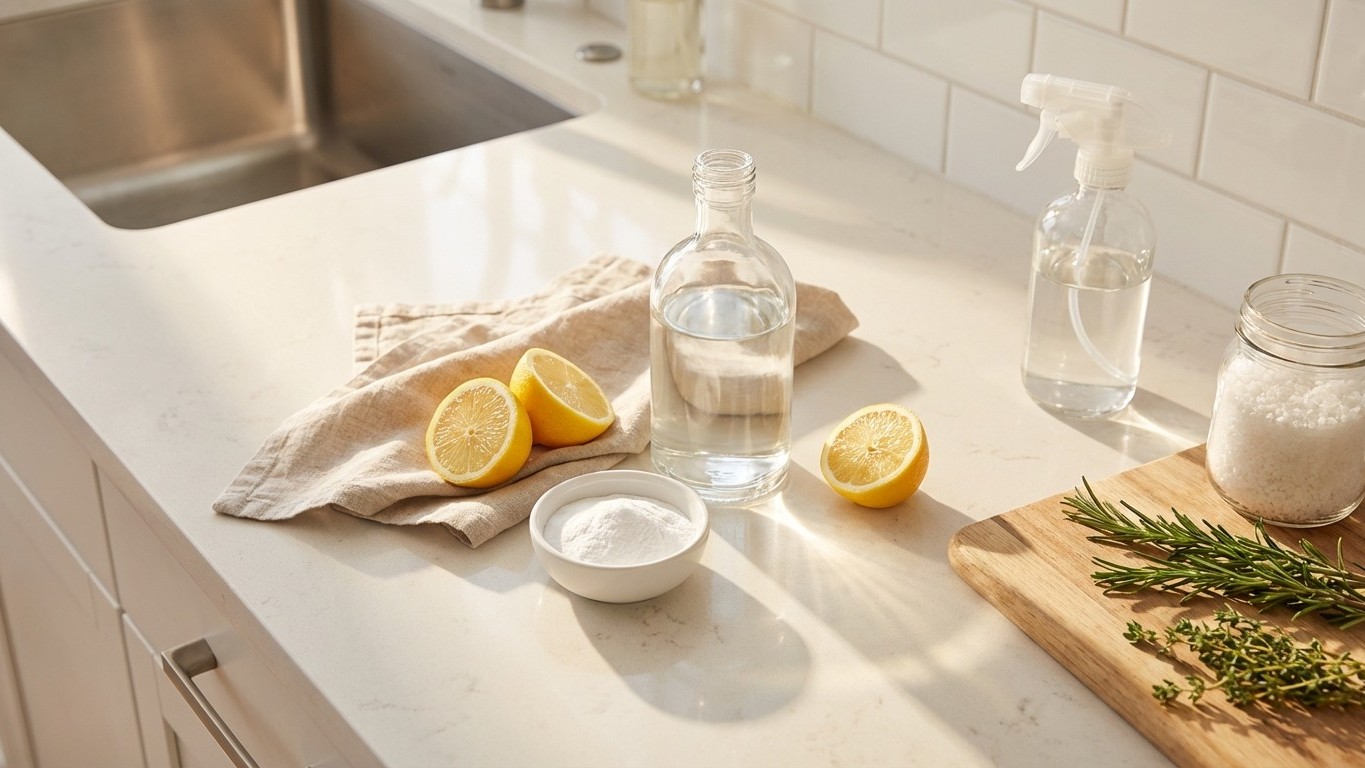
Your kitchen is the heart of your home, and keeping it clean without filling it with harsh chemicals is entirely possible, genuinely, it is. A small collection of everyday pantry staples can tackle grease, banish stubborn odours, and leave every surface gleaming without a single synthetic solvent in sight. Whether you’re scrubbing down the hob after a splashy curry, discovering natural cleaning hacks for stovetop burnt residue, learning how to clean stainless steel sink naturally, discovering how to clean oven naturally with baking soda and vinegar, finding the perfect natural degreaser for kitchen cabinets, or trying to coax last week’s smell out of the fridge (learn more about natural ways to clean a fridge and remove smells), these natural kitchen cleaning hacks will become your go-to toolkit. And once you see how well they work, you may never reach for a bottle of blue liquid again.
Why Choose Natural Cleaning Solutions in the Kitchen?
The Hidden Risks of Chemical Cleaners
Most of us grew up assuming that the more pungent a cleaner smelled, the harder it was working. That assumption is worth questioning. Many conventional kitchen sprays contain a cocktail of surfactants, synthetic fragrances, and preservatives that linger on worktops long after you’ve wiped them down. In a space where you’re constantly handling food, that residue matters. Some common cleaning agents, chlorine bleach in particular, can react with organic matter to produce low-level irritants that, with repeated exposure, affect the respiratory system.
Children and elderly family members are especially sensitive to these compounds, and with kitchens being the most frequently cleaned room in the average British home, the cumulative exposure adds up rather quickly. There’s also the question of what happens when those products go down the drain: many synthetic surfactants are slow to biodegrade and contribute to aquatic toxicity, something our water treatment systems don’t fully address.
The Environmental and Health Benefits of Going Natural
Switching to plant-based or mineral ingredients does more than just reduce chemical exposure in your home. White vinegar, bicarbonate of soda, and lemon juice are all fully biodegradable. They arrive in minimal or recyclable packaging, and buying them in bulk is significantly cheaper than stocking a cupboard full of single-purpose sprays. The financial argument alone is compelling: a one-kilogram bag of bicarbonate of soda and a two-litre bottle of white vinegar will cost a fraction of what you’d spend on branded kitchen cleaners in a month, and they’ll last considerably longer.
There’s also something satisfying about knowing exactly what’s on your surfaces. No lengthy ingredient list written in small print, just simple substances that have been used for generations of household cleaning.
The Essential Natural Ingredients for an Effortlessly Clean Kitchen
White Vinegar: Degreaser, Descaler, and Deodoriser
White vinegar is probably the hardest-working natural cleaner you can keep in the kitchen. Its acidity (typically around 5% acetic acid) makes it excellent at cutting through grease, dissolving limescale, and neutralising alkaline odours. For a general-purpose kitchen spray, dilute it one-to-one with water and add a few drops of washing-up liquid if you’re dealing with particularly greasy surfaces. On stainless steel, apply it undiluted with a soft cloth and always wipe in the direction of the grain.
One thing to remember: vinegar is acidic, which means it’s not suitable for natural stone worktops like marble or granite. It will etch the surface over time. On these materials, stick to diluted Castile soap or plain warm water instead.
Bicarbonate of Soda: Gentle Abrasion Without the Scratches
Think of bicarbonate of soda as your soft scrubbing pad in powder form. It provides just enough gentle abrasion to shift baked-on food and staining without scratching ceramic, enamel, or most modern worktop finishes. Mixed into a paste with a little water, it becomes a powerful spot treatment for everything from microwave splashes to tea-stained mugs. Combined with vinegar, the fizzing reaction helps lift debris from grout lines, drain covers, and the rubber seal of your oven door.
As a deodoriser, it works by chemically neutralising acidic odour molecules rather than simply masking them, which is why a small open dish left in the fridge or under the sink actually makes a measurable difference, not just a placebo one.
Lemon: Antibacterial, Fresh-Smelling, and Surprisingly Effective
The citric acid in lemon juice tackles limescale, brightens stained surfaces, and carries mild antibacterial properties that make it useful for food-prep areas. Half a lemon rubbed over a wooden chopping board, left for ten minutes, then rinsed, both cleans and deodorises in one step. Lemon zest simmered in a small saucepan of water for fifteen minutes fills the kitchen with a genuinely fresh scent rather than the synthetic “citrus” of commercial air fresheners.
Castile Soap and Essential Oils: Building Your Own Blends
Liquid Castile soap, made from plant oils rather than petroleum derivatives, provides the surfactant base that allows the other ingredients to emulsify grease and lift it away from surfaces. A few drops of tea tree oil add antimicrobial properties that are supported by solid laboratory evidence, while lavender or eucalyptus contribute both fragrance and additional antibacterial action. These oils are potent, so a little goes a long way: five to ten drops per 500ml of spray solution is more than sufficient.
Tackling Kitchen Grease: Surface-by-Surface Solutions
Worktops: Matching the Method to the Material
Laminate worktops respond beautifully to a 50/50 white vinegar and water spray with a few drops of Castile soap. Spray on, leave for two minutes, wipe with a damp microfibre cloth. For stubborn marks, a bicarbonate paste applied with a soft brush and rinsed after five minutes will lift most staining. Solid wood requires a gentler approach: diluted washing-up liquid or Castile soap, dried immediately to prevent moisture damage, and periodically treated with a food-safe mineral oil to maintain the surface. For natural degreaser for kitchen cabinets, the vinegar and Castile soap combination works equally well on cabinet fronts, though you should always test in a hidden area first with painted or lacquered finishes.
Hob, Oven, and Extractor Hood: Degreasing Without the Fumes
The hob is probably the most frequently greasy surface in any kitchen, and commercial oven cleaners are among the harshest products in the average cleaning cupboard. For ceramic and glass hobs, a paste of bicarbonate of soda and water spread over the surface, covered with a damp cloth for twenty minutes, then wiped away, will shift most burnt-on residue. For particularly stubborn patches, a plastic scraper (never metal) used at a low angle helps lift deposits without scratching.
For the oven itself, bicarbonate of soda and white vinegar form the backbone of the most effective natural method. If you want the full step-by-step process with timings and temperatures, the detailed guide on how to clean oven naturally with baking soda and vinegar walks you through every stage. The extractor hood filter, often the most neglected item, responds well to a soak in hot water with a generous handful of bicarbonate of soda and a splash of washing-up liquid for thirty minutes, followed by a gentle scrub with a stiff brush.
Kitchen Cabinets: Removing the Sticky Film
That slightly tacky, greasy film on cabinet doors near the hob is one of the most persistent cleaning challenges in a busy kitchen. The greasy residue is essentially polymerised cooking fat, which makes it more resistant to plain water. A solution of one part white vinegar to two parts warm water, with half a teaspoon of Castile soap per 500ml, applied with a soft cloth and left for a minute before wiping, dissolves this film effectively. For very stubborn build-up, a small amount of neat white vinegar on a cloth, left for three to four minutes, can be transformative. Just rinse the surface afterwards to prevent any moisture damage to the cabinet material. You’ll find a more thorough exploration of this problem in the dedicated piece on natural degreaser for kitchen cabinets.
Banishing Kitchen Odours with Natural Solutions
Finding the Source: Fridge, Bin, and Sink
An unpleasant kitchen smell that won’t go away almost always has a specific source, and the three most common culprits are the fridge, the bin, and the drain. Addressing the symptom (spritzing an air freshener) without addressing the cause is a frustrating and temporary fix. The fridge often harbours odours from forgotten leftovers, spoiled vegetables in the salad drawer, or simply the accumulated scent of strong foods. A thorough clean followed by a small dish of bicarbonate of soda placed inside (replaced every four to six weeks) is the most reliable long-term solution. For a complete method, the guide on natural ways to clean a fridge and remove smells covers everything from the rubber door seal to the drip tray at the back.
Bin odours usually stem from liquid seeping through the bin liner and collecting in the base. A rinse with diluted white vinegar and a light sprinkling of bicarbonate of soda left for ten minutes before rinsing addresses this. For the drain, a weekly treatment of two tablespoons of bicarbonate of soda followed by 100ml of white vinegar, left to fizz for fifteen minutes before flushing with boiling water, keeps it fresh and helps prevent blockages.
Effective Deodorising Recipes
Beyond bicarbonate and vinegar, there are other remarkably effective natural deodorisers. Coffee grounds, either fresh or used, absorb odours powerfully, a small dish on the counter near the bin works well. Simmering a saucepan of water with a sliced lemon, a cinnamon stick, and a few cloves for twenty minutes not only neutralises cooking smells but creates an inviting warmth in the kitchen. White vinegar in a small bowl left out overnight will absorb strong cooking odours (fish, garlic, onions) that have permeated the room; it smells sharp while it’s working, but once removed, so does the lingering food smell.
Streak-Free and Spotless: Natural Cleaning for Every Surface
Stainless Steel, Ceramic, and Glass
Stainless steel is deceptively tricky to clean well. The key is always to work with the grain of the metal, use a soft microfibre cloth, and avoid abrasive scrubbers that cause fine scratches where bacteria and residue collect. A diluted white vinegar solution removes fingerprints and watermarks beautifully; for a polished finish, a tiny amount of olive oil buffed in with a clean cloth afterwards adds a light protective sheen. For the full process without the risk of micro-scratches, the guide on how to clean stainless steel sink naturally is worth reading before you start.
Ceramic hobs and tiles respond well to the bicarbonate paste method described earlier. Glass surfaces, including oven doors and splashbacks, come up streak-free with a 50/50 vinegar and water spray wiped with a lint-free cloth or scrunched newspaper, an old trick that genuinely works, and one my grandmother swore by for windows too.
Limescale Prevention and Removal
In hard water areas (which covers much of southern England and parts of the Midlands), limescale is a constant battle around taps, the sink, and the base of the kettle. White vinegar and lemon juice are both effective descalers because of their acidity. For tap bases, soak a piece of kitchen paper in undiluted white vinegar, wrap it around the affected area, and leave it for an hour before scrubbing with an old toothbrush. For the kettle, fill it with a half-and-half mixture of water and white vinegar, bring it to the boil, leave it to cool, then rinse thoroughly twice. Doing this once a month in a hard water area prevents significant build-up.
Natural Disinfection Without Bleach
Tea tree oil, at a concentration of around one percent in water (roughly twenty drops per 500ml), has well-documented antimicrobial activity against a broad range of bacteria and fungi. Combined with Castile soap and white vinegar in a spray bottle, it creates a genuinely effective disinfecting surface spray for worktops, sink surrounds, and bin areas. For a higher level of disinfection on food-prep surfaces, undiluted white vinegar followed by undiluted hydrogen peroxide (available from pharmacies) applied separately and allowed to sit for a few minutes is a combination that research has shown to be highly effective, more so than either substance used alone.
DIY Recipes: Ready-to-Use Sprays, Scrubs, and Deodorisers
Having a few prepared solutions on hand makes the difference between a kitchen that gets cleaned regularly and one that gets cleaned occasionally. These recipes are straightforward, inexpensive, and can be made in five minutes.
All-purpose degreasing spray: combine 250ml white vinegar, 250ml water, one teaspoon liquid Castile soap, and ten drops of tea tree or lemon essential oil in a 500ml spray bottle. Shake before each use. Suitable for most worktops, cabinet fronts, appliance surfaces, and hob surrounds (avoid natural stone).
Bicarbonate scrubbing paste: mix four tablespoons of bicarbonate of soda with enough Castile soap to form a spreadable paste (roughly one to two tablespoons), plus ten drops of lemon essential oil. Store in a small jar with a lid. Apply with a damp cloth or soft brush to oven interiors, microwave walls, grout, and stained mugs. Rinse thoroughly.
Kitchen deodorising spray: fill a 250ml bottle with water, add two tablespoons of vodka or rubbing alcohol (acts as a preservative and odour neutraliser), ten drops of eucalyptus oil, five drops of lemon oil, and one tablespoon of bicarbonate of soda dissolved in a little warm water first. Spray into the air or onto surfaces like the bin lid and sink area.
Daily and Weekly Habits That Make the Difference
Small Gestures That Prevent Big Cleaning Jobs
The secret to a kitchen that never feels overwhelming is prevention rather than crisis cleaning. Wiping the hob immediately after cooking, while it’s still slightly warm, takes thirty seconds and prevents the polymerised grease layer that takes thirty minutes to shift later. Rinsing the sink after washing up and giving it a quick buff with a dry cloth takes ten seconds and prevents watermark build-up entirely. A small dish of bicarbonate of soda in the fridge and another under the sink adds no effort to your routine but makes a measurable difference to background odours. These are the kinds of habits that cumulatively create a clean, pleasant-smelling kitchen without any single session feeling like hard work.
A Simple Weekly Natural Cleaning Routine
Once a week, a thirty-minute circuit of the kitchen using only your homemade sprays and pastes will keep everything in order. Start with the hob and splashback (degreasing spray and a microfibre cloth), move to the worktops (spray, wipe, dry), then the cabinet fronts (vinegar solution on any greasy patches), then the sink (bicarbonate paste, rinse, buff dry). Finish by treating the drain with bicarbonate and vinegar, wiping down the appliance fronts, and replacing the bicarbonate dish in the fridge if it’s been more than a month.
For anyone wanting to extend these principles to the rest of the house, the comprehensive guide on natural cleaning hacks covers every room with the same approach: simple ingredients, specific methods, and no unnecessary expense.
FAQ: Common Questions About Natural Kitchen Cleaning
Can you really achieve a spotless kitchen using only homemade products? Absolutely, with the right ingredients and a little patience, yes. The main adjustment is that natural cleaners sometimes need a few extra minutes of dwell time compared to aggressive chemical sprays. Letting the bicarbonate paste sit for fifteen minutes rather than wiping it off immediately makes a significant difference to the results.
How do you remove grease from kitchen cupboards without damaging the surface? The vinegar-and-Castile-soap combination described above is your safest option. Always test on a hidden area first, particularly with painted or high-gloss cabinet doors. Work in small sections and dry the surface immediately after wiping.
Which natural ingredients disinfect kitchen surfaces without bleach? Tea tree oil in a water-and-Castile-soap spray provides reliable antibacterial action for everyday use. For a stronger effect on particularly germ-prone areas (like the chopping board after handling raw meat), the sequential application of white vinegar followed by hydrogen peroxide is highly effective.
How do you get rid of persistent fridge odours naturally? A thorough clean of the interior, including the rubber seal and drip tray, combined with a bicarbonate of soda dish left inside, addresses most cases. For particularly persistent smells, activated charcoal sachets are another option. The detailed method can be found in the article on natural ways to clean a fridge and remove smells.
How do you avoid streaks on stainless steel or glass when using natural solutions? The key is the drying step. Always finish with a dry, lint-free cloth or microfibre cloth rather than leaving surfaces to air dry. For stainless steel, wiping with the grain prevents the streaky appearance that goes against the metal’s texture.
Going Deeper: Further Reading by Surface and Ingredient
Natural kitchen cleaning is a broad subject, and some surfaces and problems deserve their own dedicated attention. If your oven is in need of serious intervention, the step-by-step guide to clean oven naturally with baking soda and vinegar takes you through the process without any ambiguity. For the sink specifically, where hard water and grease combine to create a particular challenge, the article on how to clean stainless steel sink naturally addresses the specific vulnerabilities of stainless steel in detail.
The broader collection of natural cleaning hacks extends the same philosophy to bathrooms, floors, windows, and beyond, because once you’ve seen how well these ingredients perform in the kitchen, it’s natural to wonder what else they can do.
A kitchen cleaned with vinegar, bicarbonate, and lemon isn’t a compromise. It’s a choice: cleaner air, lower costs, and surfaces you’re genuinely happy to prepare food on. And frankly, if it was good enough for our grandmothers’ kitchens before the supermarket shelves filled with spray bottles, there’s every reason to think it’s good enough for ours.